Trump Declines to Say Whether Bombing Iranian Civilian Infrastructure Would Constitute a War Crime
Key Takeaways
- •President Trump refused to answer whether destroying civilian power plants and bridges in Iran would amount to a war crime, instead disparaging the New York Times reporter who asked the question.
- •Trump previously threatened to destroy one Iranian bridge or power plant for every shot fired at a ship in the Strait of Hormuz, a chokepoint carrying approximately one-fifth of global oil supplies.
- •Four American service members have reportedly died recently in the escalating conflict between the United States and Iran.
- •Under the Geneva Conventions, attacks on infrastructure indispensable to civilian survival may constitute violations if civilian harm is disproportionate to military advantage, though the U.S. is not a party to the Rome Statute and has rejected ICC jurisdiction over its personnel.
- •Public polling indicates shifting attitudes toward the conflict even among Trump's political base as the economic and human costs continue to mount.
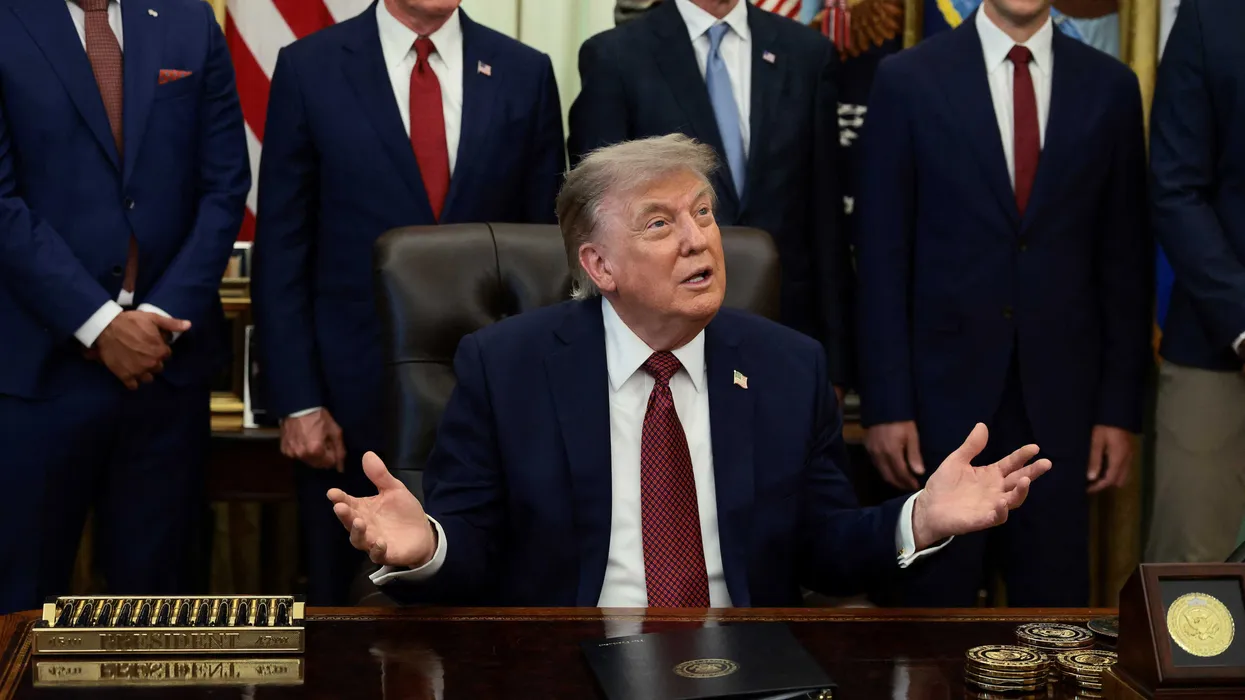
President Donald Trump on Friday refused to say whether destroying civilian power plants and bridges in Iran would amount to a war crime, dismissing the question from a New York Times reporter during an Oval Office press availability.
According to Mediaite, Times reporter Shawn McCreesh pressed Trump on his recent threats to escalate military action against Iran by targeting civilian infrastructure.
"A question about Iran," McCreesh said. "You're talking about blowing up civilian power plants and bridges, much of the civilized world would consider that a war crime. Do you?"
"I won't respond to that question," Trump replied. He then demanded to know the reporter's affiliation.
"Who are you with?" the president asked.
"The New York Times," McCreesh answered.
"Figures. Failing New York Times," Trump responded.
The exchange came amid an escalating conflict with Iran that has reportedly resulted in the recent deaths of four American service members. Fox News correspondent Jennifer Griffin reported on the lives of the fallen soldiers in a tribute following a dignified transfer ceremony.
Under international humanitarian law, including the Geneva Conventions, attacks on objects indispensable to civilian survival — such as power plants, water systems, and transportation infrastructure — may constitute violations depending on the circumstances, particularly if the anticipated civilian harm is disproportionate to the direct military advantage. The International Criminal Court at The Hague has jurisdiction over war crimes allegations, though the United States is not a party to the Rome Statute and has historically rejected the court's jurisdiction over American military personnel.
Critics on social media platform X sharply criticized the president's refusal to engage with the question.
Mehdi Hasan, founder of media company Zeteo and a British-American broadcaster, wrote on X: "A reminder that when journalists fawn over Trump giving them more access than previous presidents, taking more questions more regularly, this is how he actually 'answers' those questions."
Retired Marine Stephen Cottrill commented on X: "ANY time he doesn't like a question, he insults the reporter!"
Another X user wrote: "The press haven't learnt. They need to just keep following up with the same question. Over and over again."
"See you in The Hague, pal!" wrote another user, referencing the seat of the International Criminal Court.
One commenter pushed back on Trump's characterization of the Times: "He's been calling the Times 'failing' for over a decade. Never has a rate of decline been so gradual."
Earlier in the week, Trump threatened to destroy "ONE BRIDGE OR POWER PLANT" for every shot fired at a ship in the Strait of Hormuz, a critical maritime chokepoint through which roughly one-fifth of global oil supplies transit. Disruption to shipping through the strait has historically triggered sharp increases in global energy prices, and any sustained escalation there would carry immediate economic consequences for oil-importing nations. The threat was first reported by PBS NewsHour.
The president's unilateral military campaign against Iran has drawn scrutiny as its economic toll on the United States continues to mount. Public polling has indicated shifting attitudes even among his political base, while the rising death toll among American forces has intensified debate over the conflict's trajectory.

