Glasgow 2026 Commonwealth Games: How the Scaled-Down 'Glasgow Model' Opens Doors for Smaller Sponsors
Key Takeaways
- •The Games relocated to Glasgow after Victoria withdrew amid costs spiralling to roughly £3bn, resulting in a £300m cancellation fee on top of approximately £200m already spent.
- •The Glasgow Model features only ten sports across four venue hubs with no athletes' village, funded by £100m from the Commonwealth Games Federation and a target of £50m in commercial revenue.
- •UK broadcast coverage moved to subscription service TNT Sports, departing from the free-to-air BBC coverage that carried previous editions including Glasgow 2014.
- •Lower sponsorship costs under the streamlined model have enabled smaller brands such as Tens Sunglasses to participate, though experts caution that activation spending beyond rights fees remains essential for return on investment.
- •Sponsorship expert Sarah Niblock questioned the prominent appearance of non-sponsor brand Tunnock's Teacakes during the opening ceremony, describing it as an unusual move by the rights holder itself.
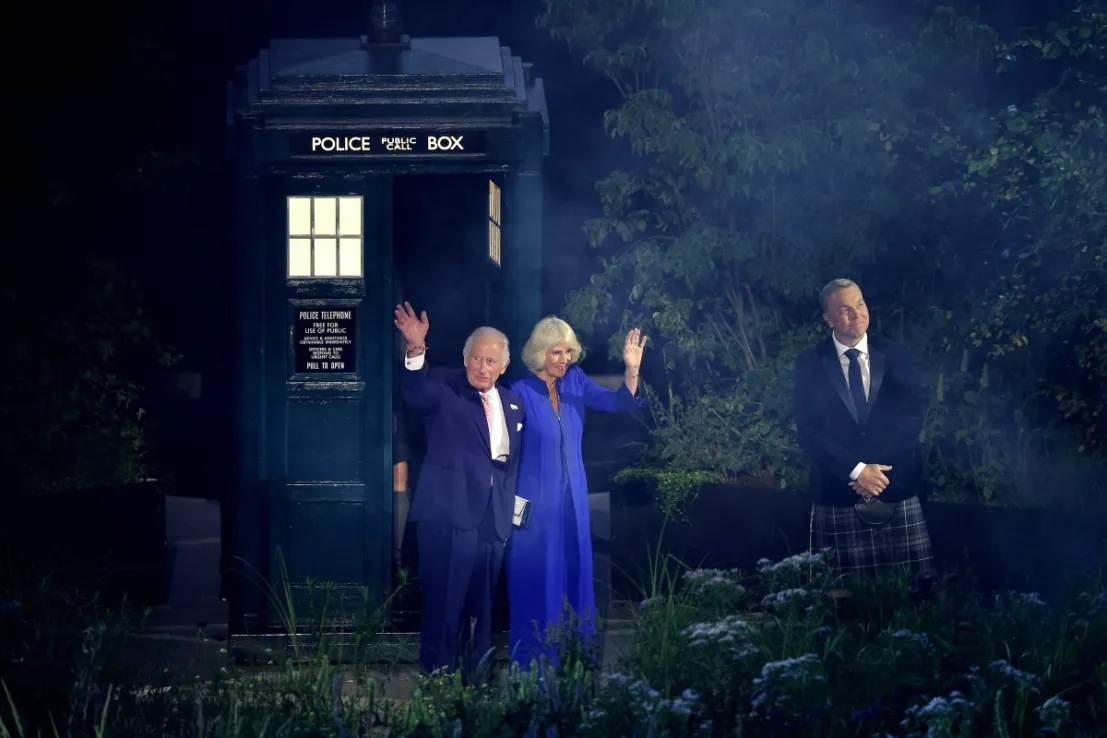
The 23rd Commonwealth Games is underway in Glasgow this week, returning to the Scottish city for the first time since 2014. But this edition comes with a notably different profile — a streamlined format, a reduced budget, and a fresh commercial framework that sponsorship experts say could create opportunities for brands that have historically been priced out of multi-sport mega-events.
The opening ceremony featured the King emerging from a Tardis and a giant, spaceship-like teacake descending from the roof of The Hydro. Now, with competition underway, attention is turning to the commercial architecture behind what organisers have dubbed 'The Glasgow Model' — and whether it represents a viable blueprint for the future of the Games.
From Victoria to Glasgow: A costly detour
The Games were originally scheduled to take place in the state of Victoria, Australia. Victoria withdrew after costs nearly trebled from initial forecasts to approximately £3bn. The cancellation itself came at a steep price: a £300m cancellation fee, on top of an estimated £200m already spent before the decision to pull out.
Victoria's withdrawal was not an isolated setback for the Games. Durban had been stripped of the 2022 edition over financial difficulties before Birmingham stepped in as a replacement host. Together, these withdrawals underscored a broader pattern in which cities have grown increasingly reluctant to commit to multi-sport mega-events amid cost overruns and uncertain economic returns — a trend that has also reshaped Olympic bidding cycles in recent years.
Glasgow stepped in as host. The city had much of its infrastructure already in place from 2014, and it possesses extensive experience staging major events. However, organisers faced a daunting set of constraints: no central government funding from either Holyrood or Westminster, and less than two years to prepare.
The result is a reduced-budget approach that may have saved not only this year's event but potentially the Commonwealth Games itself.
The Glasgow Model: How the numbers work
The Commonwealth Games Federation has contributed approximately £100m. Organisers must generate a further £50m through commercial ventures, including ticket sales, broadcast rights, and sponsorship partnerships.
The scaled-down format has reduced the number of sports from 20 to 10, with an integrated para programme across five of those ten. Several major sports have been dropped, including rugby sevens, hockey, badminton, triathlon, and all non-track cycling events — meaning no road races or mountain biking.
Venues have been consolidated into four key hubs, reducing the number of locations where brands can gain visibility. In the UK, broadcast rights were sold to TNT Sports, with streaming via HBO Max and terrestrial highlights on Channel 5 and BBC Alba. The shift to a subscription broadcaster marks a departure from recent UK Games coverage, which was carried free-to-air on the BBC — including Glasgow 2014. While the broadcast deals are a boost for the organisers' finances, placing live coverage behind a subscription wall may limit general public visibility — a factor that could affect the appeal for some commercial partners.
The sponsor roster: Household names alongside emerging brands
Several established names remain on board as principal partners, including Bupa, EDF, Coca-Cola, and Longines. They are joined by HBO Max and Ideagen, which has become the Games' first 'Official AI Technology Principal Partner.'
Ideagen, a company focused on safety, compliance, and quality across industries such as aviation, life sciences, and energy, may be familiar to Nottingham Forest or Nottingham rugby supporters through its jersey sponsorships. For the firm, the Commonwealth Games represents a significant step up in its sponsorship portfolio.
Other partners include Trespass clothing, BYD cars, Jubel beer, and Indian food and dairy brand Amul — a connection that takes on added significance given that the 2030 Commonwealth Games are scheduled to be held in India.
According to sponsorship expert Sarah Niblock, these partnerships reflect a principle she considers essential to any sponsorship deal: reciprocal relevance. 'This year's games, especially for companies like Ideagen, isn't really about displaying your brand in front of hundreds of thousands of spectators in venues and at home on screens,' she writes. 'It's about showcasing your area of expertise and highlighting what you do best by putting it in an accessible context that people can actually see working.'
She notes that the partner brands are all involved for practical supplier reasons rather than vanity. 'None of it is a 'nice to do' — and that's precisely what every partnership should have at its heart — that reciprocal relevance.'
Opportunity for smaller brands — with caveats
The reduced budget, fewer sports, and streamlined infrastructure (there is no athletes' village this year) have brought a lower sponsorship price tag. For larger companies, assessing whether a partnership of this scale makes commercial sense typically involves in-house experts or trusted agencies. Many smaller businesses lack those resources, which creates what Niblock describes as 'a tantalising opportunity to tempt them into official partner or supplier status of an event with historic kudos.'
However, she cautions that the rights fee is only the beginning. Modern sponsorship rarely functions as a pure branding exercise. 'Gone are the days of having your brand seen around the edges of the track being enough to deliver an ROI comparable with your initial outlay,' Niblock writes.
Companies may seek official supplier status to have their products used and tested by key demographics. Others may be motivated by cause-driven social responsibility, where the Games' values align with their own. Geographic drivers also play a role, whether tied to the host city or to the broadcast territories of participating nations.
For small and medium-sized businesses with limited marketing budgets, activation costs — experiential marketing for FMCG brands, customer offers for service brands, or content and communications for B2B brands — must be factored in. 'If you don't do them, there's not much point in shelling out a fee for the right to do them in the first place,' Niblock notes.
Team Scotland partner Tens Sunglasses is cited as a strong example of a company that likely would not have been able to participate under the previous, full-scale model. The brand gains product visibility and athlete endorsement while offering supporter discounts — a package that Niblock argues would 'undoubtedly cost less than paying for a traditional advertising campaign and will have so much more resonance with their potential purchasers.'
The teacake question
One of the more curious commercial talking points from the opening ceremony was the prominent — and repeated — appearance of red and silver foil-covered teacakes. The product is neither a sponsor nor a supplier of the Commonwealth Games, yet it featured heavily: athletes receive them upon arrival in Scotland for a taste test, and a giant version descended from the roof of The Hydro during the ceremony finale.
Niblock questions the extraordinary visual presence given to a non-paying brand: 'It's like guerrilla ambush marketing by the actual rights holder! An extraordinary move.'
The phenomenon is not new — teacakes also appeared in the 2014 opening ceremony, where performers danced in teacake costumes.
Despite the teacake controversy, Niblock gives Glasgow 2026 credit for rescuing the event, preparing the city on an accelerated timeline, and securing a broad roster of partners. 'Fair play to Glasgow 2026 for pulling it off,' she writes. 'Bravo. Let the games begin.'
Sarah Niblock is a sponsorship and communications professional specialising in sport and entertainment. She was part of the sponsorship team behind SSE plc's Tier One Partner status at the Glasgow 2014 Commonwealth Games and more recently brought the British & Irish Lions partnership into the global insurance group Howden.

