Dispatch Columnist Says Trump Has No 'Bankruptcy Option' in Iran
Key Takeaways
- •Catoggio said Trump cannot easily disengage from the Iran crisis because the Strait of Hormuz remains central to global oil commerce.
- •He argued that 2026 political timing makes the crisis more personally consequential for Trump than it would be near the end of his term in 2028.
- •Catoggio cited polling showing Americans link higher gasoline prices to Trump’s war and noted weak Iran approval among non-MAGA Republicans.
- •He described the United States as facing limited options: a major ground invasion, allowing Iran to retain leverage over oil supplies, or continuing airstrikes with uncertain impact.
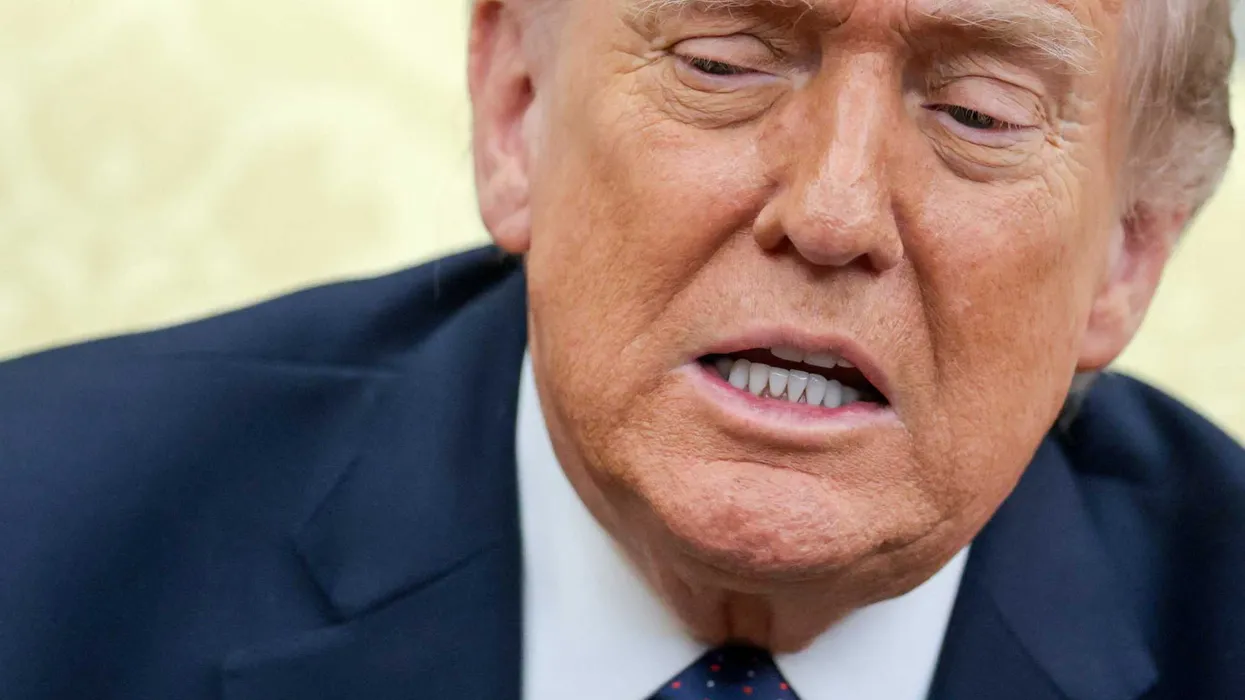
President Donald Trump built a public reputation in business for using multiple bankruptcies to get out of costly setbacks, but that approach is not available to him in Iran, Dispatch columnist Nick Catoggio argued.
Catoggio wrote that the absence of such an exit route is likely frustrating for Trump as the United States remains entangled in Iran and the Strait of Hormuz crisis continues. The strait is one of the world’s most important oil transit chokepoints, which is why control of shipping there carries economic and political stakes beyond the battlefield.
“... [Y]ou might have reasonably assumed back in February that there was no scenario in which the United States would end up fighting on in Iran aimlessly. Either the regime would quickly be brought to its knees or Trump, finding himself stymied, would bug out. He’d take the bankruptcy option and leave others to clean up the mess, as he threatened to do when the agony in the Strait of Hormuz first began to confound him,” Catoggio said.
Catoggio argued that if the situation were unfolding in 2028 rather than 2026, Trump would still have walked away from the war, even with the strait closed.
“With his presidency winding down, the prospect of Republicans being annihilated at the polls due to the knock-on effects of soaring oil prices wouldn’t have bothered him,” Catoggio said. “As long as he faced no consequences personally from having Iran in control of Hormuz, Trump would be content to leave someone else — his party and its new presidential nominee — holding the bag. That’s the whole point of declaring bankruptcy, no?”
“But it’s 2026,” he added. “He will face personal consequences if the strait doesn’t open, starting with having to spend his last two years in office fending off corruption investigations by a new Democratic-controlled Congress. Whatever’s left of his economic legacy after 18 months of tariffs and inflation will also crumble: Unlike in 2028, when he could have pawned off a Hormuz-driven recession on his successor, that misery will land in his own lap. And he knows it.”
According to Catoggio, those consequences have already begun to appear. He wrote that polling shows Americans understand that Trump’s war is the reason gasoline prices have risen sharply. He also cited new Fox News data showing Trump’s approval on Iran at 37-63 among Republicans who do not identify as MAGA.
“All of this is to say that the president would happily choose the bankruptcy option, I’m sure, if only the Iranians would offer it to him,” Catoggio said. “By signing last month’s humiliating peace agreement, he showed that he’s willing to accept the public embarrassment of admitting that a project he championed has failed, as bankruptcy requires. But bankruptcy is supposed to release him from the financial obligations created by that project, which in this case would mean oil commerce returning to prewar levels in the strait before November’s midterms. And the Iranians simply refuse to do that.”
Catoggio wrote that, with no bankruptcy option available, “all the bankruptcy king can do now is continue to plow money into the project and hope for the best.” He added: “If his choice is between being ruined economically while looking weak and being ruined economically while looking somewhat tougher, why not keep bombing?”
As a result, Catoggio said the United States is now facing a crisis in which its options appear to be a major ground invasion, allowing Iran to maintain what he described as a stranglehold on the global oil supply indefinitely, or continuing bombing with no clear effect. His argument turns on the idea that political accountability, oil prices, and military strategy have become inseparable in the crisis.
“Federal leadership has been completely bankrupted by hubris, stupidity, cowardice, and partisanship,” Catoggio said, also referring to Republicans who followed Trump into the situation. “Americans elected that bankruptcy, and this time they won’t be let off the hook.”

