Trump Struggles to Broker Truce in Bitter Georgia GOP Governor's Race
Key Takeaways
- •Trump personally phoned Lt. Gov. Burt Jones to encourage a meeting with primary winner Rick Jackson, but Jones has declined to endorse or even commit to voting for Jackson in November.
- •Jones has indicated he might reconsider his stance if Jackson takes responsibility for a roughly $20 million ad campaign by an anonymous group and withdraws a defamation lawsuit filed during the primary.
- •Jackson's legal team is pressing forward with the defamation case while Jones Petroleum has filed a separate $100 million lawsuit against Jackson over ads alleging the company profited from illegal gambling.
- •Democratic nominee Keisha Lance Bottoms is outperforming expectations as Democratic primary turnout exceeds projections, fueled in part by opposition to Trump and economic dissatisfaction.
- •Combined campaign spending and legal claims in the Georgia governor's race have surpassed a quarter of a billion dollars, drawing national attention to the state's increasingly competitive political landscape.
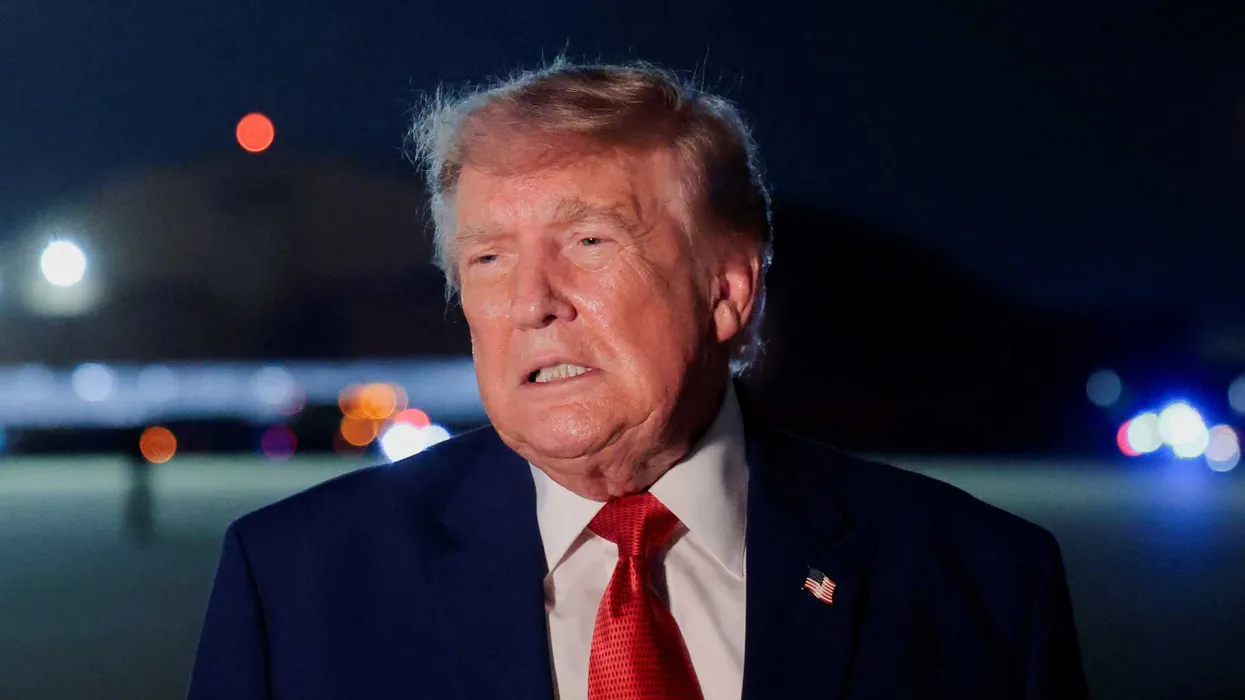
President Donald Trump is personally intervening to mend the fractured relationship between Georgia's Republican gubernatorial nominee Rick Jackson and Lt. Gov. Burt Jones, following what the Atlanta Journal-Constitution describes as one of the nastiest Republican primaries for governor in Georgia history — a state Republicans have held the governor's mansion since 2003 but where margins have narrowed in recent cycles.
According to three anonymous sources who spoke with the AJC, Trump called Jones last month and urged him to meet with Jackson, who defeated Jones in a bruising June GOP primary — notably, despite Trump having endorsed Jones last year.
However, Trump's efforts have yielded limited results. "It's not that easy," Jones told the president, according to the sources. "He spent $150 million trashing me and my family. You wouldn't like it if they did that to you."
The depth of the rupture between the two Republicans became apparent last month when Jones told the Politically Georgia podcast that he was not merely withholding an endorsement of Jackson — he would not even commit to voting for him.
"We'll see," Jones said when asked whether he would cast a November ballot for Jackson. "Obviously, I'm interested in supporting and keeping Georgia Republican-run and keeping it red. And I think November is going to be a challenge."
Despite the tepid response, Trump has not abandoned the effort. Sources told the AJC that the White House continues pressing both camps to "cool tensions" ahead of what is expected to be a competitive November race against Democratic nominee Keisha Lance Bottoms, the former mayor of Atlanta, who is outperforming expectations at a time when Trump's polling numbers sit at historic lows and Democratic voters appear energized. Democratic turnout during the primaries has been healthy and higher than anticipated, fueled in part by opposition to Trump and dissatisfaction with the economy.
The stakes are considerable for Georgia Republicans. The state has been a battleground at the presidential level — Joe Biden carried it by roughly 12,000 votes in 2020 before Trump reclaimed it in 2024 — and down-ballot races have grown increasingly competitive. A fractured GOP base heading into November would complicate Jackson's path against a Democrat with statewide name recognition in Bottoms, who led Atlanta through the pandemic and the protests that followed the murder of George Floyd.
Several additional obstacles remain between the two rivals. The AJC reports that Jones has repeatedly pressed Jackson to take responsibility for a roughly $20 million ad campaign by an anonymous group that targeted him. Jones has also signaled he might reconsider his stance if Jackson withdraws the defamation lawsuit he filed against Jones during the primary.
In an earlier interview, Jones referenced the lawsuit and accused Jackson of spending the race "trashing me, trashing my family, trashing basically everything that I had done."
There is little indication Jackson intends to drop the complaint. In a searing court filing last week, Jackson's lawyers urged a judge to reject Jones' motion to dismiss the case, ratcheting up the rhetoric significantly.
Jackson's attorneys accused Jones and his campaign of "maliciously" defaming Jackson, calling their attempt to dismiss the case "baseless" and arguing that a position taken by Jones' lawyers "borders on bad faith frivolity." They also opposed resolving the case before discovery, saying Jackson should have the opportunity to investigate what they described as "numerous misdeeds" by the Jones campaign.
"This is a textbook case of malicious, knowing, and calculated defamation. The Jones Defendants should be held accountable," Jackson's lawyers stated. "There is zero justification for dismissing this lawsuit."
Meanwhile, the AJC reports that Jones Petroleum — the lieutenant governor's family business — has filed a separate $100 million lawsuit against Jackson and his campaign over advertisements accusing the company of profiting from an illegal gambling enterprise. The sheer financial scale of the campaigns and litigation — with spending and legal claims exceeding a quarter of a billion dollars combined — reflects how high-profile and costly Georgia's governor's race has become, drawing national attention to whether party leaders can consolidate support before the general election.
