Banning Vape Shops Won't Fix Scuzzy High Streets
Key Takeaways
- •The number of vape shops on British high streets has grown from 262 in 2015 to 3,776, with barbershops similarly rising from 2,953 to 18,078 over the same period.
- •Planning legislation will be amended to require every new vape shop to apply for local council permission, and the definition of a vape shop will be tightened to prevent businesses from bypassing the rules.
- •A BBC investigation found several vape shops selling illegal cigarettes, cocaine, cannabis, and prescription medicines, leading to the closure of six shops in Sandwell.
- •Critics from the Conservatives and Reform UK warn that without cutting business rates, the crackdown could leave high streets emptier as no replacement businesses fill vacant premises.
- •Investigators have linked many of these cash-intensive retail operations to a Kurdish organised crime network involved in money laundering and harbouring illegal immigrants.
By Joseph Dinnage, Senior Press Officer at the Prosperity Institute
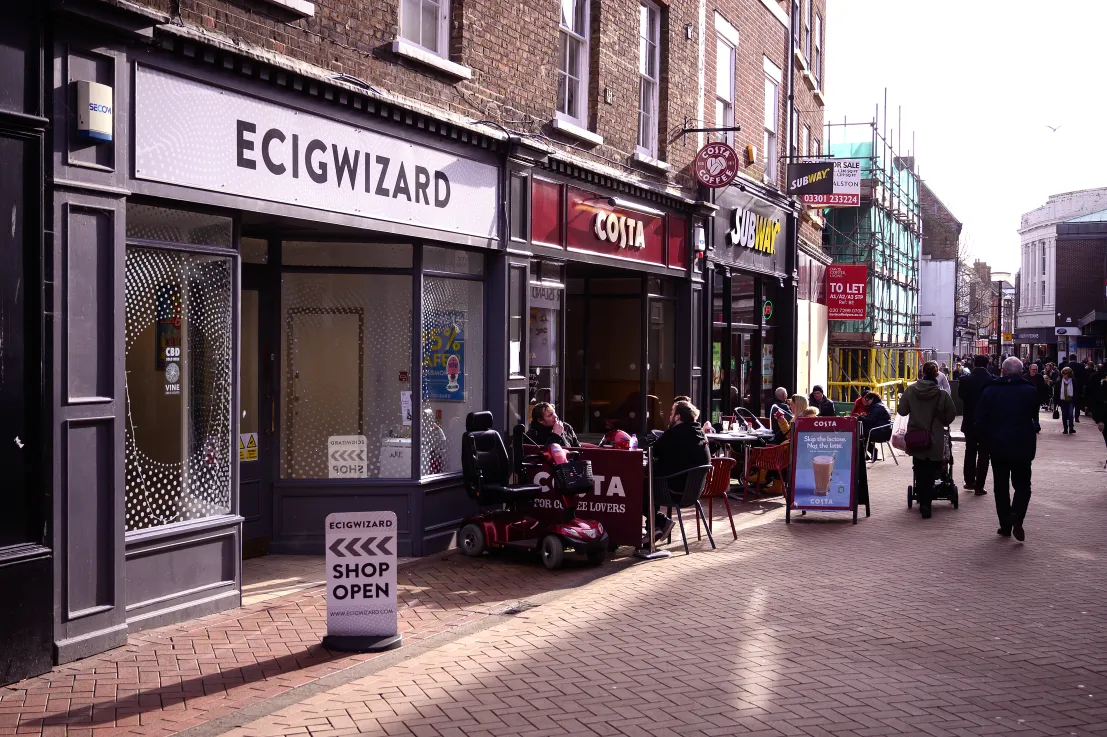
Andy Burnham is turning his attention to cleaning up Britain's high streets. Burnham, who has served as Mayor of Greater Manchester since 2017, has long positioned himself as a champion of northern England's economic revival. Commenting on the degradation of urban centres, he said that many areas have been "hollowed out" and that the high streets people grew up with are now "unrecognisable." According to Burnham, the proliferation of vape shops and betting shops is largely to blame — with the former frequently used as fronts for money laundering by organised crime groups.
The Prime Minister plans to hand local authorities new powers to block the opening of such businesses. Planning legislation will be amended so that every new shop selling e-cigarettes or vapes must apply to its local council for permission to operate. The definition of a vape shop will also be tightened to prevent businesses from sidestepping the rules by registering as a general convenience store or retailer. Building on a proposal first introduced under Keir Starmer's administration, new powers will extend closure orders for mini-marts and vape shops found selling illegal tobacco to up to 12 months. (gov.uk)
The rationale is understandable: most British high streets today leave much to be desired. The decline of the British high street has been a decades-long trend, accelerated by the rise of online retail, out-of-town shopping centres, and steadily rising overheads. Growing up in Camberwell, South-East London, the local high street already felt run-down — with its vandalised NatWest branch, a dilapidated Greggs, and a busy sexual health clinic. Walking through it now, amid clouds of synthetic blueberry drifting from garishly coloured vape shops and suspiciously empty phone repair counters, the grit of two decades ago feels almost quaint by comparison.
The Scale of the Problem
Data from the Financial Times paints a striking picture. Since 2015, the number of vape shops on British high streets has surged from 262 to 3,776. Barbershops have seen similar growth, rising from 2,953 to 18,078. Betting shops, interestingly, are in decline, dropping from 8,822 to 5,872 — a trend partly driven by the rise of online gambling platforms.
The issue is that many of these businesses are steeped in criminality. Cash-intensive retail operations have long attracted money laundering networks, as they provide a ready mechanism for mixing illicit funds with legitimate takings. A BBC investigation earlier this year discovered that several vape shops were selling illegal cigarettes, cocaine, cannabis, and prescription medicines over the counter. Following the exposé, six shops in Cradley Heath, Sandwell were shut down. Investigations into barbershops (Evening Standard) and American candy shops (LBC) have uncovered similar patterns. The common thread binding these enterprises is a sophisticated Kurdish organised crime network engaged in money laundering and harbouring illegal immigrants in squalid conditions.
Two Shortcomings
Burnham is right to take issue with this, and cracking down on these criminals is a worthy goal. However, his plan appears likely to fall short on two fronts.
First, there is the question of practicality. As both the Conservatives and Reform UK have pointed out, without cutting business rates across the board, the policy could leave high streets even more desolate, as no replacement businesses emerge to fill the vacancies left by shuttered shops. Business rates — the property tax levied on non-domestic premises in England and Wales — have been a persistent burden for high street retailers, frequently cited by shop owners and trade bodies as a primary driver of closures and a deterrent to new entrants.
Second is the lack of ambition. Empowering local authorities to close these shops does not address the root cause of the criminal activity. Without robust immigration reforms — both restricting entry and accelerating the removal of foreign criminals — criminal enterprises operating out of vape shops and similar fronts will continue to surface. A Prime Minister who publicly calls on Britons to "play their part" in accommodating migrants does not inspire confidence on this front.
The plan for Britain's high streets reflects broader concerns about the government: while Burnham, like his predecessor, talks a good game, his approach risks being characterised more by stunts than by substance.
