Trump Issues New Executive Orders Targeting Birthright Citizenship, Setting Up Second Supreme Court Showdown
Key Takeaways
- •President Trump issued two new executive orders representing a renewed attempt to restrict birthright citizenship after the Supreme Court ruled his previous order unconstitutional in June.
- •One executive order increases restrictions on foreign visitors seeking visas to give birth in the United States, targeting what the administration calls birth tourism.
- •The second order broadens existing exceptions to birthright citizenship to include children of foreign government employees and members of foreign governmental organizations.
- •Legal analyst Lisa Rubin warned the order could stretch exclusions to deny citizenship to children of parents allegedly affiliated with groups such as Tren de Aragua, a move she said disproportionately targets Latino immigrants.
- •Brown University Professor Corey Brettschneider stated the Supreme Court's June ruling left no room for the administration to revise its policy and that the new orders amount to a direct challenge to the Constitution itself.
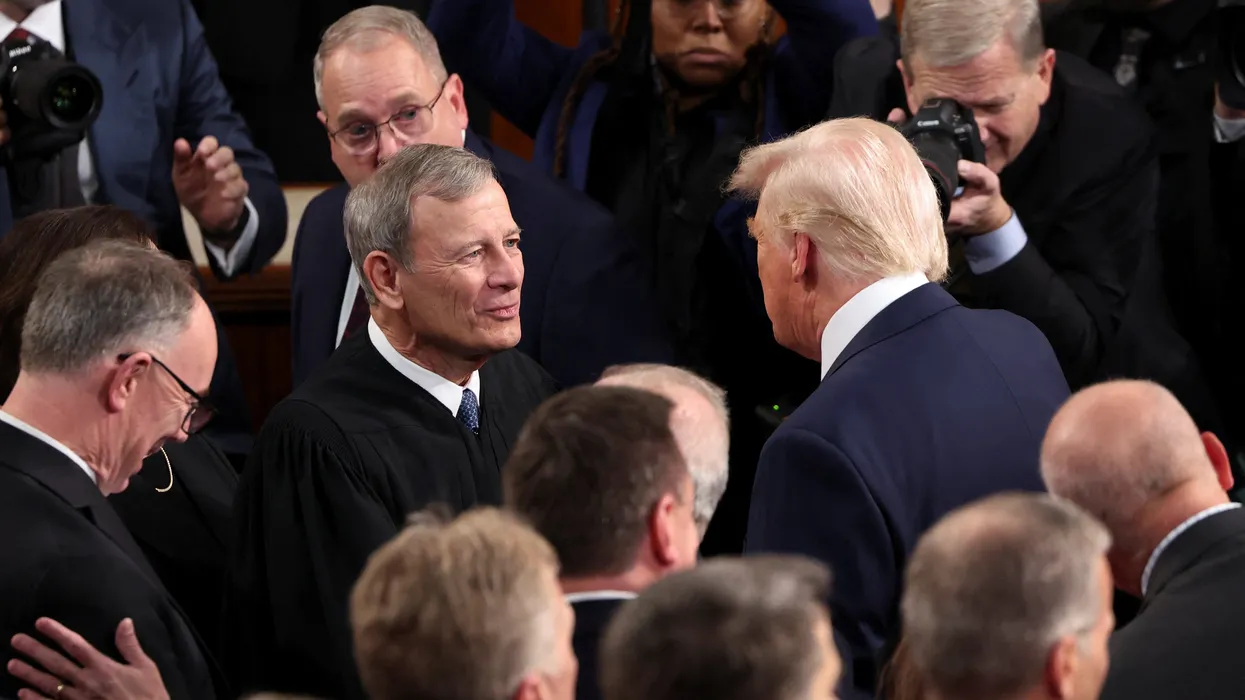
Legal analyst Lisa Rubin stated on Friday that President Donald Trump's latest action amounts to a direct challenge to the U.S. Supreme Court on an issue the justices have already decided.
Standing alongside advisor Stephen Miller this week, Trump announced two new executive orders that represent a second attempt to eliminate birthright citizenship. The Supreme Court ruled in late June that Trump's previous executive order on the matter violated the Constitution. That ruling affirmed one of the most established principles in American constitutional law: the Citizenship Clause of the 14th Amendment, ratified in 1868 in the aftermath of the Civil War, which states that "all persons born or naturalized in the United States, and subject to the jurisdiction thereof, are citizens of the United States." The Supreme Court first upheld birthright citizenship for children of non-citizens in the 1898 case United States v. Wong Kim Ark, a precedent that has governed for more than a century. Following a month of public criticism aimed at the high court over that ruling, the administration is renewing its effort.
MSNBC host Ali Vitali characterized the administration's approach as one of deliberate provocation: "trying to force the courts to decide on things, even if they know they're going to lose it. They want to be caught trying. They want to be caught trying to test the limitations of the office."
Former litigator and MSNBC legal correspondent Lisa Rubin concurred, noting that the Trump administration's posture has consistently been to "act first and ask for permission later."
The second executive order, as described by Rubin, "seeks to curb what Trump called 'birth tourism' by increasing restrictions on visitors to the U.S. who want to obtain visas to give birth while in the country." The official White House action can be found here.
While Rubin acknowledged that the birth tourism provision will face straightforward legal challenges, she cautioned observers not to "sleep on some of the other things" included in the orders.
"One of the exceptions to birthright citizenship is that we don't confer citizenship on the children of foreign sovereigns," Rubin explained. "Technically, that means like kings and queens and heads of state. What they've done through this executive order is enlarge it to any child born of a foreign government employee or a foreign governmental organization."
Rubin further noted that under existing U.S. policy, citizenship is not granted to children of hostile forces present in the country as part of an occupation. She said Trump "will stretch that to mean anyone born to a parent who, supposedly, is a member of a foreign terrorist organization like Tren de Aragua."
"That is an attack on immigrants, particularly from Latino countries in South America. And I don't think that will stand either," Rubin said.
Brown University Professor Corey Brettschneider observed that courts sometimes allow administrations room to revise a policy to bring it into compliance with the law, but he does not believe the Supreme Court's June ruling left such an opening.
"What's going on here is that they lost because they tried essentially to revoke the 14th Amendment to do something that they knew was contrary to the meaning of the Constitution," Brettschneider said. "And so they're trying to do it again. And I think actually with this administration, what really makes it different than previous administrations is that they head on with challenge, not just the courts, but the Constitution itself."
Brettschneider argued that the administration's underlying philosophy diverges from constitutional principles.
"They believe in something that is more aligned to a populist, soil-based idea that, you know, our nation is based in the ground or in place. But our nation is based in an idea," said Brettschneider. "And that's what the idea of everyone being equal, born in the United States. You are a citizen. That's what our Constitution says."
