New York AG Letitia James Leads Multi-State Lawsuit Against Trump Administration Over Bank Escrow Interest Rules
Key Takeaways
- •A coalition of ten state attorneys general led by New York and Oregon filed a 27-page lawsuit challenging OCC rules issued in May 2026 that would exempt national banks from state escrow interest laws.
- •The dispute centers on whether the OCC has legal authority to preempt state consumer protection statutes, particularly given restrictions Congress placed on such authority through the 2010 Dodd-Frank Act.
- •Multiple states including Oregon at 2.61 percent and California at 2 percent require banks to pay interest on mortgage escrow balances that homeowners fund for property taxes and insurance.
- •The states are not seeking monetary damages for homeowners but instead want a court declaration that the OCC rules are unlawful and an order requiring national banks to comply with state escrow interest statutes.
- •The Trump administration argues that freeing banks from escrow interest requirements would allow capital to benefit more borrowers, while critics contend banks would simply retain the profits from homeowner funds.
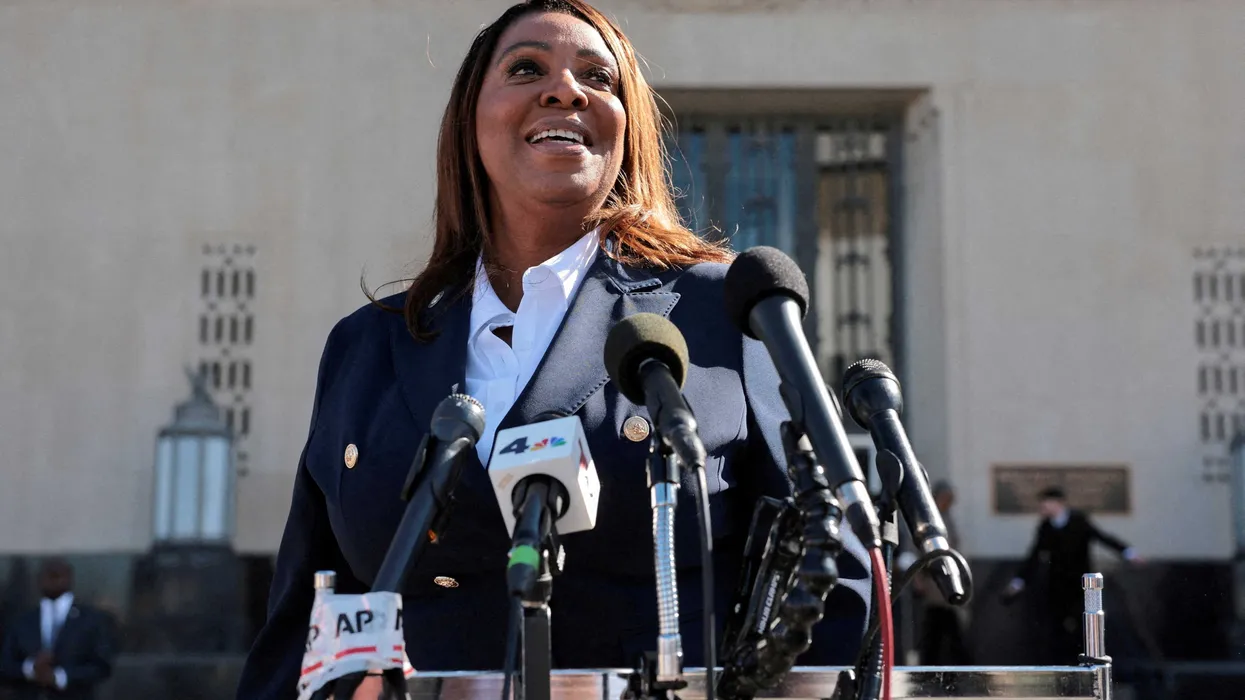
New York Attorney General Letitia James is once again challenging President Donald Trump's administration, this time taking aim at federal rules that would allow national banks to bypass state laws requiring interest payments on homeowner escrow accounts.
A coalition of ten state attorneys general, led by James and Oregon Attorney General Dan Rayfield, filed a 27-page lawsuit first reported by Law & Crime. The court filing alleges that the Trump administration is enabling big banks to avoid their obligations under state consumer protection laws — what the states describe as "predatory practices."
At the center of the dispute are mortgage escrow accounts. Each month, homeowners typically pay an additional amount alongside their mortgage payment, which the bank holds to cover property taxes and homeowners' insurance. However, the lawsuit contends that "lenders often required significantly larger deposits than necessary," enabling them to profit from funds belonging to homeowners. For many households, these escrow balances represent thousands of dollars held by banks over the life of a loan — funds that, under state laws, would generate modest but meaningful interest income for the homeowner rather than the lender.
Numerous states have enacted laws mandating that banks pay interest on these escrow balances. Oregon, for example, requires a 2.61 percent interest rate, while California mandates at least 2 percent. These state-level protections have existed for decades in various forms, reflecting a long-standing regulatory tradition of consumer oversight at the state level.
The Office of the Comptroller of the Currency (OCC), the federal regulator overseeing national banks, issued two new rules in May 2026 that would prevent state escrow interest laws from applying to national banks and federal savings associations. The move effectively draws a regulatory line between national banks, which operate under federal charters, and state-chartered banks, which would remain subject to state escrow statutes. The Trump administration contends that freeing banks from these requirements would allow capital to trickle down — potentially enabling banks to lend to more borrowers or reduce fees. Critics counter that banks could simply continue profiting from the interest on homeowners' funds.
The states argue that the OCC lacks the legal authority to override existing state statutes. The lawsuit asserts that the federal rule "exists solely as a pretext to manufacture a conflict between this new federal rule and state interest-on-escrow laws." The dispute centers on the boundaries of federal preemption — the legal doctrine that allows federal law to supersede state law in certain regulated areas. Congress narrowed the OCC's preemption authority through the Dodd-Frank Act of 2010, passed in response to the 2008 financial crisis, requiring the agency to meet specific legal standards before invalidating state consumer protection statutes.
The coalition is not seeking monetary damages on behalf of homeowners. Instead, the states are asking the court to declare the OCC's actions unlawful and require mortgage banks to comply with state interest-on-escrow laws. Any financial awards, the suit notes, should be allocated to attorneys' fees. The case is likely to turn on whether the court accepts the OCC's reasoning that national banks face a sufficient burden under state laws to justify federal preemption — an argument that has drawn mixed results in prior litigation involving banking regulation.
In a press release, James stated that the OCC's new rules "violate the law by exceeding critical limits that Congress placed on OCC's ability to preempt state consumer protection laws in the wake of the 2008 financial crisis."
"At a time when homeownership is more expensive than ever, the Trump administration is trying to make it even more costly with these unlawful rules," James continued. "Big banks and mortgage lenders should not be able to force homeowners to lock away significant amounts of money without paying interest. For decades, New York has prevented lenders from taking advantage of homeowners, and my office is taking action to defend our laws."
