SpaceX Satellite Data Center Ambitions Spark Debate Over Environmental Risks
Key Takeaways
- •SpaceX is considering plans to deploy up to 1 million satellites to establish space-based data center infrastructure, though the concept remains in early developmental stages.
- •The first test satellite for the proposed network is not expected to launch until 2027, providing a window for scientific study and regulatory discussion.
- •Scientists warn that aluminum oxide particles generated during satellite re-entry could contribute to ozone depletion, though the magnitude of the effect at projected scales remains uncertain.
- •SpaceX currently operates more than 6,000 active Starlink satellites as of 2024, demonstrating proven capability to manage large-scale satellite constellations.
- •Scaling a network to hundreds of thousands or millions of spacecraft would require regulatory approval from the FCC and international coordination through the International Telecommunication Union for spectrum allocation.
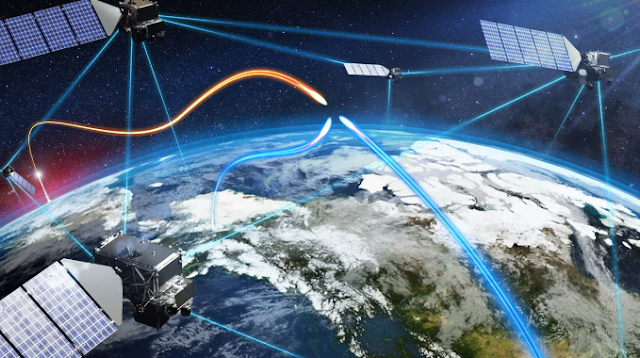
SpaceX Satellite Data Center Ambitions Spark Debate Over Environmental Risks
SpaceX's ambitious vision for expanding space-based infrastructure has ignited a scientific debate following concerns raised by researchers regarding the environmental consequences of deploying a massive constellation of satellites designed to support future data center operations in orbit.
According to reports, SpaceX is exploring plans that involve up to 1 million satellites to provide computing capabilities from space, potentially creating a large-scale orbital data network unlike anything previously attempted. While supporters argue that space-based computing could revolutionize global connectivity, artificial intelligence infrastructure, and cloud services, some scientists warn that such an immense satellite deployment could introduce unprecedented challenges for Earth's atmosphere.
Researchers have expressed particular concern over the materials released when satellites eventually return through the atmosphere and burn up during re-entry. As satellites are destroyed by atmospheric friction, components made from aluminum and other metals vaporize and enter the upper atmosphere. Recent studies published in peer-reviewed journals have suggested that aluminum oxide particles produced during satellite re-entry could contribute to ozone depletion, though the magnitude of the effect at projected constellation scales remains under investigation. Scientists note that the long-term effects of releasing these materials on a massive scale remain uncertain. The discussion has garnered international attention after being referenced by the X account @coinbureau (https://x.com/coinbureau/status/2082625722540241345), adding to broader conversations about the environmental impact of the rapidly expanding space economy.
SpaceX's Early-Stage Plans and Starlink's Expansion
Despite these environmental concerns, SpaceX's reported satellite data center concept remains in its early stages, and the company has not yet launched a prototype system for the proposed network. According to reports, the first test satellite is not expected until 2027, giving researchers time to study potential environmental impacts before any large-scale deployment begins. SpaceX has not publicly confirmed a final timeline or detailed architecture for a million-satellite data center network.
SpaceX already operates one of the world's largest satellite constellations through Starlink, which provides broadband internet services globally. With more than 6,000 active satellites in orbit as of 2024, Starlink has successfully demonstrated the technical ability to deploy and manage thousands of satellites at unprecedented scale. However, scaling a network to hundreds of thousands or millions of dedicated spacecraft would represent a monumental expansion — one that would require not only regulatory approval from bodies such as the U.S. Federal Communications Commission, which licenses satellite communications domestically, but also international coordination through the International Telecommunication Union for radio spectrum allocation.
The Shift to Orbital Infrastructure and AI Demand
The concept of building large-scale infrastructure in orbit represents a significant shift in how technology companies approach computing and communications. Traditionally, data centers have been constructed on Earth, demanding enormous amounts of electricity, cooling systems, and physical space. However, advances in satellite technology, reusable rockets, and artificial intelligence have encouraged companies to explore alternative approaches.
A space-based data center network could offer distinct advantages, including comprehensive global coverage, reduced dependence on terrestrial infrastructure, and the ability to process information closer to where satellite networks operate. For companies involved in AI and cloud computing, access to additional computing capacity has become increasingly critical. The rapid growth of AI models requires immense processing power, driving demand for new approaches to computing infrastructure. AI systems rely on massive computing resources, encompassing advanced processors, data storage, and energy infrastructure. Microsoft and Amazon have also reportedly explored concepts for space-based or edge computing in orbit, reflecting growing industry interest in moving data processing closer to satellite data sources.
Space-based data centers have been proposed as a potential future solution because satellites could theoretically operate using solar power without the physical limitations faced by Earth-based facilities. Supporters argue that orbital computing could become an integral part of future digital infrastructure, while critics maintain that the environmental consequences must be rigorously studied before any large-scale deployment proceeds.
Atmospheric Consequences of Satellite Disposal
The primary concern raised by researchers revolves around the environmental impact of satellite disposal. Most satellites eventually reach the end of their operational lives and re-enter Earth's atmosphere. During re-entry, intense heat causes spacecraft materials to break apart and vaporize.
Scientists studying atmospheric chemistry worry that large numbers of satellites could introduce significant quantities of metals and other compounds into atmospheric regions where they have not historically existed at such levels. Satellites contain various materials necessary for electronics, structural components, solar panels, and communication systems. When spacecraft burn up during atmospheric re-entry, these materials can transform into microscopic particles or chemical compounds, including aluminum oxide nanoparticles that have been shown in laboratory studies to catalyze ozone-destroying reactions.
Potential concerns include alterations to atmospheric chemistry, effects on ozone-related processes, and unknown impacts on climate systems. Researchers emphasize that the exact consequences remain uncertain because no previous period in human history has involved satellite re-entry at this magnitude. The challenge lies not in the existence of satellite re-entry itself, but in the dramatic increase in the volume of material introduced into the atmosphere.
Furthermore, researchers point out that the scale of future satellite deployments is dramatically larger than previous generations of space activity. Traditional satellite launches involved relatively limited numbers of spacecraft. In contrast, plans involving hundreds of thousands or millions of satellites present a completely different environmental scenario, making the potential accumulation of artificial materials in the upper atmosphere an area requiring extensive research.
The Growing Debate Around Space Sustainability
The concerns surrounding SpaceX's plans are part of a larger debate over the rapid proliferation of satellite constellations. In recent years, commercial satellite networks have expanded dramatically as companies seek to provide global internet access, Earth observation services, navigation capabilities, and communication systems. These networks have delivered significant benefits, including improved connectivity in remote areas and expanded access to digital services. Beyond SpaceX, companies such as Amazon with its Project Kuiper constellation and OneWeb have accelerated the deployment of low-Earth-orbit satellite networks, intensifying the overall volume of spacecraft and re-entry events.
However, astronomers, environmental scientists, and space policy experts have raised concerns about the increasing number of objects placed into orbit. Key issues include space debris, interference with astronomical observations, and the long-term sustainability of Earth's orbital environment. The FCC has begun requiring satellite operators to submit disposal plans as part of licensing applications, and the U.S. government has adopted orbital debris mitigation standards, though enforcement mechanisms remain limited. This ongoing debate underscores the challenge of balancing technological progress with the responsible management of space resources.
As commercial activity in space intensifies, sustainability has emerged as one of the most critical topics facing the industry. Governments, scientists, and private companies are increasingly focused on developing responsible approaches to satellite operations, which includes improving satellite design, creating better disposal methods, reducing debris risks, and understanding environmental impacts. International organizations including the United Nations Committee on the Peaceful Uses of Outer Space have stressed the importance of maintaining space as a safe and sustainable environment for future generations.
SpaceX's Influence and Environmental Responsibility
SpaceX has established itself as one of the most influential companies in the modern space industry. Founded by Elon Musk, the company has revolutionized rocket technology through its reusable launch systems and significantly increased the frequency of space missions. Its Falcon rocket program and Starlink satellite network have fundamentally reshaped expectations regarding commercial access to space. The company's expansion has spurred broader investment in space technology, including satellite communications, launch services, and orbital infrastructure.
However, SpaceX's unprecedented scale has placed it at the center of discussions concerning how humanity manages increasing activity beyond Earth. Experts emphasize that responsible development requires collaboration between companies, governments, and scientific communities. Innovation frequently introduces new possibilities but also generates novel risks that require careful evaluation. Artificial intelligence, cloud computing, and space infrastructure all demand significant resources and can yield unintended consequences.
Before deploying extremely large satellite networks, researchers believe additional studies must examine atmospheric effects, material disposal, and long-term environmental consequences. The objective is not to hinder technological progress, but to ensure that expansion is managed responsibly. Companies developing large satellite networks face growing expectations to incorporate environmental factors into their long-term planning, and SpaceX's visibility as an industry leader means its design and disposal choices are likely to influence broader industry practices.
Future Research and Looking Ahead
Scientists stress that further research is essential to determine the true environmental impact of large-scale satellite networks. While current models offer estimates, the unprecedented scale of proposed constellations introduces significant uncertainty. Future prototype missions could yield valuable data regarding satellite materials, re-entry behavior, and atmospheric interactions. These findings could assist regulators and companies in establishing improved guidelines for future space operations. Additionally, the development of advanced monitoring technologies may enable scientists to track changes in atmospheric conditions as commercial space activity continues to expand.
SpaceX's reported plans for a massive satellite-based data center network stand as one of the most ambitious concepts in the future of space technology. The prospect of deploying up to 1 million satellites has generated enthusiasm among technology advocates who anticipate significant benefits for global computing and connectivity. Simultaneously, scientists warn that the environmental consequences of such a large-scale deployment demand thorough investigation. Concerns surrounding vaporized metals from satellite re-entry highlight the urgent need for additional research before orbital infrastructure expansion reaches unprecedented levels.
With the first test satellite reportedly not expected until 2027, there is a window for further scientific analysis and regulatory discourse. As humanity navigates a new era of commercial space activity, the primary challenge will be striking a balance between technological innovation and the protection of Earth's atmosphere for future generations.

