Real Yields Surge: TIPS 30-Year Up 55 bps, 10-Year Up 69 bps Since Start of US-Iran War
Key Takeaways
- •The 30-year TIPS yield has risen 55 basis points since the US-Iran War began.
- •The 10-year TIPS yield has increased 69 basis points over the same period.
- •TIPS yields strip out expected inflation, meaning their sustained rise signals greater investor demand for compensation on long-duration government debt apart from inflation concerns.
- •Real yields at the 10- and 30-year maturities act as benchmarks for borrowing rates across the economy, so increases can raise real financing costs for households and businesses.
- •Higher real rates reduce the present value of future cash flows, which can weigh on valuations of equities and other risk assets.
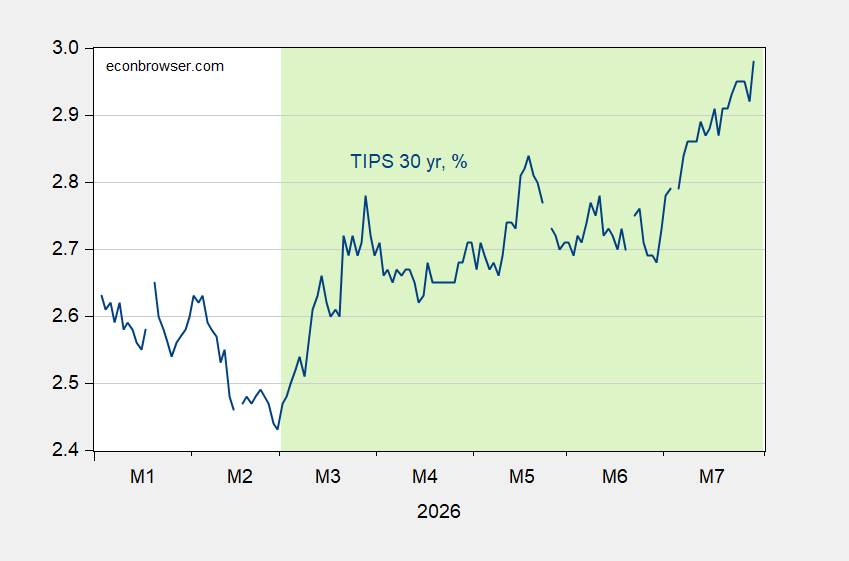
Treasury Inflation-Protected Securities (TIPS) yields have risen sharply since the onset of the US-Iran War, reflecting a notable shift in inflation-adjusted borrowing costs across long-dated maturities.
Since the War's start, the 30-year TIPS yield has climbed 55 basis points, while the 10-year TIPS yield has increased 69 basis points.
TIPS are US government bonds whose principal is adjusted for changes in the Consumer Price Index (CPI), meaning their yields represent real, or inflation-adjusted, returns for investors. Movements in TIPS yields are widely monitored as an indicator of real interest rate expectations and broader macroeconomic conditions. Because TIPS yields strip out expected inflation, sustained increases are often read as a signal that investors are demanding greater compensation for holding long-duration government debt, independent of any rise in inflation expectations.
Rising real yields at the 10- and 30-year maturities matter beyond the Treasury market itself. They serve as benchmarks for a wide range of borrowing rates across the economy, including mortgages, corporate bonds, and other long-term credit, meaning that sustained increases can translate into higher real financing costs for households and businesses. Sharp moves in real yields also feed into discount-rate frameworks used to value equities and other risk assets, as higher real rates reduce the present value of future cash flows.
The data is sourced from the US Treasury Department.
- Figure 1: TIPS 30-year yield (%), shown in blue. Green shading denotes the US-Iran War period. Source: Treasury.
- Figure 2: TIPS 10-year yield (%), shown in blue. Green shading denotes the US-Iran War period. Source: Treasury.
The article was published by Econbrowser on July 30, 2026, and can be accessed at its original URL.

