HRAS Report Warns of 'Grave Miscarriage of Justice' in Phoenician M Cocaine Convictions
Key Takeaways
- •Türkiye's Karadeniz Ereğli High Criminal Court sentenced Albokhari and Bekavac to 30 years in prison each in September 2024, with the terms reportedly extended to 33 years after their TRY200,000 fines went unpaid.
- •Human Rights at Sea reports there was no fingerprint, communications, surveillance, or witness evidence linking Albokhari to the cocaine, arguing his liability was inferred mainly from his roles as chief officer and ship security officer.
- •The report questions the evidentiary link between the 137 kg of cocaine found in Colombia and the 101.5 kg allegedly recovered in Türkiye, citing Colombian inspection records never presented to the court and missing chain-of-custody documentation.
- •Albokhari is the only crew member still imprisoned nearly three years after his arrest; the Court of Cassation upheld his conviction 3-2, with two dissents and a reported recommendation from the Chief Public Prosecutor's Office to reverse it.
- •HRAS calls for independent examination of the missing evidence, continued Finnish and Croatian diplomatic intervention, engagement by Interpol and the UN Working Group on Arbitrary Detention, and possible recourse to the European Court of Human Rights if domestic remedies fail.
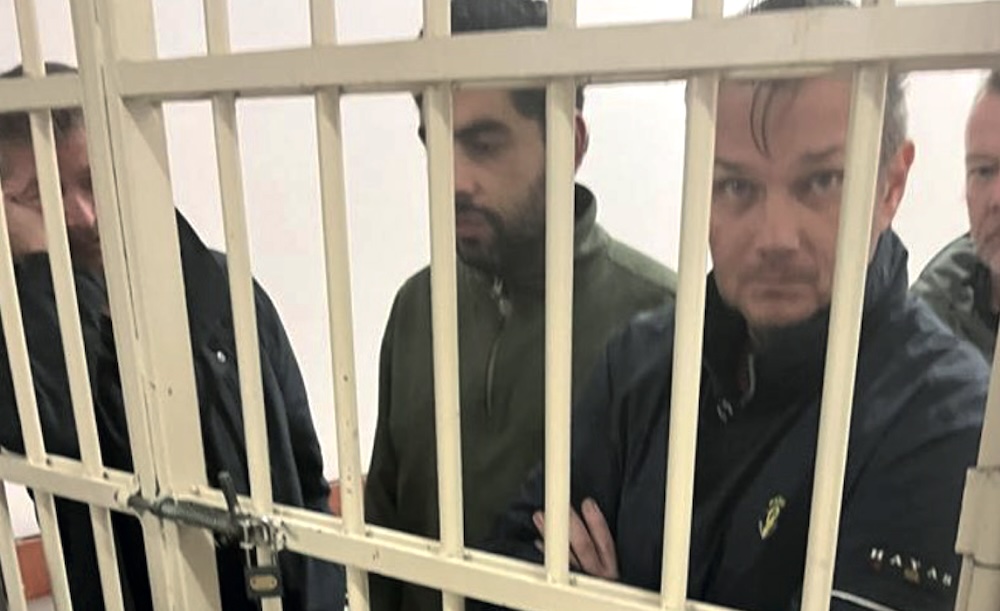
A new independent report is calling for urgent international intervention in the case of two senior seafarers convicted of drug trafficking in Türkiye, arguing that serious gaps in the evidence raise the prospect of a "grave miscarriage of justice".
Human Rights at Sea (HRAS) has examined the convictions of chief officer Ali Albokhari, a Syrian-born Finnish citizen, and Croatian captain Marko Bekavac. Both were serving aboard the Panama-flagged bulk carrier Phoenician M when cocaine was discovered in Colombia and later allegedly found in Türkiye in 2023.
The 46-page report identifies three central concerns: missing cross-border evidence, an unverified chain of custody surrounding the alleged Turkish drugs seizure, and what it describes as reliance on the officers' command positions without clear evidence that either man knew of or participated in the trafficking operation.
Albokhari remains imprisoned in Türkiye nearly three years after his arrest. HRAS brought publication of the report forward amid new claims from his family that prison authorities have intensified threats to transfer him to Finland as a convicted prisoner to serve his now 33-year sentence. The organisation argues that repeatedly threatening such a transfer while legal attempts to overturn the conviction remain underway is causing severe psychological distress and may amount to mental torture.
The case began at Barranquilla, Colombia, in September 2023, when Colombian authorities discovered a reported 137 kg of cocaine in the vessel's aft peak tank around the steering gear compartment. The packages bore the emblem of Turkish football club Kayserispor. Crew statements were taken, but nobody aboard was arrested. After a meeting with the harbour authorities and an underwater inspection, Phoenician M was cleared to leave Colombia for Türkiye. HRAS says crucial Colombian inspection records were never put before the Turkish court.
On reaching Ereğli on Türkiye's Black Sea coast in early October, Turkish authorities initially searched the vessel without finding drugs. During subsequent coal discharge operations, however, bags and packages containing a reported 101.5 kg of cocaine were allegedly recovered from areas associated with cargo hold No.2 and shoreside cargo handling.
This, according to HRAS, is one of the largest holes in the case. The organisation says it has not seen the forensic report, photographs, exhibit register or chain-of-custody documentation needed to verify exactly where the Turkish drugs were recovered, or to establish continuity between the substances allegedly found and the vessel. That lack of documentation, HRAS argues, makes it difficult to assess how the Colombian discovery and the later Turkish seizure were connected in evidentiary terms.
Ten of the 20 crew members were arrested. On September 16, 2024, the Karadeniz Ereğli High Criminal Court sentenced Albokhari and Bekavac to 30 years in prison and fined each TRY200,000 ($4,171). The other eight defendants were acquitted. According to the report, the two sentences were subsequently extended to 33 years following non-payment of the fines, although HRAS notes that it has not seen the primary decision confirming the legal basis and present effect of that extension.
Bekavac spent nearly two years imprisoned before unexpectedly being returned to Croatia in August last year following diplomatic intervention. He remains convicted in Türkiye and, according to HRAS, faces restricted employment options and concerns over travelling internationally.
Albokhari is now the only member of the crew still behind bars. His legal team is pursuing an extraordinary remedy under Article 308 of Türkiye's Criminal Procedure Code. The Court of Cassation upheld his conviction by a 3-2 majority, but two judges dissented, and the Chief Public Prosecutor's Office had reportedly recommended that the conviction be reversed.
The defence petition argues that Turkish investigators failed to obtain Colombian records, did not properly investigate the original intelligence behind the Turkish operation, failed to hear key police and port witnesses, and did not properly examine digital evidence. In a case built across two jurisdictions, those gaps are central because they affect not only what was found, but whether the court had a complete record of how and where the evidence moved.
HRAS also highlights the absence of direct forensic evidence linking Albokhari to the cocaine. The report says there was no fingerprint evidence, communications evidence, surveillance evidence or witness testimony establishing his participation in a trafficking operation. Instead, the defence argues, criminal liability was inferred principally from his role as chief officer and ship security officer.
The case has a Turkish precedent. In 2020, 31 kg of cocaine was discovered in a magnetically attached underwater "torpedo" on the Panama-flagged capesize Shandong De Rui, which had also carried coal from Colombia to Türkiye. Its captain and chief officer were sentenced to 30 years.
After more than four years in detention, Türkiye's Criminal General Assembly overturned the convictions in January 2025, finding that prosecutors had failed to prove beyond reasonable doubt that the two officers participated in importing the drugs. The court accepted that professional third parties could have attached the cocaine externally without the crew's knowledge, and ruled that rank alone was insufficient to establish criminal responsibility.
HRAS stresses that the Phoenician M case is factually different, but argues that the precedent raises important questions over how Turkish courts distinguish a seafarer's operational responsibility from personal criminal intent.
The report calls for the missing Colombian and Turkish evidence to be disclosed and independently examined, for continued Finnish and Croatian diplomatic intervention, and for engagement by Interpol and the UN Working Group on Arbitrary Detention. It also says recourse to the European Court of Human Rights should be considered if domestic remedies are exhausted.

