Uzbekistan at 35: The Case for Making Tashkent the Anchor of U.S. Central Asia Policy
Key Takeaways
- •Uzbekistan has pursued major economic reforms since 2016, including foreign-exchange liberalization, lower trade barriers, and improved ties with neighboring states.
- •Real GDP grew 7.7% in 2025, while the IMF reported 8.7% year-over-year growth in the first quarter of 2026.
- •Moody’s upgraded Uzbekistan’s long-term sovereign rating from Ba3 to Ba2 in June 2026, citing budget deficit reduction, and said the move should lower external debt servicing costs.
- •The United States and Uzbekistan launched a joint investment platform at the Tashkent International Investment Forum, which drew 193 U.S. firms.
- •The article argues that Washington should support Uzbekistan’s WTO accession, expand development finance and investment, and treat the country as a key partner in Central Asia.
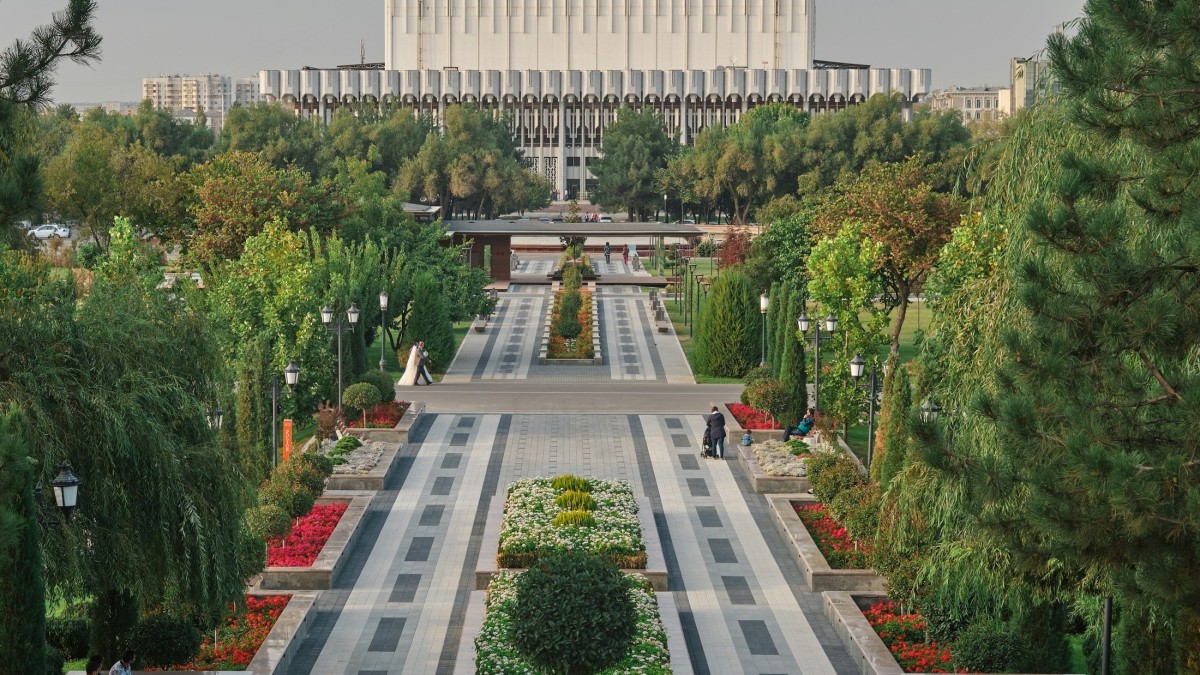
When Uzbekistan marks 35 years of independence on September 1, Washington should do more than congratulate its people and government, argues James Durso. It should recognize a strategic opportunity and make Uzbekistan the anchor of its policy in Central Asia.
Uzbekistan is Central Asia's most populous country, strategically located between Russia, China, Iran, Afghanistan, and the Caspian Sea. It is opening its economy, improving relations with its neighbors, and seeking greater integration with global markets — a remarkable transformation for a state that spent its first decades as one of the world's most isolated economies.
From Soviet Inheritance to Reform
When Uzbekistan became independent in 1991, it inherited the rigid institutions of the Soviet Union. Its conservative government emphasized stability and state control as it dealt with internal security challenges, and for years the country remained one of the world's most isolated economies.
Transformation began in earnest after Shavkat Mirziyoyev became president in 2016. Uzbekistan liberalized its foreign-exchange regime — arguably Mirziyoyev's single most consequential decision — reduced trade barriers, encouraged foreign investment, and dramatically improved relations with its Central Asian neighbors, mostly by quickly resolving longstanding border disputes. Those changes also made Uzbekistan a more practical point of engagement for outside investors and governments looking for a stable partner in a region long shaped by transit bottlenecks and overlapping great-power interests.
The country is pursuing membership in the World Trade Organization (WTO) and has committed to completing the accession process in 2026. In January 2026, Uzbekistan joined President Trump's Board of Peace. Presidents Trump and Mirziyoyev meet and speak regularly, most recently in July 2026, on the progress of their joint economic cooperation program.
Economic Momentum
The economic results are increasingly impressive. Real gross domestic product (GDP) grew 7.7% in 2025, and the International Monetary Fund reported 8.7% year-over-year growth in the first quarter of 2026. Investment surged to US$43 billion in 2025, up 24% from 2024, most of it foreign direct investment (FDI).
In June 2026, Moody's upgraded Uzbekistan's long-term sovereign credit rating from Ba3 to Ba2, with a significant consideration being the "systematic contraction of the national budget deficit" to 2% of GDP. As a result, Uzbekistan will "reduce external debt servicing costs by $250-300 million per year," according to The Tashkent Times.
The recent Tashkent International Investment Forum (TIIF) drew 193 U.S. firms, including Boeing, JPMorgan Chase, Citibank, BlackRock, Visa, Meta, Air Products, and Franklin Templeton. If agreements are formalized in the coming months, Uzbekistan's FDI for 2026 will continue its upward march.
During the forum, the United States and Uzbekistan launched the U.S.–Uzbekistan Joint Investment Platform, a joint project of the U.S. International Development Finance Corporation, the Export-Import Bank of the United States, and the Uzbekistan Fund for Reconstruction and Development. The platform aims to identify and support strategic investment projects in Uzbekistan that align with U.S. and Uzbek economic and strategic interests, boosting the American presence in an area courted by Beijing. Tashkent also announced at the forum that it would incorporate recommendations from foreign investors into its reform roadmap, a move expected to increase the international community's confidence in the reform and transformation program.
American financial firms are finding key opportunities in Uzbekistan. Franklin Templeton manages Uzbekistan's National Investment Fund and assisted with the fund's listing on the London Stock Exchange in May 2026. In 2026, President Mirziyoyev and Uzbek officials held ongoing discussions with BlackRock regarding joint-investment mechanisms, privatization, and the development of Uzbekistan's financial markets.
Geography as Leverage
Geography gives Tashkent leverage. Uzbekistan borders every other Central Asian state and Afghanistan. Its population is approaching forty million — 52% under 30 years old — making it the region's largest potential market and labor force. It sits astride transport routes connecting China and Europe, the Caspian with Central Asia, and, potentially, the region with South Asian markets and the Persian Gulf.
For Washington, this matters enormously. The United States has long talked about resilient supply chains and alternatives to economic dependence on China and Russia. Central Asia now offers an opportunity to turn those words into action.
The objective should not be to force Uzbekistan to choose Washington over Beijing — a challenge for an America that demands absolute loyalty from its friends. Instead, a mature Washington will ensure Tashkent has choices, because a country with multiple trading partners, transportation corridors, sources of investment, and diplomatic relationships is much harder for any outside power to dominate.
China understands Uzbekistan's importance. Chinese companies and financing are deeply involved in Central Asian infrastructure and trade. In 2025, China's Belt and Road investment in the region rose 375%, on top of a 1,044% increase in 2024. In June 2026, China's Foreign Minister, Wang Yi, advocated for security cooperation and more industrial cooperation with Tashkent.
The United States brings assets Uzbekistan wants: advanced technology, capital, management expertise, financial services, higher education, and experience building competitive private markets. Washington should use positive economic statecraft — commercial diplomacy, the U.S. International Development Finance Corporation, and the Export-Import Bank — to make those assets more accessible. The best way to compete with China's influence is not to tell Uzbekistan to reject China or use sanctions to coerce behavior. A winning strategy gives Uzbekistan an attractive alternative that embodies what America preaches to the world: choice, transparency, and competition.
Critical Minerals as Shared Opportunity
Uzbekistan's mineral resources make the economic relationship even more compelling. The country has significant deposits of gold, copper, uranium, and other minerals. As Washington seeks to diversify critical-mineral supply chains, Uzbekistan deserves serious attention from American investors.
In February 2026, the United States and Uzbekistan established a critical-minerals partnership, including a framework for up to US$400 million in investment in the two countries. Washington should also think beyond extraction and consider how American investment can help Uzbekistan move up the value chain by developing sustainable processing, refining, and manufacturing capabilities. That would create Uzbek jobs, strengthen American supply chains, and give Tashkent an economic stake in maintaining diversified relationships with the West.
Connectivity Is Security
The United States should continue supporting development of the Trans-Caspian International Transport Route, the "Middle Corridor," which offers Central Asia an alternative route to European markets that does not rely on Russian territory. Improved connections with South Asia should be encouraged when security conditions permit, even if those connections require cooperation with Afghanistan and Iran.
The goal is straightforward: more roads, railways, ports, and markets mean more sovereignty. Connectivity is not simply an economic-development issue but a geopolitical asset that can change countries from landlocked to land-linked.
Uzbekistan's Unresolved Challenges
Uzbekistan still has challenges, and a credible American policy cannot ignore its shortcomings.
The state still dominates the economy. The World Bank reported that Uzbekistan had more than 2,000 centrally held state-owned enterprises in 2020, with revenues equivalent to 32% of GDP; four out of five operated in sectors where private firms could compete more effectively. The solutions are easy to describe but hard to execute: privatization, without social dislocation, needs to accelerate; monopolies need to be broken up; and the private sector needs greater freedom to compete.
For decades, Uzbekistan was notorious for systemic forced labor and child labor in cotton production, which was the most important part of the economy. The International Labour Organization now reports substantial progress, including the elimination of forced labor and child labor in the cotton harvest, though labor-rights problems remain, including concerns about the treatment of farmers and the implementation of labor protections.
Political reform is another unfinished task. Opposition parties face significant obstacles, while independent media and civil society remain constrained. The government's handling of the 2022 Karakalpakstan unrest also remains controversial.
These issues should be raised with Tashkent, but Washington needs to restrain its impulse to demand political perfection and social reorganization as the price for strategic cooperation — especially after a former Al-Qaeda leader was publicly welcomed to the White House by President Trump.
America can pursue two objectives simultaneously: strengthen the U.S.-Uzbek relationship and encourage political reform. Economic liberalization itself can strengthen the foundations of a healthy democracy, because investors and entrepreneurs need predictable laws, secure property rights, and trustworthy courts. The appropriate policy is engagement with clear expectations, not disengagement disguised as lofty principle, which would cede the playing field to Russia and China, who will take a more practical approach.
A Policy Agenda for Washington
The Trump administration has an opportunity to put Central Asia on a more strategic footing. A good first step is updating the U.S. government's Central Asia policy, drafted in 2019, which does not reflect the increased engagement between the United States and the republics — though the administration's September 2025 "Report to Congress on A Strategy Regarding United States Interests in Central Asia" is a good first draft.
Central Asia is not a static entity. The Central Asian republics, the "C5," are now the "C6" as Azerbaijan becomes part of regional structures — logical, given that Kazakhstan and Turkmenistan also border the Caspian Sea. Uzbekistan and Azerbaijan are forming a US$10 billion joint investment fund to support projects between enterprises in both countries and are collaborating in shipbuilding that will support trade via the Middle Corridor.
Washington should establish sustained, high-level strategic dialogue with Tashkent, including the American-Uzbek Business and Investment Council; repeal the Jackson-Vanik Amendment, a Cold War relic that blocks permanent normal trade relations with Uzbekistan; support Uzbekistan's WTO accession; encourage American investment; expand development finance for commercially sound projects involving critical minerals, energy, transportation, and advanced manufacturing; expand educational and technological exchanges; and strengthen cooperation in law enforcement, border security, and counterterrorism.
U.S. Secretary of State Marco Rubio intends to visit all the Central Asian republics in 2026 — an excellent opportunity to prepare for a visit by President Trump, who would be the first American president to visit any of the republics.
A History of Cooperation
Most important, Washington should stop viewing Central Asia as a collection of former Soviet republics and recognize Uzbekistan as an emerging regional power — a capable partner that will pursue its national interests while sharing America's interest in sovereignty, diversified supply chains, open markets, and regional stability.
When America needed help, Uzbekistan extended a hand: it gave U.S. forces access to an airbase shortly after the 9/11 attacks and hosted a leg of the Northern Distribution Network, the lifeline for NATO troops after Pakistan cut off overland supply routes.
The United States and Uzbekistan have agreed to an economic cooperation program, a multi-year package of deals, commitments, and cooperation initiatives in energy, critical minerals, transport, agriculture, and information technology worth almost US$35 billion. It is an ambitious undertaking, but the leaders' goals — revitalized manufacturing in America and economic autonomy for Uzbekistan — are worth pursuing in Eurasia, the hinge of two great civilizations.
Tashkent still has work to do. The economy needs more competition. Political institutions need greater independence, and civil society needs more room to operate. But the country is traveling in the right direction. Thirty-five years after independence, Uzbekistan is opening to the world, growing rapidly, and asserting itself as a regional power.
America should meet that ambition with an ambition of its own and make Uzbekistan the anchor of its Central Asia strategy — not to contain China, confront Russia, create a new military alliance, or remake Uzbekistan in America's image. Washington should strive to help create something far more useful to American interests: a prosperous, independent Uzbekistan with the economic and diplomatic freedom to say yes — or no — to every great power.
By James Durso for Oilprice.com

