Chinese Startups Dominate Humanoid Robotics Patent Rankings, LexisNexis Analysis Finds
Key Takeaways
- •Six of the top ten private humanoid robotics patent portfolios belong to Chinese companies, with Shanghai-based Fourier ranking first overall.
- •The LexisNexis ranking covers only privately held firms, excluding major public companies such as Tesla and its Optimus robot program.
- •Chinese inventors increased patent activity across all three core technology areas over the past decade, with control and planning architectures showing approximately fivefold growth.
- •Industry forecasts project the humanoid robotics market could generate between $38 billion and $200 billion in annual revenue by 2035, with Goldman Sachs predicting production of 1.4 million units that year.
- •Analyst Lian Jye Su of Omdia cautioned that patents alone do not ensure commercial success, noting that embodied AI capabilities and manufacturing scale will be the decisive competitive factors.
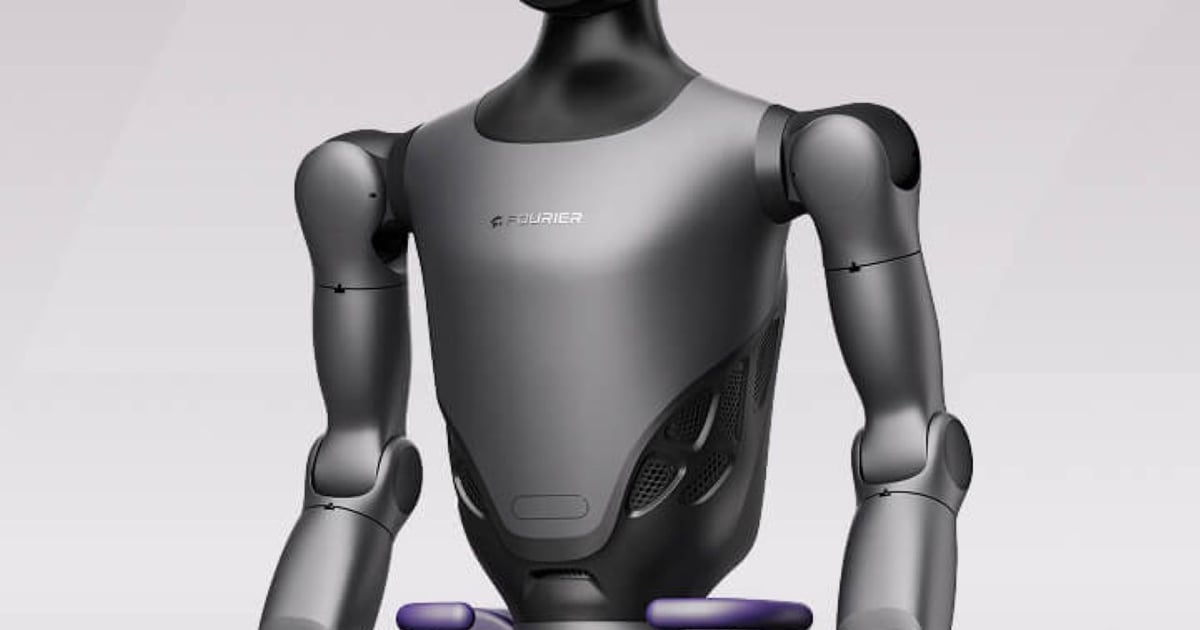
Chinese companies hold six of the world's ten strongest private humanoid robotics patent portfolios, according to a new analysis from LexisNexis Intellectual Property Solutions.
Using its proprietary patent index, LexisNexis evaluated privately held companies that have developed bipedal humanoid robots, assessing both the size and quality of their patent holdings across three key technology areas: interaction systems, morphology, and control and planning architectures. The restriction to private firms means the ranking excludes publicly traded corporations with major humanoid programs — notably Tesla, which is developing its Optimus robot — positioning the list as a competitive snapshot of the startup sector rather than the industry at large.
Shanghai-based Fourier claimed the top position, followed by Agibot and LimX Dynamics. Pudu Robotics, Unitree Robotics, and Leju Robotics also placed in the top ten. Germany's Agile Robots and U.S. firms Figure AI, Apptronik, and Agility Robotics completed the ranking.
The results emerge amid growing investor interest in humanoid robotics as a significant commercial opportunity. Industry forecasts cited by LexisNexis project that the market could generate between $38 billion and $200 billion in annual revenue by 2035, with Goldman Sachs forecasting production of 1.4 million humanoid robots that year.
While public attention has largely centered on increasingly sophisticated robot demonstrations — spanning warehouse automation, industrial inspections, sporting competitions, and household tasks — LexisNexis contends that underlying intellectual property may offer a more meaningful indicator of future competitive advantage.
Some analysts, however, caution against placing excessive weight on patent counts alone.
"A patent does matter in the long run when there is widespread adoption of the patented technologies," said Lian Jye Su, an analyst at Omdia, a division of Informa TechTarget. "Until that happens, the lead is merely reflective of the investment in frontier R&D. It is generally challenging to translate pure R&D results into commercial outcomes."
Su also observed that not all patent categories carry equal weight in determining which companies will ultimately prevail.
"Embodied AI will be most important, given its critical role in the overall system decision-making process," Su said. "This is followed by locomotion, as robots must be able to move around in an efficient and safe manner."
China's Expanding Innovation Footprint
Beyond company rankings, the LexisNexis analysis examined the geographic origins of key humanoid robotics inventions. The findings reveal that Chinese inventors have substantially increased their contributions across all three core technology areas over the past decade. Patent activity in control and planning architectures grew approximately fivefold, while robot morphology patents increased roughly 2.5 times and interaction systems patents nearly doubled.
The control and planning category — the fastest-growing area for Chinese filers — aligns with the embodied AI capabilities that Su identified as the most critical for commercial success, suggesting that Chinese companies are concentrating their IP buildup in the technology layer analysts consider most decisive.
The results suggest that China's position in humanoid robotics extends beyond manufacturing capacity and government backing into the development of foundational technologies that could shape future commercial products. China's Ministry of Industry and Information Technology in 2023 published guidelines aimed at accelerating the country's humanoid robotics industry, setting development targets through 2025.
Su argued that the combination of R&D investment and manufacturing scale will ultimately distinguish market leaders from competitors.
"Given that all major Chinese humanoid robotics vendors are investing in proprietary technologies and large-scale production, leading vendors like Agibot, Unitree and UBTech [which is not on the LexisNexis ranking list] are well-positioned to continue leading the market," he said. "The EV industry shows that the ability to scale up production is equally critical to frontier R&D, as large production quantities and rapid iteration lead to worker learning, process improvements, and better technology."

