Psychologist identifies 'most alarming' signs yet of Trump's neurological deterioration
Key Takeaways
- •Dr. John Paul Garrison, a clinical and forensic psychologist, asserted that Trump experienced a "distinct neurological event" while speaking at a ceremony honoring NASA's Artemis II crew.
- •Garrison based his claim on video footage showing arm spasms, blinking, and voice hesitation, which he said resembled a focal aware seizure seen in people who have had strokes.
- •His analysis relied entirely on remote video review rather than an in-person examination, and professional bodies like the American Psychiatric Association discourage definitive diagnoses of individuals not personally evaluated.
- •The Epilepsy Foundation states that focal aware seizures have many causes and diagnosis requires physician evaluation and neurological testing, not video observation alone.
- •Trump, 79 and the oldest person elected U.S. president, has not publicly responded to the claims, and no medical statement has been issued.
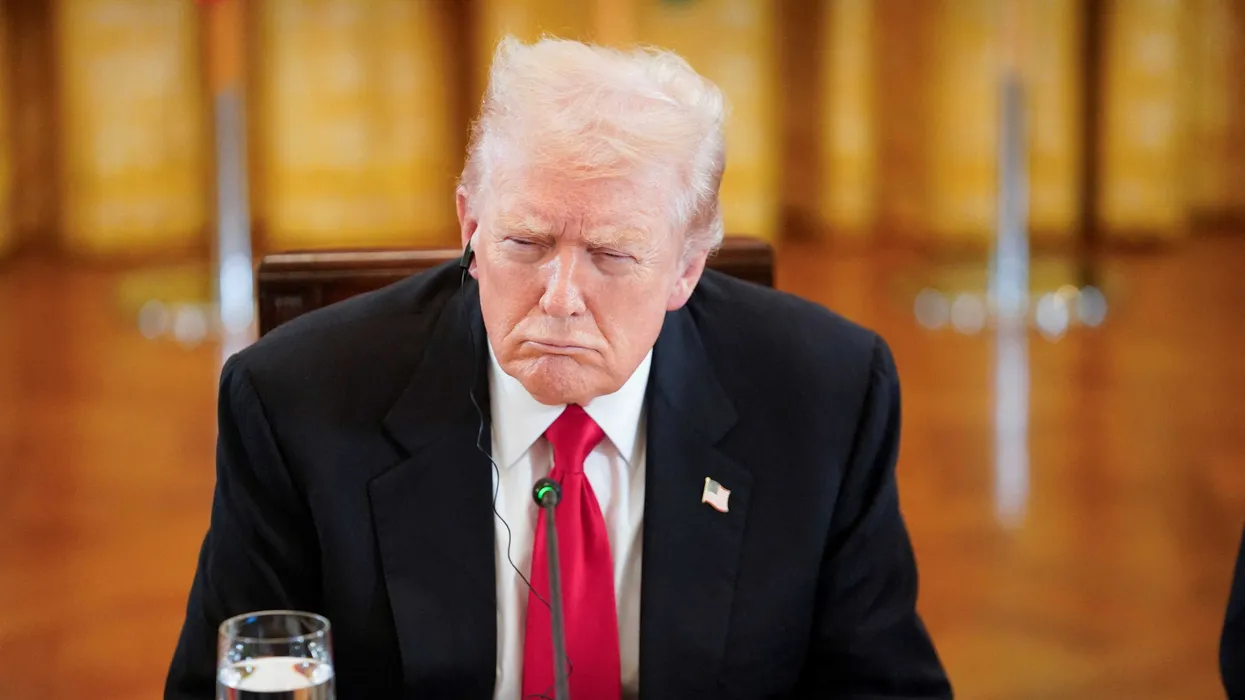
A clinical and forensic psychologist says President Donald Trump may have suffered a "distinct neurological event" at a recent speaking appearance, describing the footage as some of the "most alarming" and "extremely concerning" evidence of the president's deterioration.
Dr. John Paul Garrison specializes in body language analysis and also works as a content creator, applying his professional expertise to the behavior of major public figures. He has produced numerous videos examining the president across a range of appearances, frequently noting what he views as signs of neurological decline. He has also suggested that Trump may have suffered a stroke at some point since returning to the White House. His assessments are based on video review rather than an in-person examination of the president, a limitation that applies to any remote analysis of a public figure's health; professional bodies such as the American Psychiatric Association have long cautioned members against offering definitive diagnoses of individuals they have not personally evaluated, a guideline that emerged from the so-called Goldwater rule after psychiatrists publicly assessed Senator Barry Goldwater during the 1964 presidential campaign. Garrison's observations therefore represent one practitioner's interpretation of publicly available footage rather than a clinical diagnosis.
In his latest video, Garrison analyzed Trump's speech from earlier this week at a ceremony in which the president awarded the Congressional Space Medal of Honor to NASA's Artemis II team. During the address, Garrison said, the president displayed some of the most alarming signs of neurological issues he has seen, and he went as far as to suggest Trump experienced an episode of some kind. The ceremony otherwise drew coverage for its celebration of the Artemis II crew, the first crewed lunar flyby mission of NASA's Artemis program.
Garrison pointed to a specific moment in the speech, when the president was discussing the stock market, in which Trump appears to suffer a spasm in one arm, blinks, and then spasms in the other arm. According to Garrison, the sequence suggested a neurological issue moving across both sides of Trump's brain.
"What you just observed was a distinct and concerning neurological event, and you got to watch it cross both hemispheres of his brain," he said. "I'll explain what I mean. You saw his right arm jerk, and then you saw him blink. You heard his voice hesitate, and then you saw his left arm jerk. You literally watched it travel across his brain."
After replaying the portion of the speech several times, he added: "And to be very clear, these were not simple muscle spasms. This is not something related to pain. You don't see any pain on his face. And you actually watch it travel from one arm to his eyes to his voice to his left arm. Now, what this is very consistent with is something that we see in people that have had strokes called a focal aware seizure or a focal motor seizure. And this can be focused in one part of the brain, and occasionally it can spread to both parts of the brain. Doesn't always, but sometimes the activity will move across the brain. And I'm not insisting that's what's going on with him, but it is clearly something neurological, whether it's post-stroke or something else. But sometimes there's scarring in the cortical areas, and this can cause focal aware seizures."
The Epilepsy Foundation describes focal aware seizures as a type that can begin in one portion of the brain, during which the person experiencing them remains entirely responsive and conscious of what is happening. The foundation notes that such seizures can have many causes, and that diagnosis typically requires evaluation by a physician, including neurological testing, rather than observation of a video alone.
Garrison also highlighted what he described as distinct signs of disorientation during the purported event, noting that Trump appeared to repeat himself unintentionally.
"There are a variety of reasons that someone may be exhibiting these neurological symptoms, but it is clear throughout this that he is declining and he is struggling," Garrison concluded. "I do think we're seeing these neurological issues playing out in real time and affecting his judgment, Lake America being a prime example of that." Trump, who at 79 is the oldest person elected to the U.S. presidency, has not publicly addressed these claims, and no medical statement has been issued regarding the episode Garrison describes.
