California Senate Approves AB 1813, Industry-Backed Community Solar Bill Now Heading to Governor's Desk
Key Takeaways
- •The California State Senate passed AB 1813, the Community Renewable Energy Program Act, which now needs one procedural Assembly step before reaching Governor Newsom.
- •If signed, California would join more than 20 states, including New York, Minnesota, and Massachusetts, that already operate community solar programs.
- •The bill directs regulators to value community solar and storage using the CPUC's existing Avoided Cost Calculator and requires paired battery storage on projects.
- •According to bill backers, the program would deliver clean power to more than 2.2 million Californians from an estimated 5.4 GW of new community solar and storage.
- •Backers cite projections of roughly $190 in average annual savings for subscribers (about $250 for low-income households), $6.5 billion in statewide ratepayer savings, and more than 160,000 jobs.
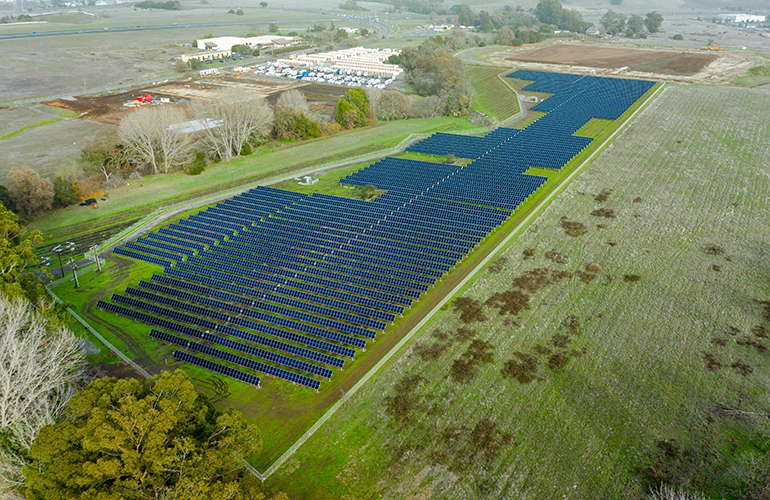
Over the weekend, the California State Senate passed AB 1813, the Community Renewable Energy Program Act, moving the bill toward the governor's desk. Industry advocates describe it as a workable community solar and storage program that the state has failed to deliver for more than a decade. The bill has one procedural step remaining in the Assembly before it reaches Governor Newsom. If signed, California would join the more than 20 states — including New York, Minnesota, and Massachusetts — that already operate community solar programs, where residents subscribe to a share of an off-site solar project and receive credits on their utility bills.
"In the midst of rising energy bills and an affordability crisis, this is a popular and sensible policy solution to lower bills for every Californian while moving us closer to our climate goals," said Derek Chernow, Executive Director of Californians for Local, Affordable Solar and Storage (CLASS) (localenergyca.org). "California has fallen behind more than 20 other states on community solar, but Governor Newsom now has a tremendous opportunity to reverse that trend and help pave the way towards California becoming the national leader in community solar projects."
The Senate vote caps a long road marked by fits and starts. California passed a strong community solar law, AB 2316, in 2022, directing the California Public Utilities Commission (CPUC) to build a program that would let renters, low-income households, and others who cannot install rooftop solar subscribe to local projects and save on their bills. That matters in a state where roughly half of households rent, leaving many Californians without access to onsite solar. Instead, the CPUC produced a program built to fail, and not a single community solar project has come online under it.
The Legislature responded to this inaction by passing legislation that directs regulators to value community solar and storage using the CPUC's own Avoided Cost Calculator — an existing tool the state has declined to apply — and requires paired battery storage so projects deliver power when the grid needs it most. Research from the University of California, Los Angeles (UCLA) identified AB 1813 as a step toward community solar success for the same reasons: it directs the state to use the CPUC's own Avoided Cost Calculator to value community solar subscriptions and requires paired storage so projects deliver power when the grid needs it most.
With the legislation clearing the Senate, Gov. Newsom now has an opportunity to sign AB 1813, positioning California to build the nation's largest community solar and storage program. What happens next falls to the governor: he can sign the bill, let it become law without a signature, or veto it, with the outcome determining whether regulators get a second mandate to build a workable program. According to bill backers, the program would deliver:
- Clean power for more than 2.2 million Californians, from a conservative 5.4 GW of new community solar and storage built across the state. A study by Kevala finds opportunity for more than 17.5 GW of community solar and storage to serve California's grid during summer peak demand.
- Lower bills with no cost shift. Subscribers save roughly $190 a year on average, and closer to $250 a year for low-income households, while every ratepayer benefits and no cost is shifted to people who do not subscribe.
- $6.5 billion in ratepayer savings statewide for subscribers and nonsubscribers alike, according to independent analysis from Aurora Energy Research, by cutting reliance on expensive gas generation and easing grid congestion.
- More than 160,000 good-paying local jobs and over $20 billion in new investment across California, including $700 million to modernize the state's aging grid.
- Real equity by design. A majority of projects must serve low-income subscribers, reaching renters, small businesses, and Central Valley farmers who can host projects on unproductive land and keep farms in the family.
- A stronger, cleaner grid. Paired storage discharges during peak evening demand, easing strain on the system while reducing reliance on natural gas and lowering emissions.
News item from CLASS.
