Fallen Power Line Highlights Grid Stability Risks From AI Data Centers
Key Takeaways
- •A power line failure triggered a near-simultaneous switch to backup power by Northern Virginia data centers, removing about 3.1 gigawatts of demand from PJM.
- •The disruption produced voltage spikes and regional light flickering, but it did not lead to a blackout.
- •The load loss was twice as large as a comparable 2024 incident involving 60 data centers and 1.5 gigawatts of demand.
- •Data centers represent about 6% of PJM’s load today, with their share projected to rise to 24% by 2040.
- •Potential responses include sequential connection protocols and battery-backed ride-through systems that help facilities remain stable during grid disturbances.
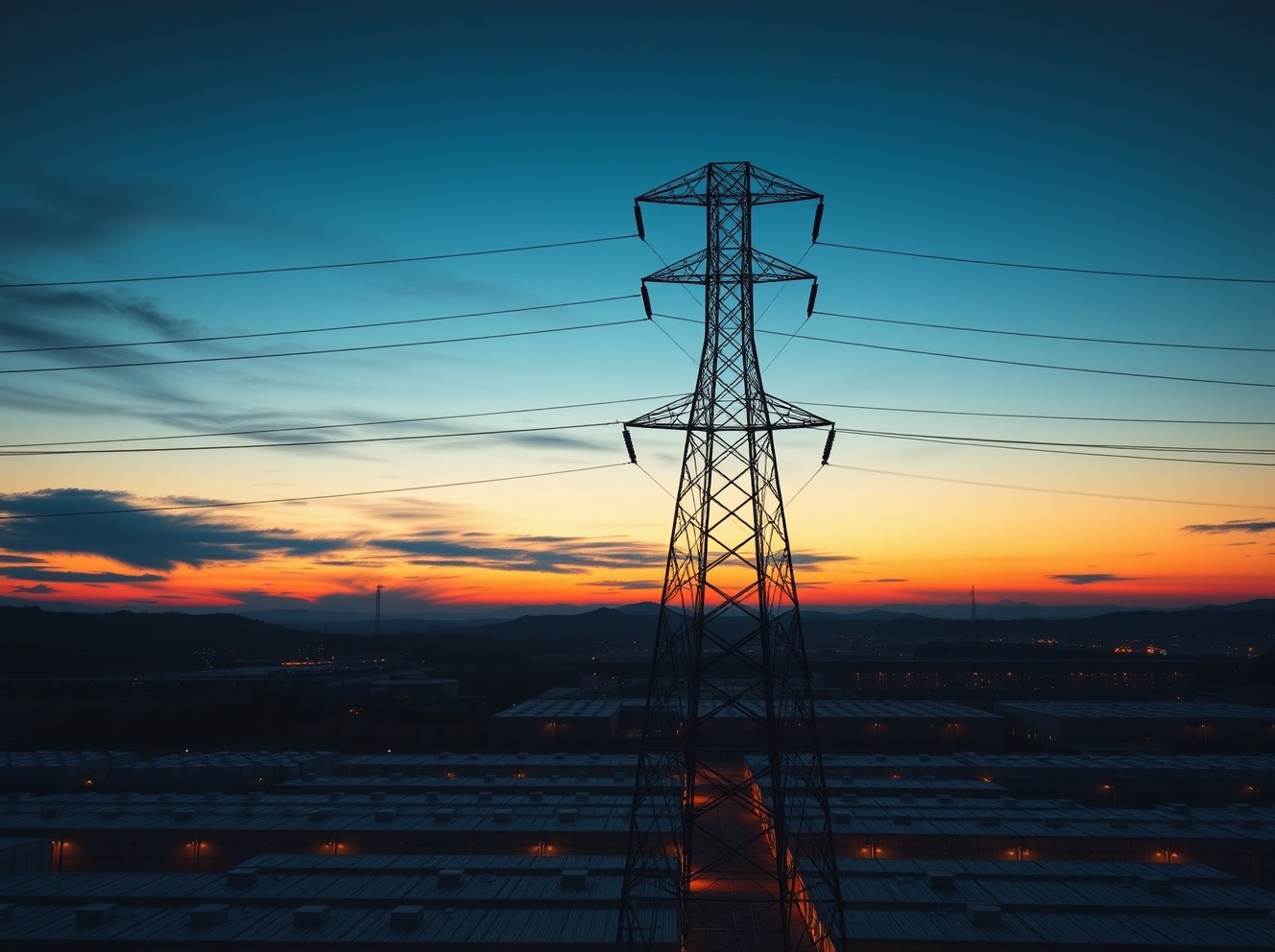
A single power line failure outside Washington, D.C., this week caused more than 3 gigawatts of data center demand to disappear from the PJM grid in less than a minute, producing voltage spikes that made lights flicker across the region.
The incident took more than 11 minutes to stabilize and has renewed concerns about the resilience of the largest electric grid in the United States as AI data centers expand rapidly and place new demands on infrastructure built for a different era.
Power Line Failure Triggers Sudden PJM Load Drop
PJM Interconnection, which manages electricity for 67 million customers from New Jersey to Illinois, experienced the disruption after a power line went down. Under normal conditions, the grid recovers from such events within seconds. In this case, the failure set off a wider chain reaction.
Data centers in Northern Virginia, the world’s densest concentration of such facilities, detected the voltage fluctuation and switched to backup power at nearly the same time. Within about 30 seconds, approximately 3.1 gigawatts of demand disappeared from the grid.
The grid then recorded an excess of 3.49 gigawatts before it began to rebalance, according to data collected by Ting Labs, a startup that monitors grid quality through residential IoT sensors.
No blackout occurred, but the event caused widespread light flickering and showed how quickly concentrated data center loads can affect grid stability. Ricardo de Azevedo, CTO of ON.Energy, described the incident as “the canary in the coal mine.”
The disconnection was twice the size of a similar event in 2024, when 60 data centers simultaneously removed 1.5 gigawatts of load from the same grid.
AI Data Centers Add New Pressure to Energy Infrastructure
Data centers currently represent about 6% of PJM’s load, according to Synapse Energy Economics. By 2040, that share is projected to rise to 24%.
Electric grids require supply and demand to remain nearly perfectly balanced. When large loads disconnect at the same time, voltage can sag or spike, which can then trigger additional protective disconnections. The challenge is especially acute where many large facilities are clustered in one region, because automated equipment can respond to the same disturbance at nearly the same moment.
Ali Zain Banatwala, senior market models specialist at the Independent Electricity System Operator, told Bitcoin World that data centers need to “sequentially either disconnect or reconnect” instead of acting all at once. A more orderly process would give grid operators the ability to prepare robust procedures in advance.
The issue is not limited to PJM. Grid operators across the United States, including ERCOT in Texas, are beginning to require large loads such as data centers to “ride through” disruptions rather than disconnecting. However, the technology needed to support that approach is still being deployed at scale.
Battery-Backed Systems Aim to Reduce Grid Volatility
Startups including ON.Energy are developing uninterruptible power supply systems designed for entire data center campuses, not only servers but also chillers and other equipment.
The system effectively places the data center behind a bank of batteries and advanced power conversion equipment. From the grid’s perspective, the facility appears as a stable and predictable load rather than a source of sudden volatility.
ON.Energy’s system can absorb power fluctuations by charging batteries during surges and dispatching power during dips, with responses measured in milliseconds. De Azevedo said the company is currently installing 3 gigawatts of its systems at four data center campuses.
That approach can also allow data centers to increase or reduce computing workloads, including energy-intensive AI training, without disrupting the grid. It reflects a shift from designing data centers only to protect themselves during grid disturbances toward designing them to operate as cooperative participants in the power system.
Coordination Remains Central to Grid Planning
This week’s power line failure did not cause a catastrophe, but it demonstrated how a localized incident can create a large and rapid grid response when major data center loads disconnect simultaneously.
The 3.1-gigawatt load loss was twice as large as a comparable incident in 2024. As AI data centers grow in number and energy use, grid operators, data center developers and technology providers face increasing pressure to coordinate how large loads connect to and interact with the grid.
Potential measures include sequential disconnection and reconnection protocols, as well as battery-backed ride-through systems that allow facilities to withstand grid fluctuations without immediately disconnecting. The next test for operators and data center owners is whether those practices can be standardized before larger clusters of AI infrastructure become a bigger share of regional electricity demand.
FAQs
Q1: What caused lights to flicker across the Washington, D.C., region?
The flickering was caused by a voltage spike on the PJM grid after more than 3 gigawatts of data center load disconnected almost simultaneously following a power line failure. The sudden drop in demand left excess supply on the grid, causing voltage to rise.
Q2: How common are data center disconnection events?
The events are becoming more common. This week’s incident was twice as large as a similar event in 2024, when 60 data centers disconnected 1.5 gigawatts from the same grid. Experts cited in the report said such events will increase as data centers account for a larger share of grid load.
Q3: What can help prevent future grid disruptions from data centers?
Potential solutions include requiring data centers to disconnect or reconnect sequentially rather than simultaneously, and deploying technologies such as battery-backed uninterruptible power supplies that allow facilities to ride through grid fluctuations without disconnecting.

