From Goldilocks to Green Living: How Pinky Yee Turned a Health Crisis into a Philippine Botanicals Brand
Key Takeaways
- •Pinky Yee previously served as store operations director at Goldilocks, where she developed the franchising program and led a corporate rebranding that expanded the brand to 400 branches nationwide.
- •Yee was diagnosed with chronic fatigue syndrome and food intolerances to dairy, sugar, and gluten, which a functional medicine doctor attributed to her body's diminished capacity to produce digestive enzymes.
- •Pure Essentials Specialist Corp. launched in August 2020 during the COVID-19 lockdown, producing the LivClean brand of eco-friendly cleaning agents and the First Botanicals personal care line.
- •LivClean products use calamansi essential oil — inspired by traditional Filipino household practices — as a key antibacterial and degreasing ingredient in dishwashing liquid, kitchen cleaners, and disinfectant sprays.
- •First Botanicals products are formulated without petroleum derivatives, parabens, sulfates, phthalates, or harsh synthetic fragrances, utilizing plant-based ingredients such as virgin coconut oil, pomelo, avocado oil, and tea tree.
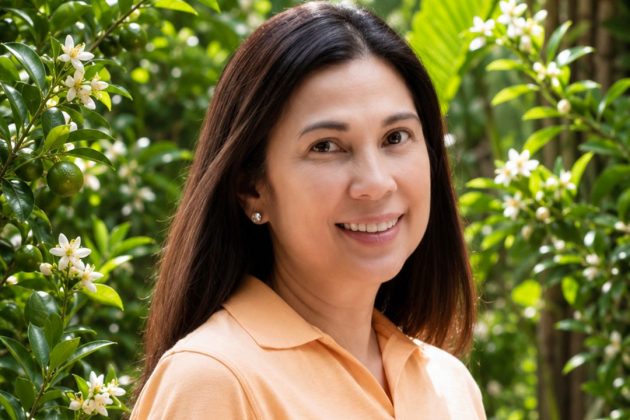
Pinky Yee channels Philippine botanicals into clean living and wellness enterprise
By Anna Isabel C. Sobrepeña
The expectation that Pinky Yee would serve a fairytale confectionery for dessert never materialized. Given that her family's bakeshop was central to her success story, visions of a luscious caramel cake or the classic choco roll came easily to mind. Yet none of these appeared on the menu during lunch at her home. The cakes that had been a staple of her professional life no longer agreed with her system. She had developed food intolerances to dairy, sugar, and gluten — the very ingredients in the signature desserts that catapulted the family brand to national prominence.
The day she learned that her persistent weakness and fatigue stemmed from shifts in gut bacteria was a difficult one. Medical test results offered no explanation for her diminished energy. It was baffling: the once high-functioning, energetic corporate executive felt depleted by 5 p.m., took to bed by seven in the evening, and switched off the lights before 9 p.m. After several months, she consulted a functional medicine doctor — a discipline that focuses on identifying root causes of disease rather than treating symptoms alone. The practitioner explained that her body had lost the capacity to produce the digestive enzymes her younger system had once generated adequately. She could no longer process naturally occurring substances from her food intake.
From Fashion to Food
Pinky was working as a management trainee at a Canadian fashion brand when she met and married Richard Yee. The couple had largely settled in North America and were exploring the possibility of opening branches of his family's Goldilocks bakeshop there. However, developments in Manila reshaped their plans. The brand was expanding, and Richard's mother, Milagros Yee — who had co-founded Goldilocks in 1966 and built it into one of the most recognizable food brands in the Philippines — asked them to return to assist with the business. The relocation came with an unexpected opportunity: her mother-in-law offered her the role of store operations director.
The younger Ms. Yee was honored by the trust placed in her and applied what she had learned in Western Canada to open Goldilocks' ninth store. She later developed the franchising program that broadened the brand's reach across the domestic market. A decade afterward, she conceptualized and led a major corporate rebranding that accelerated the company's growth to 400 branches nationwide. Following that successful brand-building effort, she took on the role of business group director with a mandate to expand the company's portfolio internationally. She was also appointed president and CEO of Domino's Pizza and tasked with co-managing Triple-O, a Canadian burger chain — both affiliates of the family corporation.
Despite the satisfaction she drew from corporate life, her health began to deteriorate. She was diagnosed with chronic fatigue syndrome, a condition marked by extreme tiredness, sleep dysfunction, and brain fog. There was no known cure.
Finding Purpose During COVID-19
It was at this low point that she found her spiritual footing. Prayer, a Bible study support group, and an indomitable spirit set the course for managing her symptoms. Stepping back from corporate life, she embarked on a mission to detoxify both her lifestyle and her living spaces.
Processed foods, sugar, and gluten disappeared from her table. She scoured the market for all-natural cleaning solutions, scrutinizing labels to avoid products unsuited to the clean, healthy home environment she sought. That search proved more challenging than expected — she found nothing that met her standards. The most viable path, she concluded, was to create a high-quality, eco-friendly alternative herself using local ingredients. That decision gave rise to Pure Essentials Specialist Corp.
The COVID-19 lockdown became an extended period for formulating cleaning solutions, testing samples, and designing packaging. The brand officially launched in August 2020, at a time when consumer demand for germ-killing household products had surged and scrutiny of chemical ingredients in everyday goods was intensifying. Her medical crisis had catalyzed a pivot from food to sustainable personal care.
The Power of Calamansi
She recounts the journey to wellness with unbridled enthusiasm and energy, framing it as candidly as a faith story as much as a quest for a cleaner world. She describes following God's lead as redirecting her energies toward social enterprise, lending purpose beyond the pursuit of profit. Her corporate background and training became the foundation for her current work.
This purpose-driven path led to the creation of earth-friendly cleaning agents inspired by a childhood memory. She recalled that her mother and grandmother both used calamansi — the small Filipino citrus ubiquitous in households across the archipelago — to clean surfaces and remove fabric stains without dulling colors. Its citric acid content makes it an effective antibacterial agent and degreaser, while leaving a fresh scent that deodorizes as it sanitizes.
Calamansi essential oil became the signature ingredient in the dishwashing liquid developed under the LivClean label. By combining it with vinegar, she created a kitchen cleaner for pots, pans, dishware, and utensils that contained no harmful chemicals. "All the ingredients are disclosed on the label," she said, emphasizing her commitment to transparency.
Additionally, a multi-purpose powder cleanser was developed using baking soda for cleaning cookware, sinks, and microwave ovens. "It can also be used to clean floors, walls, toilet bowls, and sinks," she noted.
Following further research and testing, LivClean introduced anolyte spray disinfectants designed for misting machines and for surfaces in frequent contact with food.
The Purity Principle
Deepening immersion in natural ingredients led to the development of First Botanicals, a brand defined by what it deliberately excludes. "There are no petroleum derivatives, parabens, sulfates, phthalates, and harsh synthetic fragrances," she explained.
Formulated to be gentler on the skin, the products reflect her conviction that personal care items should support wellness without relying on unnecessary synthetic fillers — a philosophy aligned with a growing clean-beauty movement in Southeast Asia, where consumers increasingly seek plant-based alternatives free from controversial chemicals. Virgin coconut oil, pomelo, avocado oil, papaya, tea tree, licorice, rosemary, and pennywort number among the plant-based ingredients featured in a face and body spray, a room and linen spray, and a multi-benefit skin salve called Miracle Balm.
The real miracle, in this writer's view, was seated across the table — a glowing presence excitedly recounting a journey she had never anticipated.
The salad and garlic shrimp were finished before a platter of fruit arrived. No fairytale cakes graced the table, yet a pervading sweetness infused the story of a woman whose personal health crisis led her to harness Philippine botanicals and transform them into an alchemy for living well. She had reshaped the equation of wellness through elimination — and the power of what is absent.

