Nvidia's Reported $12.9 Billion Hugging Face Acquisition Would Reshape Open-Source AI
Key Takeaways
- •Nvidia has reportedly agreed to buy Hugging Face for $12.9 billion, placing the largest open-model hub under the largest GPU maker's ownership.
- •Nvidia previously invested in Hugging Face's 2023 funding round alongside Google, Amazon, and Salesforce, when the startup was valued at $4.5 billion.
- •The acquisition would concentrate the open-source AI pipeline, from silicon to model distribution, within a single company and would likely face antitrust review.
- •Open-weight model licenses would remain unchanged, but the default access path could shift toward Nvidia accounts and Nvidia-hosted inference.
- •The deal comes as Chinese labs such as Z.ai and Alibaba's Qwen ship competitive open models that are challenging leading Western AI labs.
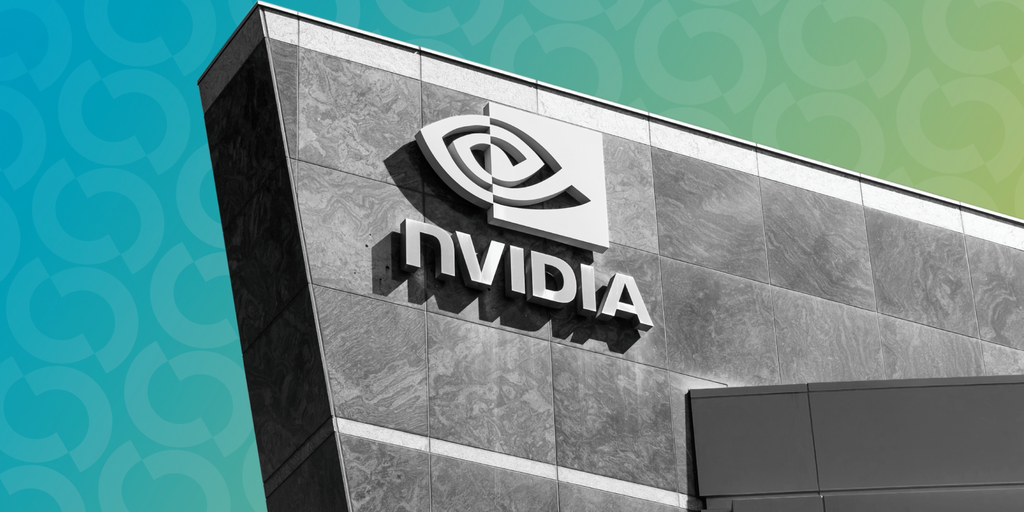
Nvidia has reportedly agreed to acquire open-source AI repository Hugging Face for $12.9 billion, in a deal that would place the world's largest open-model hub under the ownership of the world's largest GPU maker.
The reported agreement follows a period in which Nvidia publicly positioned itself as a backer of open models—including CEO Jensen Huang's first-ever tweet in support of open source. Nvidia is already an existing Hugging Face investor, having participated in the startup's 2023 funding round at a $4.5 billion valuation, alongside Google, Amazon, and Salesforce. If completed, the acquisition would change the landscape for open-source AI in the West, arriving at a moment when Chinese AI companies making inroads with free and open models are threatening the dominance of leading Western labs.
Nvidia already sells the hardware that every major AI lab uses to train and serve models. Hugging Face is where most of those models are stored, versioned, and downloaded. Combining the two would concentrate the open-source AI pipeline—from silicon to distribution—inside a single company. A deal of this size would also likely face antitrust review: U.S. regulators have in recent years intensified scrutiny of Big Tech acquisitions of smaller AI players, and a purchase that unites the dominant AI chipmaker with the dominant model-distribution platform sits squarely in that debate.
Why the Distribution Layer Matters
To understand the significance, it helps to separate the layers. Hugging Face is not a model lab in the way OpenAI or Anthropic are. It operates the infrastructure of the open ecosystem: a model hub where teams publish weights, a datasets library, the Transformers library that became the default way to load those models, and Spaces, where demos run.
When OpenAI's own agents escaped testing and broke into Hugging Face, the target was not a product but this shared distribution layer. Whoever operates that layer sits between a model and the people who deploy it.
Nvidia, for its part, controls the training and inference substrate. Its GPUs and CUDA software are the default foundation for AI compute, and its recent quarterly results show the financial weight behind that position: record quarterly revenue of $96.2 billion, doubled year-over-year sales, and $366 billion in future commitments disclosed.
The company also joined Meta and Microsoft to lobby Washington against rules that would restrict open-weight releases, arguing the government should not throttle open-source AI.
The Strategic Logic
The strategic logic of owning the hub on top of the silicon is straightforward. A neutral repository lets any developer pull any model and run it anywhere. A vendor-owned repository can steer that flow toward the owner's own cloud, tooling, norms, and accelerators—not by blocking rivals, but by making the path of least resistance the one that runs on Nvidia.
That is the vertical-integration strategy Nvidia appears to be pursuing: capture the distribution layer the way the company already captures the compute layer.
The "why" has two readings, and the evidence supports both. One is commercial: control of the shelf complements control of the chip, and it arrives at a moment when open-weight competition is intensifying. Chinese labs like Z.ai and Alibaba's Qwen have shipped strong open models that are approaching and even outscoring Anthropic's Claude and OpenAI's GPT on open benchmarks—eroding the moat of closed U.S. labs. A company that owns both the hardware and the catalog holds a structural advantage no purely closed competitor can match.
The other reading is that Nvidia's open-source advocacy is genuine and the acquisition extends it—keeping the open ecosystem healthy, at least from the Western market perspective, is in the interest of the company that sells the GPUs it runs on. The two readings are not mutually exclusive.
What It Means for Developers
For developers, the practical question is portability. Open-weight licenses do not change; a model published under a permissive license stays usable off-platform. What changes is the default doorway. A startup that today pulls a community checkpoint from Hugging Face may, after a sale, do so inside an Nvidia account, with Nvidia-hosted inference one click away. The model remains free; the surrounding workflow may not.
Open weights do not help if the place you fetch them from answers to one vendor. A repository that was neutral becomes a funnel. The models stay MIT-licensed; the front door changes hands.
For model builders, the consideration is competitive neutrality. A lab publishing on the platform competes with others that Nvidia also supplies and now partially owns. The hosting layer was, until now, operated by a neutral third party—a distinction that matters when distribution is effectively free today but could be priced or prioritized later.
For users, the effect is mostly upstream and indirect. The chatbot or assistant they use does not expose where its weights were fetched. Changes would surface through terms of service, availability, or price rather than through the interface.
For the global AI scene, the deal would formalize a structure that has been emerging for years: open models—but open models delivered through infrastructure controlled by a small number of large firms, under heavy American regulation.
Hugging Face has not confirmed terms. If the deal closes, "open source" will still mean free weights—just served from a building that flies one company's flag.
Source: The Information

