Why Are Korea's High-Speed Rail Stations Built So Far From City Centers?
Key Takeaways
- •Most Korean high-speed rail stations are situated on urban outskirts because trains operating at 300 km/h require straight track alignments and acquiring land in dense city centers is prohibitively expensive and complex.
- •Author Jun Hyun-woo contends that remote station locations actually deepen automobile dependence, since isolated stations are difficult to serve with frequent public transit and force passengers to drive or take taxis.
- •Korea's rail network remains structured around Seoul, making east-west regional travel inconvenient and funneling talent and resources toward the capital despite national policies aimed at balanced regional development.
- •Jun proposes building a cross-regional rail grid linking the Chungcheong, Jeolla, and Gyeongsang regions to strengthen provincial economies, reduce greenhouse gas emissions, and support carbon neutrality goals.
- •Korea recorded the lowest total fertility rate among OECD countries, intensifying demographic pressures on non-metropolitan areas and raising urgent questions about the effectiveness of existing decentralization measures.
Why Are Korea's High-Speed Rail Stations Built So Far From City Centers?
Published Jul 31, 2026 12:10 am KST
Author proposes rail infrastructure as a starting point for redesigning regional policy
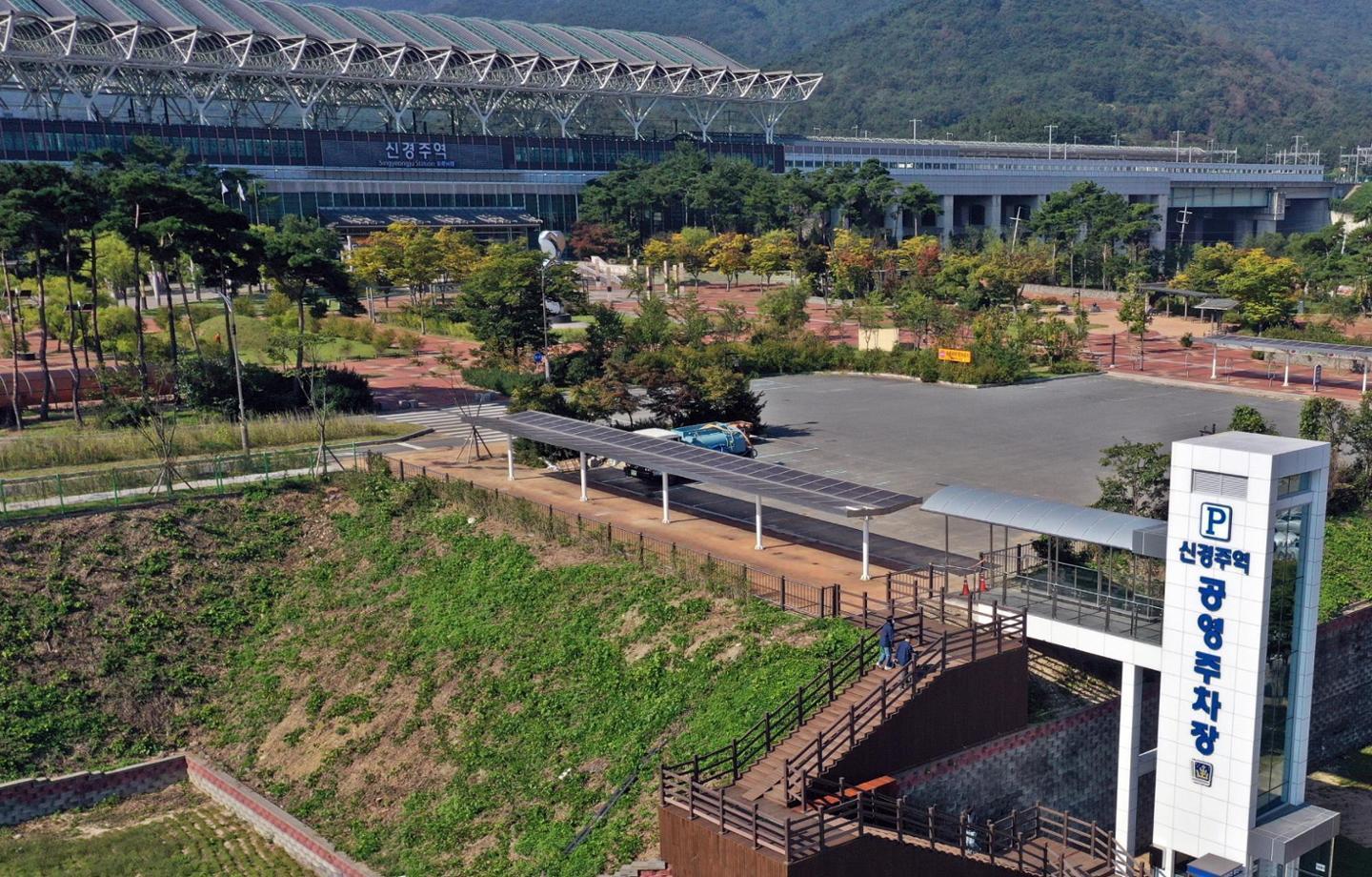
Passengers arriving at an unfamiliar city via KTX or SRT are often struck by the same reaction: "What? There's nothing around the station." While downtown high-speed rail stations such as those in Busan, Dongdaegu, and Daejeon are exceptions, most stations across Korea stand on urban outskirts, amid open fields and rice paddies, or even in mountainous areas with few homes nearby. This pattern is widespread enough that no single city needs to be singled out.
The question of how so many of Korea's high-speed rail stations ended up in such remote locations is the starting point for Leaving the Lonely Station, a book by Jun Hyun-woo, a researcher at the Natural Science Research Institute at the University of Seoul. Beginning with the unusual placement of KTX stations, the book broadens its scope to examine Korea's reliance on automobiles, the energy crisis, and regional population decline. The issue carries particular weight for Korea, which has invested heavily in high-speed rail since launching KTX service in 2004 and now faces some of the steepest demographic decline among developed nations, with regions outside the capital losing working-age residents at an accelerating pace.
Engineering and Economic Constraints
Several factors explain the remote locations. High-speed trains traveling at 300 kilometers per hour require relatively straight tracks, making it impractical to route lines deep into existing city centers. In addition, building or expanding stations in dense urban cores often requires difficult and costly negotiations with numerous landowners, leading project developers to favor cheaper peripheral land. This tension between speed-oriented alignment and urban accessibility is not unique to Korea — high-speed rail networks in countries such as France and Japan have grappled with similar trade-offs, placing some stations on greenfield sites outside historic centers to avoid costly urban realignment.
Jun identifies specific causes behind individual station placements. Cultural heritage protection shaped the location of Gyeongju Station, formerly known as Singyeongju Station. Competition among local governments influenced the siting of Gongju Station. At Osong Station, a combination of regional demands and a presidential pledge for balanced regional development determined the outcome.
The Paradox of Korea's Rail Network
Jun argues that remote stations can deepen, rather than reduce, passengers' reliance on cars — particularly in medium-sized cities where bus service is infrequent and subway systems do not exist. Because these isolated stations are difficult to serve with frequent public transit, many passengers have no choice but to drive or take taxis, resulting in overcrowded parking lots and congested surrounding roads. The outcome is a paradox: a rail network that inadvertently reinforces automobile dependence.
The author also criticizes the network's Seoul-centric structure. East-west travel remains highly inconvenient, forcing passengers traveling from Busan to Gwangju to detour north through Osong Station. Jun further contends that this layout functions as a funnel, drawing young talent and patients away from provincial areas and reinforcing Seoul's dominance. For a country that has made balanced regional development a national priority for decades — including the construction of the administrative capital city of Sejong and the creation of designated Innovation Cities across provinces — the persistence of a hub-and-spoke rail network centered on Seoul underscores how infrastructure geometry can work at cross-purposes with decentralization policy.
A Proposed Cross-Regional Rail Grid
As an alternative, Jun proposes constructing a cross-regional rail grid connecting the Chungcheong, Jeolla, and Gyeongsang regions. Rather than depending solely on the current Seoul-centric network, the plan would leverage existing tracks to link major and medium-sized cities across different regions. He describes this approach as a "solidarity of the weak," arguing it could expand economic activity, counter the decline of regional communities, and support efforts to reduce greenhouse gas emissions. This argument aligns with Korea's commitment under its 2050 carbon neutrality framework, which identifies transportation-sector decarbonization as a key challenge.
The proposal would require substantial funding. Jun acknowledges the cost but contends that such investment should be evaluated alongside the large sums already spent by the government and private sector on roads and automobiles. While rail may demand greater spending in the short term, he says the long-term payoff — in environmental benefits, energy efficiency, and social cohesion — could be significant.
Rethinking Regional Policy
The book uses rail as a lens to address both Seoul's dominance and environmental pressures. Korea has spent decades expanding high-speed rail and relocating government agencies and public corporations to Sejong and designated Innovation Cities, yet regional population decline has persisted. With Korea recording the lowest total fertility rate among OECD countries, the demographic pressures on non-metropolitan areas are intensifying, making the effectiveness of existing decentralization measures an increasingly urgent question. This record, Jun suggests, indicates it is time to reconsider the direction of regional policy.
By treating rail infrastructure as a starting point rather than an afterthought, Leaving the Lonely Station — published by Minumsa — offers a fresh framework for that discussion.
This article from the Hankook Ilbo, the sister publication of The Korea Times, is translated by a generative AI system and edited by The Korea Times.

