Korean Football Needs Structural Reform, Not Another Apology from the KFA
Key Takeaways
- •Police conducted a search-and-seizure operation at KFA headquarters in Cheonan as part of an investigation into possible improper interference in the 2024 appointment of national team coach Hong Myung-bo.
- •South Korea's sports ministry previously determined that the KFA violated its own internal procedures in appointing both Hong Myung-bo and his predecessor Jurgen Klinsmann, though it stopped short of declaring the appointments illegal.
- •Recent reports citing 2016 investigation materials allege that foreign referees at seven international competitions between 2011 and 2012 received improper entertainment, including sexual services, paid for with KFA corporate cards.
- •A 2016 sports ministry probe uncovered approximately 200 million won in prohibited corporate-card spending by KFA officials, resulting in police charges against 11 former and current association personnel.
- •The editorial argues that the publicly funded KFA must undergo an independent governance review and implement verifiable reforms rather than rely on further public apologies.
Korean Football Needs Structural Reform, Not Another Apology from the KFA
Published Aug 9, 2026, 3:33 pm KST — The Korea Times
The Korea Football Association (KFA) has issued yet another apology.
Following Korea's disappointing 2026 World Cup campaign, a parliamentary hearing, a police raid on KFA headquarters, and renewed scrutiny of long-dormant allegations, the association has acknowledged that public trust in the institution has been severely eroded. It has pledged "deep self-reflection," enhanced transparency, and sweeping reform.
A necessary response — but not a sufficient one. Korean football does not need another apology. It needs a reckoning.
Crisis Beyond the Pitch
The current turmoil extends well beyond a poor World Cup showing or the controversial appointment of a national team coach. Police are actively investigating whether improper interference occurred during the 2024 appointment of Hong Myung-bo — a former national team captain and one of the most celebrated figures from Korea's 2002 World Cup semifinal run — in a process that has already drawn sustained public criticism. Separately, the sports ministry previously determined that the KFA had violated its own internal procedures in appointing both Hong and his predecessor, Jurgen Klinsmann — though it stopped short of declaring the appointments illegal.
That distinction is important: an allegation is not a conviction, and procedural lapses do not automatically constitute criminal conduct. Nevertheless, a governing body cannot reasonably expect to retain public confidence when its most consequential decisions repeatedly attract police, parliamentary, or ministerial scrutiny.
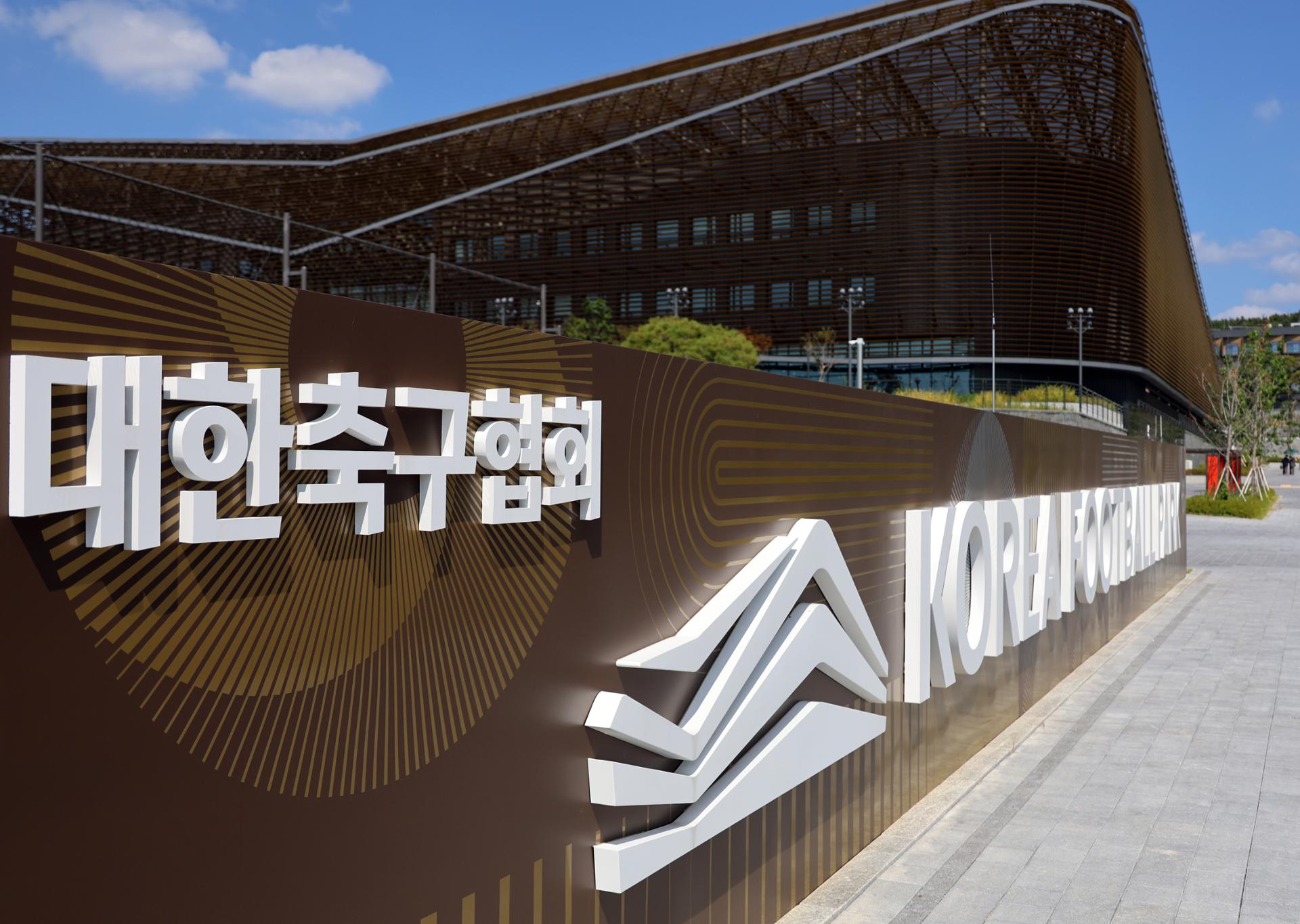
On Thursday morning at approximately 9 a.m., police conducted a search-and-seizure operation at Korea Football Park in Cheonan, South Chungcheong Province, the headquarters of the KFA. All employees were sent outside during the operation, according to Yonhap.
Resurfaced Allegations from 2011–12
Even more troubling are allegations now resurfacing from the 2011–12 period.
Drawing on materials from a 2016 Ministry of Culture, Sports and Tourism investigation, recent reports allege that foreign referees assigned to seven international competitions received improper entertainment — including sexual services — with certain expenses charged to KFA corporate cards. The competitions in question reportedly included qualifiers linked to the 2014 World Cup and the 2012 London Olympics.
Whether any referee was actually influenced, or whether any match result was compromised, has not been established. Those determinations require evidence, not speculation. However, the seriousness of the allegations warrants a transparent examination of the underlying financial records and the decisions that authorized such spending.
A Pattern of Financial Misconduct
These allegations do not exist in isolation. In 2016, the sports ministry uncovered widespread improper expenditure by current and former KFA officials, including approximately 200 million won ($141,600) in corporate-card spending at establishments where such transactions were prohibited. The ministry ordered the recovery of misused funds, disciplinary measures, and referrals for further investigation. Police subsequently charged 11 former and current KFA officials over alleged misuse of association funds.
The lesson should have been unmistakable: governance is not a mere administrative detail. It is the very foundation on which sporting credibility rests.
Yet Korean football has repeatedly circled back to the same unresolved questions — who made the decision, whether proper protocols were followed, whether funds were appropriately spent, and who bears ultimate accountability. For a nation that has qualified for every World Cup since 1986 and stands as one of Asia's most consistent footballing powers, the persistent inability to resolve these governance questions carries weight well beyond domestic administration.
The Path Forward
Another written statement promising reform will not suffice. The KFA, which as a publicly funded body operates under the jurisdiction of the Ministry of Culture, Sports and Tourism, must submit to an independent, comprehensive review of its governance structure. The process for appointing national team coaches must be made transparent and independently auditable. Financial controls require strengthening. Conflicts of interest must be fully disclosed. Disciplinary and pardon decisions must be governed by clear, published standards. Crucially, where wrongdoing is established, accountability must extend to senior officials — not merely to those lower in the organizational hierarchy.
At the same time, Korean football must resist any temptation to rewrite its sporting history on the basis of unproven allegations. The players who represented Korea on the field did not create these institutional failures. Their effort, achievements, and defeats remain their own. Nothing uncovered about the KFA's administration should casually diminish what was legitimately earned in competition.
Protecting the players, however, means protecting the credibility of the institution behind them. The KFA does not own Korean football — it is entrusted with administering it. That distinction has been overlooked for far too long.
Fans do not owe the association their trust. The association must earn it — through transparency, accountability, and demonstrable, verifiable change. A disappointing World Cup can be addressed on the training ground. A damaged institution cannot.
The KFA has stated that it wants Korean football to receive cheers rather than anger, support rather than criticism. That outcome will not be achieved by asking people to forget. It will be achieved only by giving them a credible reason to believe that the same failures will not recur.
Korean football does not need another apology. It needs a reckoning — and this time, it needs genuine reform to follow.
Source: The Korea Times

