Trump Revives Effort to Remove Fed Governor Lisa Cook, Citing Mortgage Fraud Allegations
Key Takeaways
- •President Trump sent a formal notice to Federal Reserve Governor Lisa Cook on August 5, giving her 21 days to respond before potential dismissal based on mortgage fraud allegations.
- •This is Trump's second attempt to remove Cook, following an initial effort in August 2025 that resulted in litigation and a Supreme Court ruling requiring proper procedural steps before any removal.
- •Cook has denied the fraud allegations, which involve mortgage applications from around 2021, and has indicated she will not step down voluntarily.
- •No sitting president has ever carried out the removal of a Federal Reserve governor, and the precise legal meaning of the statutory 'for cause' standard remains unresolved.
- •A successful removal could set a precedent enabling future presidents to dismiss Fed governors, potentially undermining the institutional independence that the central bank was designed to maintain.
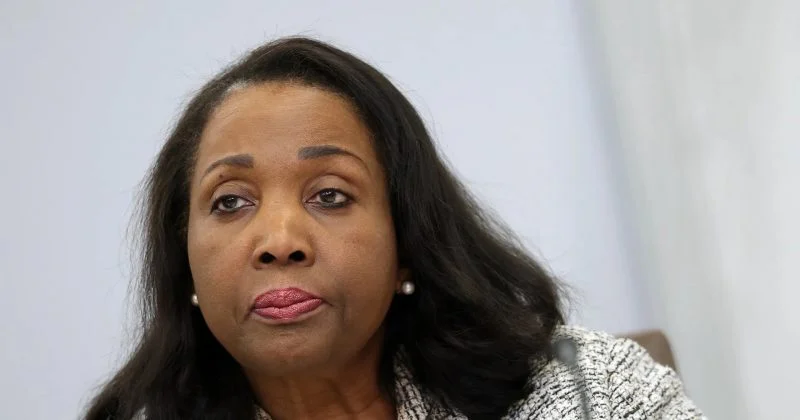
President Donald Trump is making a second attempt to remove Federal Reserve Governor Lisa Cook, this time following a formal process outlined by the Supreme Court. On August 5, the White House sent Cook a letter notifying her that the president is considering her dismissal, citing allegations of mortgage fraud connected to property applications in Georgia and Michigan.
Cook has been given 21 days to respond. She has denied the allegations and indicated that she does not intend to resign.
A Second Removal Attempt
This is not Trump's first effort to oust Cook. He initially moved to remove her in August 2025, a decision that sparked immediate litigation and ultimately reached the Supreme Court. The justices issued their ruling on June 29. While the full implications of that decision are still unfolding, the court made clear that a procedural framework must be followed if a president seeks to fire a Federal Reserve governor.
That framework requires proper notice and an opportunity for the official in question to respond. The August 5 letter appears intended to satisfy those procedural requirements.
The allegations referenced in the notice center on mortgage applications Cook reportedly submitted around 2021. The White House contends that these applications contain fraudulent information. Cook, who joined the Fed's Board of Governors in 2022 as the first Black woman to hold the position, has consistently rejected the claims. A former Michigan State University economics professor and former member of the Duke University faculty, Cook brought academic expertise in international economics and financial stability to the Board.
Her response window expires on August 26, which could set the stage for another legal confrontation if the administration moves forward with removal after that date.
Federal Reserve Independence at Issue
The Federal Reserve was deliberately designed to operate with a measure of independence from the executive branch. Board governors serve 14-year terms, a structure intended to allow them to make politically unpopular decisions without fear of dismissal. Central bank independence is a principle widely embraced across democratic economies, based on the view that monetary policy decisions should be insulated from short-term political pressures.
Trump's effort to remove Cook tests the limits of that independence in unprecedented ways. During his first term, Trump publicly criticized Fed rate decisions and pressed the central bank to lower rates, breaking with the long-standing norm of presidents avoiding public commentary on monetary policy. Although the president possesses statutory authority to remove governors "for cause," no president has ever carried out such a dismissal. Historically, the phrase "for cause" has been interpreted to mean serious misconduct rather than policy disagreements, though its precise legal definition remains unresolved.
The Supreme Court's June ruling did not settle this question definitively. Rather than issuing a broad ruling on the scope of presidential removal authority over Fed governors, the justices focused on procedure, directing the executive branch to follow proper process before the courts would address the broader constitutional issues.
Political and Institutional Implications
Cook's supporters contend that the mortgage fraud allegations serve as a pretext, offering legal cover for what they describe as a politically motivated removal. Her critics maintain that if the allegations are substantiated, the president is within his rights to act.
If Trump succeeds in removing Cook, it could establish a precedent that future presidents could follow to dismiss Fed governors they view as obstacles. The initial removal attempt in August 2025 already illustrated the disruptive potential of such an effort, consuming months of legal resources and injecting uncertainty into an already complex policy landscape. By following the court-mandated procedure this time, the administration positions the matter to return to the judiciary sooner, where the substantive question of presidential removal power over Fed governors may finally receive a direct legal test.

