Former Mueller Prosecutor Andrew Weissmann Says Financial Crime Charges Could Outlast Trump's Presidency
Key Takeaways
- •Andrew Weissmann maintains that presidential immunity does not shield Donald Trump from financial crime prosecutions, as the Supreme Court's July 2024 ruling only protects official acts while leaving unofficial conduct exposed.
- •Statutes of limitations for financial crimes typically run at least five years, and Weissmann notes there are additional methods to extend those deadlines further.
- •Weissmann, who directed the DOJ's Enron Task Force before joining the Mueller investigation, predicts that evidence of corruption under Trump will be extensive, particularly involving financial crimes.
- •Trump has retaliated against Weissmann through multiple executive orders, including revoking his security clearance and targeting his employer's law firm.
- •Weissmann argues that future leaders must bring righteous, evidence-based prosecutions to deter similar misconduct and strengthen democratic institutions.
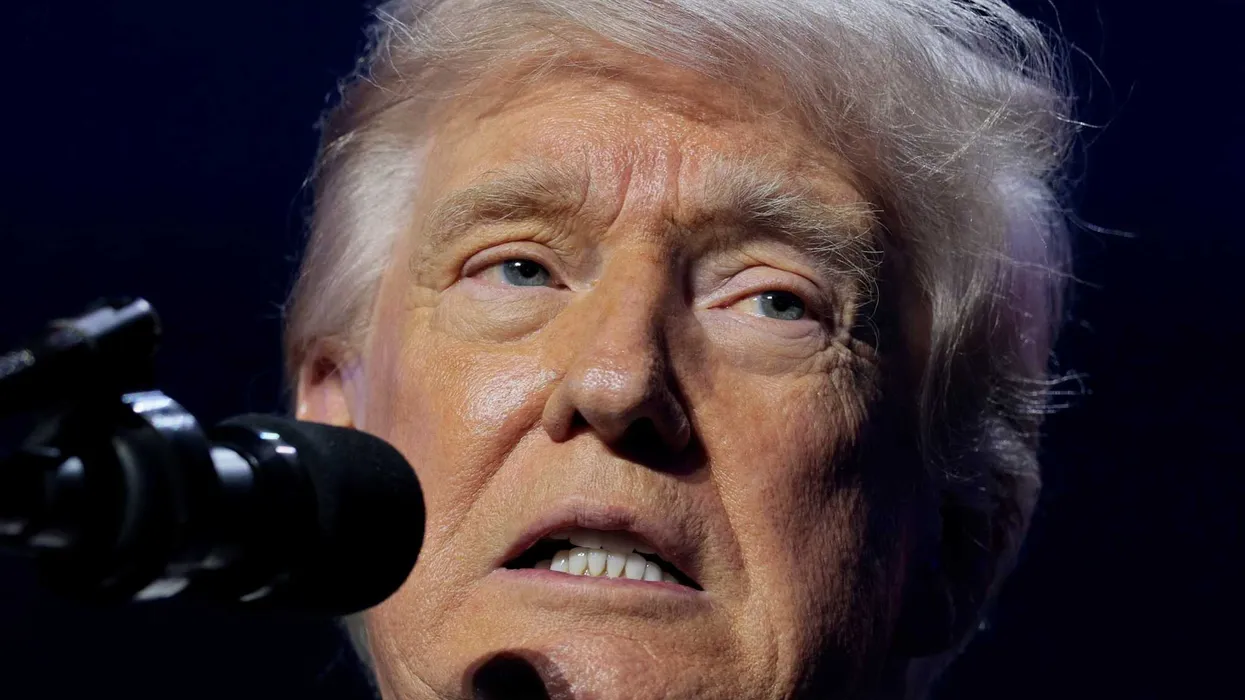
President Donald Trump has made no secret of his disdain for Andrew Weissmann, the former Department of Justice prosecutor who served as a leading member of Robert Mueller's investigation. Trump has publicly called Weissmann "scum" and "a bad guy," and has singled him out in multiple executive orders — one revoking his security clearance and another targeting the law firm that employs him.
Weissmann, for his part, says the president's hostility changes nothing. In his view, Trump cannot escape the corruption charges likely to pursue him long after he leaves the White House.
"The one thing I strongly suspect, if we get back to a normal rule of law administration, I think we're going to learn about corruption," said Weissmann, author of the new book Liar's Kingdom: How to Stop Trump's Deceit and Save America. "We're going to learn that it is off the charts, particularly regarding financial crime, and it's going to be eye-popping."
Financial crime prosecutions, Weissmann noted, have a long half-life — and presidential immunity does not shield them. His assessment carries particular weight given his career focus on complex financial crime: before joining the Mueller team, Weissmann directed the Justice Department's Enron Task Force and spent years prosecuting organized crime and white-collar fraud cases.
The Supreme Court's July 2024 ruling in Trump v. United States granted former presidents presumptive immunity for official acts but explicitly left unofficial, private conduct unprotected — a distinction Weissmann pointed to as leaving financial-crime exposure intact.
"That is the kind of thing that can be prosecuted, and it is not covered by immunity," Weissmann told Washington Roundtable host Jane Mayer. "The statute of limitations, which is the time period by which you've brought a case, will not have run on those things. This means it won't be too late to prosecute. So, if Donald Trump is out of office in a couple of years and you have a normal administration, even at the shortest range it's a five-year statute of limitations, which means you have five years to bring a case."
He added that there are also "all sort of ways" to extend the deadline further: "I'm saying given the shortest amount of time is five years, but it could be much longer in effect."
Weissmann argued that prosecutions must be brought if the nation is to recover from what he described as the corruption Trump has spread across the federal government. He called Trump the ultimate stress test for democracy, exposing where democratic institutions are failing — a framing consistent with broader debates among legal scholars and former prosecutors about how accountability mechanisms have performed under successive administrations.
"We cannot be in the situation where if we get out of this we go into denial about what happened. There's no putting the genie back in the bottle. If you have Donald Trump winning twice there will be many, many more of these [kinds of bad characters]," he said. "We're humans. We are imperfect. The whole idea of institutional reform is to have the institution create rules that lessens these risks."
A course correction, he cautioned, depends on whether future leaders have the resolve to act on evidence of wrongdoing: "We have the backbone and the smarts to realize that where there is that proof — and if it's a righteous case not a vindictive case — that it has to be brought as a deterrent to this happening again."
"We can't close our eyes to it," he warned.
Source: AlterNet | Related: The New Yorker — Andrew Weissmann Thinks Donald Trump Can Be Held to Account

