Trump appointees issue sharp ruling as judges question DOJ credibility
Key Takeaways
- •ProPublica reviewed hundreds of cases since Trump returned to office and found more than 40 in which judges explicitly cited the presumption of regularity.
- •Judges have accused DOJ lawyers of misrepresenting facts, withholding information, submitting incorrect declarations, and even citing nonexistent case law generated by artificial intelligence.
- •The criticism has come from judges appointed by both Republicans and Democrats, including in cases involving immigration enforcement, subpoenas, and detention challenges.
- •Some judges have referred DOJ lawyers for possible discipline, including in Rhode Island and Miami.
- •Legal scholars and former judges say the growing distrust may reduce the government’s procedural advantage in court.
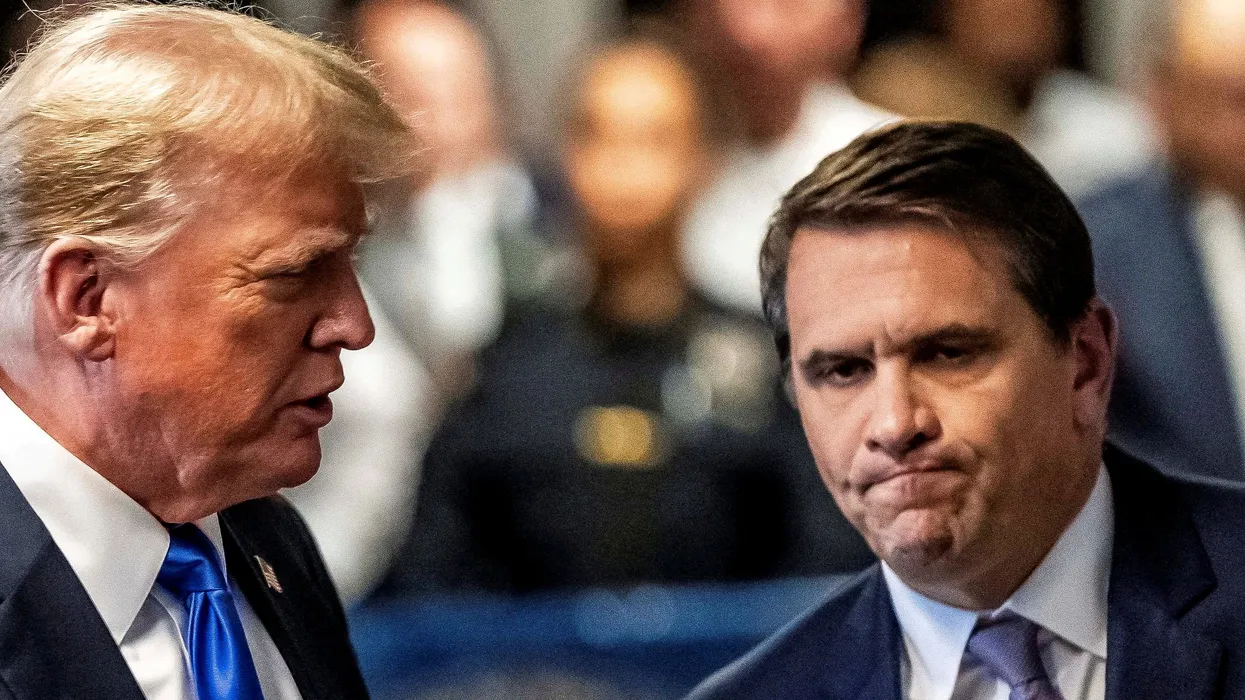
Across the country, federal judges are publicly rebuking Department of Justice lawyers and, in unprecedented ways, questioning whether they can be trusted to tell the truth or uphold long-standing legal norms.
From Washington, D.C., to Rhode Island and Oregon, judges nominated by presidents of both parties, including Donald Trump, have focused on what is known as the “presumption of regularity.” The doctrine requires judges to presume that government officials — whether federal prosecutors, an IRS auditor or an FBI agent — acted according to the rules and in good faith.
Until Trump’s second term, which has brought an exodus of veteran DOJ lawyers and a sharp shift in priorities from civil rights enforcement to defending a mass deportation agenda, that foundational principle was rarely discussed in federal courtrooms, according to former judges, lawyers and scholars. But as Trump’s DOJ has engaged in conduct that judges have described as “unlawful,” “unethical,” “unseemly” or otherwise dishonest, courts have increasingly questioned whether the standard still applies, especially in cases where government lawyers ask judges to rely on filings and declarations as the basis for urgent rulings.
ProPublica reviewed hundreds of cases since Trump returned to the White House in which judges criticized DOJ lawyers, and found more than 40 that explicitly referenced the presumption of regularity. In many of those cases, judges said they could no longer accept the government’s assertions at face value.
“Judges simply don’t believe the representations that are being made by United States attorneys, assistant United States attorneys and the like,” said John E. Jones, a former federal judge for the District of Pennsylvania appointed by President George W. Bush. “I don’t think in the annals of the Department of Justice, in the history of jurisprudence in the United States, we’ve ever seen anything close to this.”
In Rhode Island in May, Trump-appointed federal Judge Mary McElroy sharply criticized federal prosecutors, saying they withheld information and misrepresented facts when she quashed their subpoena requests in an investigation into a hospital’s care of transgender children. McElroy said the DOJ falsely claimed the inquiry was operating out of Texas in order to obtain subpoenas for sensitive medical records in another state, and also wrongly claimed the Rhode Island hospital had not communicated with the department.
“The discrepancy between the honorable conduct expected of federal prosecutors and DOJ’s tactics in this case is unsettling,” McElroy wrote. “The Court cannot help but share the sentiment that ‘[t]he presumption of regularity that has previously been extended to [DOJ] that it could be taken at its word — with little doubt about its intentions and stated purposes — no longer holds.’”
Judges have also issued forceful criticism of the legal basis for parts of Trump’s political agenda, including mass firings of federal workers, immigration enforcement actions that have imprisoned hundreds of U.S. citizens and retaliation campaigns against the president’s political enemies. Legal scholars say the tone of those rulings signals to the administration that the judiciary is losing trust in the Justice Department, a shift that matters because the presumption of regularity has long functioned as a key procedural advantage for the government.
Federal judges rarely grant interviews, and none of the judges who criticized the DOJ in their orders spoke with ProPublica.
In a statement, DOJ spokesperson Kiersten Pels said the department’s attorneys are “dedicated public servants who represent the United States with integrity, in accordance with their ethical obligations and the law.” She added, “The Department stands firmly behind the professionalism and good faith of its attorneys.” The White House did not respond to a request for comment.
According to ProPublica’s review, federal judges have found that the government submitted artificial intelligence-generated statements citing nonexistent case law, filed briefs that ignored facts and submitted declarations with incorrect dates. In one case, the government produced documents stating that a detainee had been convicted of marijuana possession in 2009. The judge noted that the detainee would have been 4 years old at the time, citing what she described as the government’s persistent “sloppiness.”
“This Court will no longer blindly accept statements of fact from [the U.S. government] unless they are made under oath by an individual with personal knowledge,” Judge Christine O’Hearn, a Biden appointee in New Jersey, wrote while reviewing a habeas corpus petition from a man who said immigration officers had unlawfully detained him. O’Hearn also accused the government of defying her orders when, instead of releasing the man, Immigration and Customs Enforcement transferred him to another facility in New York.
In Minnesota, the state’s top political leaders had already clashed with the administration after violent ICE raids that led to the deaths of two U.S. citizens. The administration later filed a series of subpoenas against them. Last month, Judge Patrick J. Schiltz, a George W. Bush appointee who clerked for Supreme Court Justice Antonin Scalia, condemned the government’s “spurious claims” and said the presumption of regularity was being abused.
“Initiating a criminal investigation in order to harass political opponents or to coerce them into taking official action — particularly official action that the federal government cannot directly require those political opponents to take — is a blatantly unlawful and unethical use [of] the grand-jury process,” Schiltz wrote.
A “breakdown” of a presumption
The presumption of regularity sets a high bar for people suing the government or defending themselves in criminal cases. To overcome it, they often must show that the government willfully violated a policy or otherwise deviated from its duties.
It is a powerful shield for the government and one that is usually accepted without much dispute. But court watchers say overcoming that presumption has become more common during Trump’s second term, particularly in litigation tied to immigration enforcement and emergency challenges that reach federal judges on short timelines.
About half of the cases ProPublica identified came from districts such as Washington, D.C., Maryland and Virginia, where many Trump-related challenges are filed and often heard by Democratic-nominated judges because of jurisdiction and proximity. The Southern District of New York, which has repeatedly rebuked Trump administration actions, and the Northern District of California are also major centers of scrutiny.
Last September, D.C. Magistrate Judge Zia M. Faruqui accused the administration of circumventing the federal grand jury process by securing an indictment in state court after prosecutors failed to obtain one in his court. He called the maneuver “unseemly,” if not “unlawful.”
“This only deepens the growing mistrust of the actions of prosecutors,” Faruqui wrote. “That is a sentiment that was once unthinkable, but the irregular is now the regular.”
Although assistant U.S. attorney Caelainn Carney handled much of the case, according to court transcripts, Faruqui directed his frustration at senior prosecutor Jonathan R. Hornok and DOJ leadership. Neither attorney responded to requests for comment.
Pels, the DOJ spokesperson, said Faruqui “was wrong on the law” and noted that his order was later overruled after the government appealed to the district’s chief judge. She also said, “Judge Faruqui has a long-standing documented pattern of editorializing from the bench beyond the scope of the cases before him.”
In recent months, however, skepticism about the presumption has also come from judges appointed by Republicans and from courts in GOP strongholds.
In Indiana, Trump-appointed Judge James Patrick Hanlon ordered the release of Salah Sarsour, president of the Islamic Society of Milwaukee and a lawful U.S. resident, from ICE custody in March. Sarsour’s lawyers argued that the government had targeted him to suppress his First Amendment right to free speech. The DOJ invoked the presumption of regularity and argued that his arrest was part of an anti-terrorism dragnet, an argument the judge rejected.
In the Southern District of Ohio, Judge Michael R. Barrett, appointed by George W. Bush, ordered ICE to release a detainee after concluding that the presumption had been overcome because the government had not presented a reasonable argument that the man posed a flight risk.
News organizations including CNN have documented the anger of federal judges toward Trump’s DOJ, and several of the cases have become widely known, including the government’s unlawful deportation of Maryland resident Kilmar Abrego Garcia to El Salvador. In that case, Judge Paula Xinis, an Obama appointee, told the government, “You have taken the presumption of regularity, and you’ve destroyed it.”
Many of the rulings have focused on one of Trump’s signature priorities: immigration enforcement and deportations.
“The presumption of regularity and integrity previously and routinely afforded to the Executive branch and the United States Attorney’s Office has been undeniably eroded in this jurisdiction and across the country,” O’Hearn wrote in February, noting repeated federal court-order violations in immigration cases in her district and others.
In another immigration detention case in Washington state, Judge Lauren King, a Biden appointee, wrote that “[t]he ‘presumption of regularity’ is dislodged here by the numerous factual errors in Respondents’ filings and by their conflicting representations.”
Jeremy Fogel, executive director of the Berkeley Judicial Institute and a former federal judge in California, said the current climate feels more like a “political conflict” than the usual operation of the justice system.
“It’s really one branch that is really sort of questioning the legitimacy of the other one,” Fogel said. “I think the judges are trying to stand up for the legitimacy of their branch.”
Just Security, an online law and policy journal, has been tracking cases in which federal judges have admonished Trump’s prosecutors, including those involving the presumption of regularity.
“We’re witnessing a breakdown in the ways in which any administration ordinarily carries out its responsibilities, through the Justice Department in particular,” said Ryan Goodman, Just Security’s co-editor-in-chief.
Erosion of trust, ethics inquiries
The loss of confidence from the federal bench has come as Trump has moved the DOJ sharply toward his political agenda, including ending civil rights and diversity programs, deporting immigrants and rolling back environmental protections.
Lawyers who regularly face DOJ attorneys say the change is obvious in court.
Mitch Bernard, chief counsel at the nonprofit Natural Resources Defense Council, has confronted the department on environmental matters many times. He said that even when they disagreed, he had expected DOJ lawyers to be “fair and above board.”
“That dynamic is gone,” Bernard said.
“I would call it a transformation of the role of the Justice Department,” he said. “There are many different judges in different jurisdictions not only ruling against the government but calling the government out for dishonesty and dissembling, and that’s an extraordinary thing.”
Bernard said the result is that “the government will lose more cases as a result of the way the Justice Department is behaving.”
He also said organizations like his are benefiting from departures from the department. “We hired 10 litigating attorneys last year,” Bernard said. “Of those, eight came from the DOJ.”
Judges are not only losing faith in the department; some are also moving toward possible discipline for DOJ lawyers.
This month, Miami federal Judge Kathleen M. Williams ruled that Trump’s lawsuit against the IRS was an improper exercise in self-enrichment, citing a series of misstatements by the president’s lawyers. The Obama appointee referred Alejandro Brito, the lawyer who brought the case against the IRS, to the Florida Bar for possible disciplinary action. She also forwarded her ruling to disciplinary officials in New York, who had already received an ethics complaint about acting Attorney General Todd Blanche.
A DOJ spokesperson called the Blanche matter “nothing more than a politically motivated bar complaint, filed by partisan activists who disagree with this Administration’s policies.” Brito did not respond to a request for comment.
In Rhode Island, McElroy referred DOJ lawyers to a review board for possible discipline over their handling of the hospital investigation.
“As citizens, we trust that federal prosecutors, when wielding this awesome power against a state, a company, or certainly against vulnerable children, will play fair and be honest with its counterparts and the judiciary,” McElroy wrote. “DOJ has proven unworthy of this trust at every point in this case.”

