Richmond Fed Manufacturing Index for July at 5, Below 10 Estimate
Key Takeaways
- •The July Richmond Fed Manufacturing Index registered 5, below the estimated 10.
- •The prior month’s composite index was 4, indicating a modest improvement in the headline reading.
- •The services index fell to -3 from -1 in the previous month.
- •Manufacturing shipments increased to 8 from 3 last month.
- •The survey covers the Fifth Federal Reserve District and is closely watched as an early indicator of U.S. factory activity.
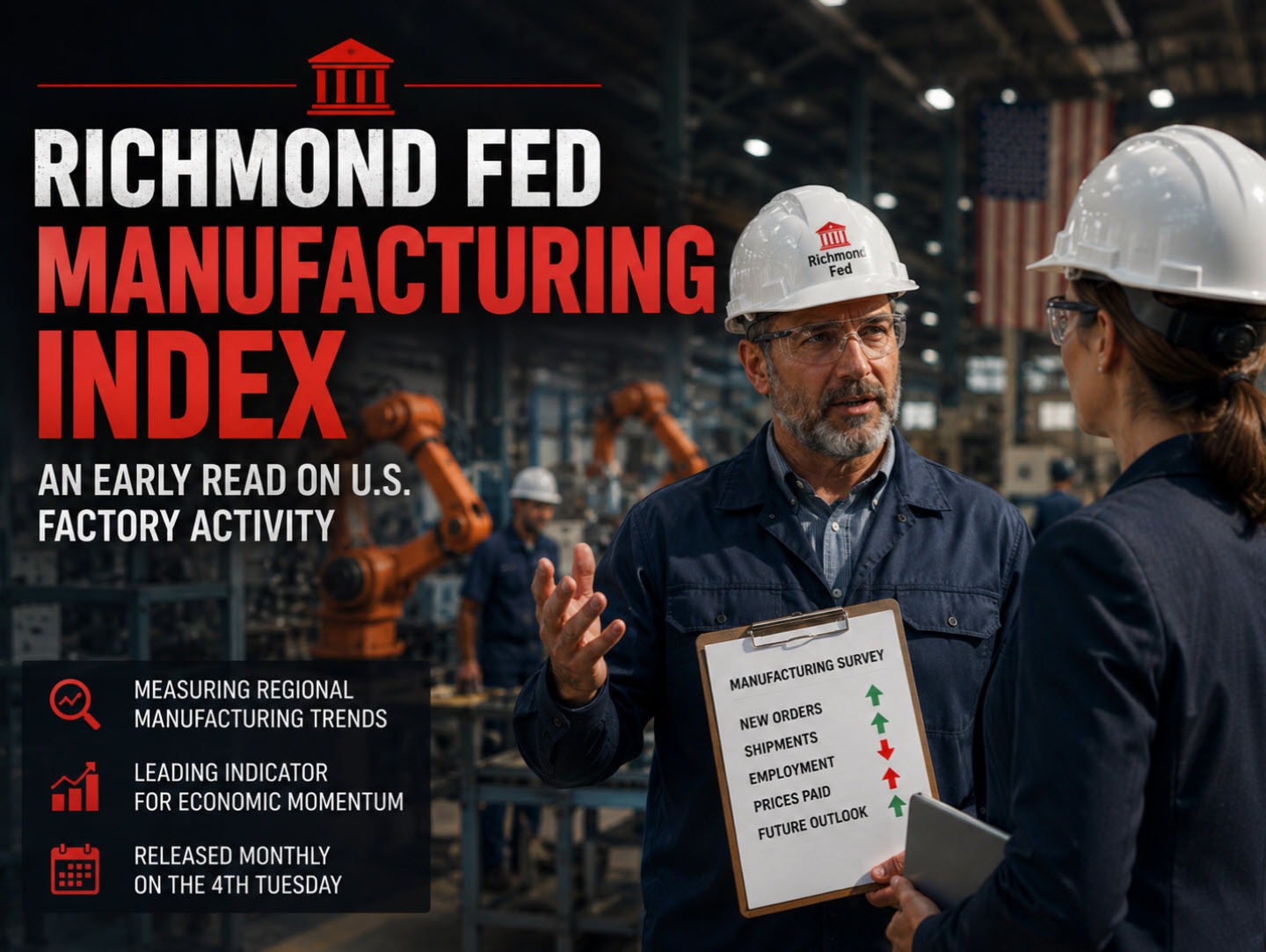
Richmond Fed Manufacturing Index for July at 5, Below 10 Estimate
The Richmond Fed index for July 2026 came in at 5, below the estimate of 10.
The prior month’s composite index was 4. The services index was -3, compared with -1 in the previous month. Manufacturing shipments rose to 8 from 3 last month.
The Richmond Fed Manufacturing Index is a monthly survey published by the Federal Reserve Bank of Richmond that measures manufacturing activity in the Fifth Federal Reserve District, which includes Virginia, Maryland, North Carolina, South Carolina, the District of Columbia, and most of West Virginia. It is released on the fourth Tuesday of each month and is one of several regional Fed manufacturing surveys that provide an early look at U.S. factory activity, so it is often watched for hints about broader manufacturing trends before national data are released.
How to interpret it:
Above 0: Manufacturing activity is expanding.
Below 0: Manufacturing activity is contracting.
Higher than expected: Stronger manufacturing sector.
Lower than expected: Weaker manufacturing sector.
Why markets care:
A strong reading can support the U.S. dollar and Treasury yields while boosting economically sensitive stocks.
A weak reading can pressure the dollar and yields, increase expectations for Fed easing, and weigh on cyclical stocks.
Beyond the headline, traders pay close attention to new orders, employment, shipments, and prices paid for clues about future growth and inflation.

