University of Michigan researcher documents ant behaviour that may help protect coffee plants from berry borers
Key Takeaways
- •Jonathan Morris of the University of Michigan documented ants using coffee berry borer-created spaces inside coffee fruits to reproduce.
- •The behavior adds a new layer to the ants’ role as biological control agents against coffee berry borers.
- •The research began in 2016 in Chiapas, Mexico and was revisited in 2025 to gather additional evidence and photographs.
- •The finding was published in The Scientific Naturalist section of the journal Ecology.
- •Coffee berry borer outbreaks can cause major economic losses, with global estimates reaching up to US$1 billion a year.
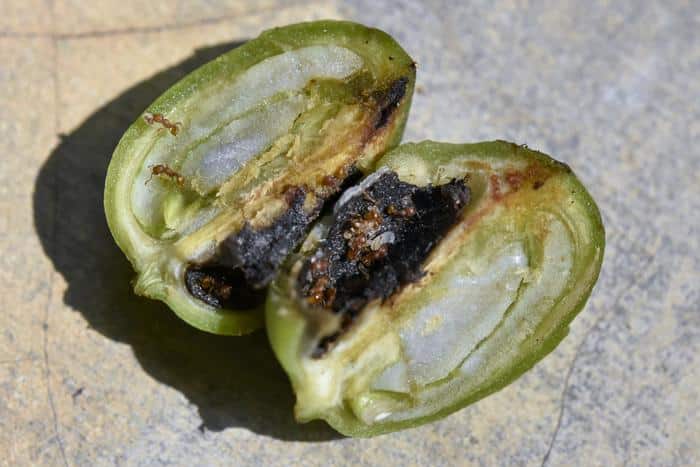
A researcher from the University of Michigan has identified a never-before-documented ant behaviour that could help protect coffee plants from coffee berry borers, one of the industry’s most damaging pests.
Ants are already known to be effective biological control agents against coffee berry borers, with some species preying on adult female coffee berry borers as they move between coffee cherries in search of new berries to infest. Graduate Student Jonathan Morris says his discovery adds “a new dimension” to that protection.
While it has already been documented that small ants can root the borers out of the homes they make for themselves in coffee fruits, Morris observed that these small ants can also use those habitats for reproduction. That means the pest-created spaces inside damaged berries may serve as both a target for ant defense and a site where ants can persist on the plant.
“In terms of pest control, this is primarily a good thing because it’s benefiting the ants in terms of their populations and fitness,” Morris said. “The ants gain this reproductive benefit that’s originally created by the coffee pest. And this might actually help to maintain more diverse ant communities directly on the coffee plants.”
Morris, now a postdoctoral researcher, began the project in 2016 while working at a research station in Chiapas, Mexico. During research for another study, he collected coffee berries that had at one point been infiltrated by coffee berry borers and later evicted by ants.
“I had all these ants in vials that I had found nesting in coffee fruits and told myself, ‘Maybe I’ll do something with this at some point,'” he said. “Then, years later, I got to thinking about it and, as far as I know, this is the first time anyone’s documented or reported the ants taking advantage of the niche construction by the berry borer and using it to reproduce themselves.”
In 2025, Morris returned to the field with a team of research technicians to gather more evidence of the behaviour and to take the first photographs of it. The finding is published in The Scientific Naturalist section of the journal Ecology.
Globally, economic losses from coffee berry borer outbreaks are estimated at up to US$1 billion per year. Infestations can cause 30% to 35% yield losses when berries are heavily attacked, and losses may be even higher if harvesting is delayed. In severe outbreaks, some farms have reported losing 30% to 80% of their harvest.

