Iran Announces Understanding on Safe Shipping Route Through Strait of Hormuz
Key Takeaways
- •Iran's foreign ministry announced an understanding with neighboring coastal countries on a safe shipping route through the Strait of Hormuz, indicating de-escalation even though the waterway remains under Iranian control and is not fully reopened.
- •The Strait of Hormuz is a roughly 21-mile-wide passage between Iran and Oman carrying about 20 million barrels per day of petroleum liquids, near one-fifth of global consumption, along with a significant share of world LNG exports.
- •Bypass pipelines such as Saudi Arabia's East-West line and the UAE's Fujairah route can divert only part of regional oil flows, leaving most cargoes dependent on safe passage through the strait itself.
- •Prediction markets have raised the perceived likelihood of a U.S.-Iran agreement on the strait, while the Iran-Oman Hormuz Management Agreement market showed fluctuating odds consistent with a potential but not finalized deal.
- •Focus is now on forthcoming joint statements, announcements from the U.S. administration or Iranian officials, and Strait of Hormuz shipping and transit data to assess implementation of any agreed safe-passage routes.
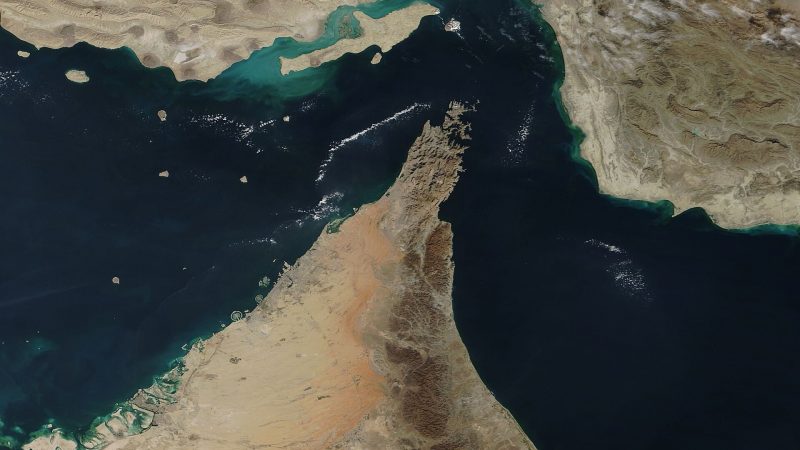
Iran's foreign ministry has announced that an understanding has been achieved regarding a safe shipping route through the Strait of Hormuz, involving agreements with neighboring coastal countries. The development comes amid ongoing negotiations over the strategic waterway, which has been a point of contention between Iran and Oman. According to the announcement, the understanding points to a de-escalation of tensions, although the strait remains under Iranian control and has not been fully reopened.
A Critical Global Chokepoint
The Strait of Hormuz is a narrow passage between Iran and Oman that connects the Persian Gulf to the Gulf of Oman and, beyond it, the Arabian Sea. At its narrowest point, the waterway is roughly 21 miles wide, with inbound and outbound shipping lanes running through the territorial waters of both countries. It is widely regarded as the world's most important energy transit chokepoint: estimates from the U.S. Energy Information Administration have put the flow of petroleum liquids through the strait at roughly 20 million barrels per day in recent years, equivalent to about one-fifth of global consumption, while a significant share of the world's liquefied natural gas exports also passes through it. Because the strait is the Persian Gulf's principal outlet to open ocean, alternatives are limited: bypass pipelines, such as Saudi Arabia's East–West line and the route serving the UAE's Fujairah export terminal, can divert only a portion of the region's oil flows, leaving most cargoes dependent on safe passage through the waterway itself. The strait has historically been a flashpoint in regional disputes, and disruptions to traffic there can ripple through global energy and shipping markets.
Market Response
Prediction markets, in which participants trade contracts tied to real-world outcomes and prices act as crowd-sourced probability estimates, have been actively tracking the negotiations. Participants in prediction markets tied to the negotiations appear to interpret the announcement as a positive step toward a potential agreement involving the United States and Iran, as well as Iran and Oman. Market activity suggests an increase in the perceived likelihood of a U.S.–Iran agreement concerning the Hormuz Strait, reflecting progress in negotiations. The Iran–Oman Hormuz Management Agreement market has shown fluctuating odds, with recent developments consistent with a potential, though not yet finalized, agreement. Statements from Iran's foreign ministry indicating progress may be viewed by market participants as an indication of easing diplomatic tensions.
What to Watch
Observers are expected to monitor any forthcoming joint statements from the countries involved, particularly Iran and Oman, as these could solidify perceptions that an agreement is taking shape. Attention will also focus on announcements from the U.S. administration or official Iranian sources, which could further influence market perceptions. In addition, shipping and transit data from the Strait of Hormuz will be crucial in assessing the practical implementation of any agreed-upon safe passage routes.

