Even Deep-Red Ohio Shifts Left as Pre-Midterm Polls Point to Trouble for Trump's GOP
Key Takeaways
- •If current polling proves accurate, Republicans could suffer a midterm outcome worse than 2018, when Democrats gained 40 House seats while losing two Senate seats.
- •Sabato's Crystal Ball moved Ohio's open gubernatorial race and Nevada Gov. Joe Lombardo's reelection bid from Leans Republican to Toss-up despite Republican spending advantages.
- •Kyle Kondik cited Trump's weak approval rating, typical midterm headwinds for the presidential party, and dissatisfaction with the economy and foreign policy as factors working against the GOP.
- •Kondik noted that the current Democratic lead on the generic ballot is larger than the Republican lead that preceded the GOP's 2022 House takeover under Biden.
- •Common Cause reported that the administration's push to compile state voter rolls into a federal database has failed in court whenever resistant states pushed back, with the group involved in roughly 17 such cases.
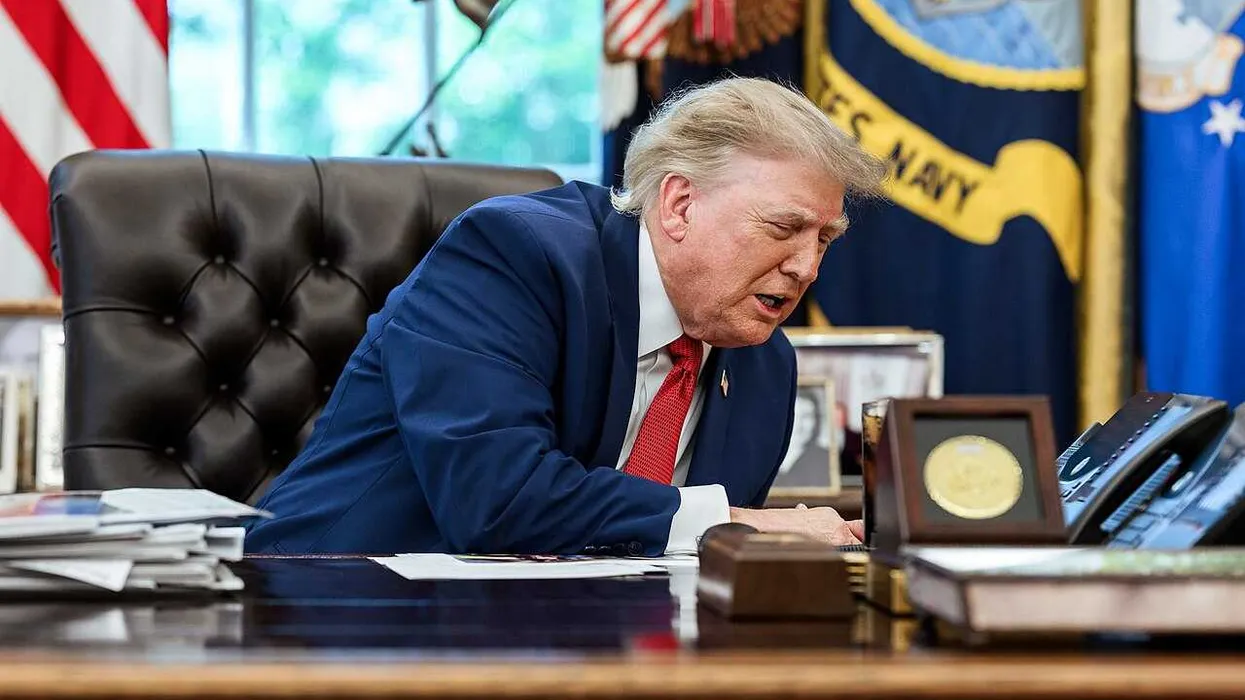
President Donald Trump's Republican Party is faring so poorly in pre-midterm polling that analysts have begun to wonder whether the surveys themselves are flawed. If the numbers are accurate, Trump could be headed for an even harsher midterm rebuke than the one his party received during his first term, when Democrats gained 40 seats in the House of Representatives in 2018 even while losing two Senate seats. All 435 House seats and dozens of governorships will be on the ballot when voters go to the polls in November 2026.
Kyle Kondik, managing editor of the University of Virginia Center for Politics' nonpartisan newsletter Sabato's Crystal Ball, addressed the question directly in a post on X on Tuesday.
"To be clear, I am concerned about polls being loaded up for Ds (and I note some of those concerns on a couple of newsy polls in my piece today that otherwise moves a lot of races toward Ds)," Kondik wrote. "But we also have to be open to the possibility that this is 2018 on steroids."
In an analysis published on the Sabato's Crystal Ball website, Kondik elaborated on his position, announcing a string of rating changes toward Democrats. The newsletter's ratings place contests on a spectrum from safely Democratic to safely Republican, with Toss-up reserved for races with no clear favorite.
"We also are pushing Ohio's open gubernatorial race as well as Gov. Joe Lombardo's (R-NV) reelection bid from Leans Republican to Toss-up," Kondik wrote. "We have resisted making this pair of moves for months because of the Buckeye State's generic GOP lean as well as Lombardo's incumbency, but we can no longer justify looking at the Republicans as favorites in either race given broader trends. Republicans have had big spending edges in both races but they still both appear highly competitive."
The Ohio shift carries particular weight. Once a famed presidential bellwether that Barack Obama carried twice, the state has backed Trump in both 2016 and 2020, a rightward lean that Kondik's team cited as the reason it had held off on the move for months. Lombardo, a former Clark County sheriff first elected in 2022, faces voters in Nevada, a battleground state decided by narrow margins in recent presidential cycles.
Speaking with AlterNet last week about the 2026 midterm elections, Kondik broke down the variables working against Trump's party.
"It's primarily the president's weak approval rating combined with the usual difficulty that the presidential party has in a midterm," Kondik told AlterNet. "I also think there may be even more for voters to react to in 2026 compared to even 2018, because Trump has acted as more of an imperial president and there is more dissatisfaction both with the economy as well as the president's foreign policy choices."
Asked to compare Trump's 2026 predicament with that of past presidents in analogous positions, Kondik drew notable parallels.
"Generally speaking, a president who is this unpopular should see his party lose a lot of ground in Congress," he said. "That said, Joe Biden also had poor approval in 2022, but Republicans didn't do all that well—they flipped the House but not the Senate. However, the Republican lead in the generic ballot was not as large as the Democratic lead is now." The generic ballot — the survey question asking whether voters would back a Democratic or a Republican candidate for Congress — is a standard gauge of the national midterm environment.
In June, Susannah Goodman, policy director of the nonpartisan watchdog Common Cause's Voting and Fair Representation Program, warned that Trump might seek to meddle in the midterm elections — which are administered at the state and local level — in order to rig them for his party.
Goodman said the administration "has been trying to compel states to turn their voter rolls over to the federal government and to consolidate all of that in a mega database." A number of states, she noted, have refused to hand over unredacted voter rolls containing personal identifying such as Social Security numbers and driver's license numbers.
"Common Cause and our partners have intervened in, I think, 17 of those cases on behalf of voters," she said.
Goodman added that courts have so far sided with resistant states: "I don't believe there has been a single case, Dan — correct me if I'm wrong — where, when the state has resisted and claimed they are not going to turn these voter rolls over, the court has dismissed the case or compelled the states to turn them over. The government has not had a compelling reason, and the states have won. So when states fight back, they win. We have been involved in that litigation. That is another huge power grab by the administration. It is also an illegal power grab, and when we have pushed back, we have won."

