How Nigeria’s Early Digital Creators Helped Build Today’s Influencer Economy
Key Takeaways
- •Nairaland, launched publicly by Seun Osewa in March 2005, showed that Nigerians could build large participatory communities online.
- •Blogs such as BellaNaija and Linda Ikeji’s Blog helped turn Nigerian lifestyle, entertainment and celebrity coverage into commercially valuable digital content.
- •iROKO demonstrated that Nollywood films could reach online audiences locally and in the diaspora beyond cinemas, DVDs and television schedules.
- •Toke Makinwa’s Toke Moments and Mark Angel Comedy showed how individual personalities and short-form video could build loyal digital audiences.
- •Nigeria’s current creator industry now includes talent managers, influencer agencies, production studios, paid communities, merchandise and international partnerships.
Before Nigeria’s creator economy became associated with TikTok dances, Instagram skits, YouTube podcasts, ring lights and agency-managed brand deals, online publishing often meant working from a cybercafé and hoping a slow internet connection held long enough to upload a post.
At that time, few people introduced themselves as content creators. Influencer managers were not yet a visible part of the media business, and companies were not routinely allocating millions of naira to influencer campaigns. Still, a small group of internet entrepreneurs had begun gathering audiences online and testing formats that many Nigerians were only starting to understand.
They included bloggers, forum operators, digital publishers, vloggers and video producers. They did not describe their work as part of a creator economy, but their experiments helped establish the foundations of the industry now visible across Nigerian social media.
When Nigerian attention moved online
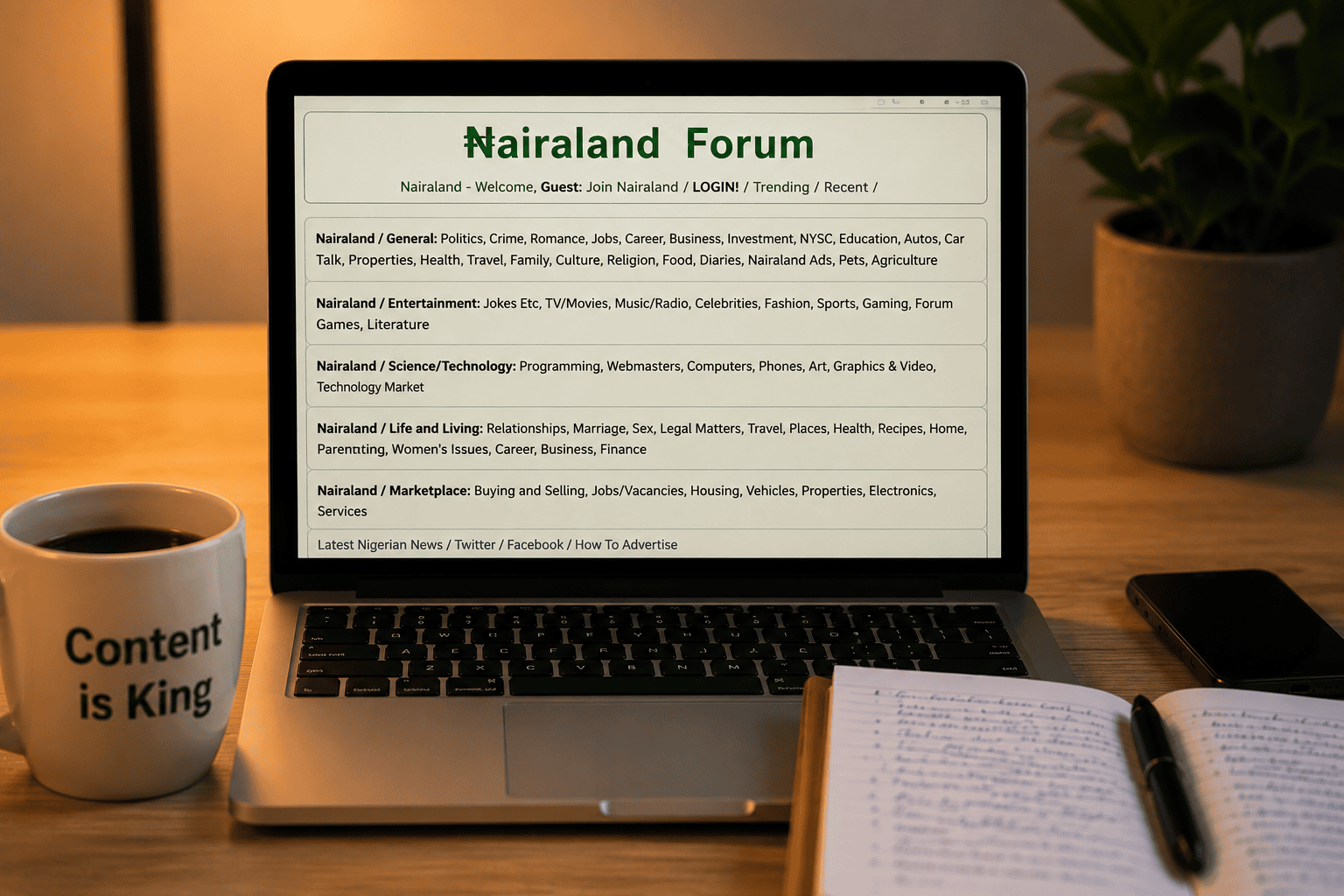
One of the earliest signs that Nigerians were ready to form large communities on the internet came from Nairaland. Seun Osewa opened the online forum to the public in March 2005, creating a space where users could debate politics, relationships, jobs, technology, entertainment and nearly every other subject.
Nairaland was not centered on a single celebrity figure. Its influence came from ordinary users creating the conversations themselves. That participatory model later became central to the creator ecosystem: a person did not need to own a newspaper, radio frequency or television station to attract an audience. They needed something compelling to say and a platform where others could respond.
The bloggers followed.
Uche Pedro launched BellaNaija in 2006 as a small blog that later grew into a major lifestyle, entertainment, fashion and wedding platform. BellaNaija helped show that Nigerian culture could be presented online with polish, aspiration and commercial value.
Its impact was especially visible in entertainment and weddings. Events that might once have remained inside family photo albums became content for a broad digital audience. Designers, photographers, makeup artists and event planners gained visibility alongside the couples being celebrated. BellaNaija was not only reporting culture; it was helping package Nigerian lifestyle for the internet.
Linda Ikeji took another route. She began blogging in 2006, publishing entertainment news, celebrity stories, personal opinions and gossip on Linda Ikeji’s Blog. The format was simple, but the connection with readers was strong.
Readers returned several times a day, not just for the stories but for the often-heated exchanges beneath them. The comments section became a form of entertainment in its own right. Audiences were not passive consumers; they became part of the spectacle. Ikeji’s success influenced how many young Nigerians viewed the internet. A person with a laptop, a distinctive voice and relentless consistency could build an audience large enough to attract advertisers and become a media brand.
Others extended the model. Noble Igwe built a digital identity around publishing, entertainment and fashion through platforms including 360Nobs and StyleVitae. Chude Jideonwo and Adebola Williams launched YNaija in 2010, combining politics, youth culture, entertainment and social commentary for a younger online audience.
Together, these platforms helped create an early class of Nigerian internet celebrities, writers and cultural commentators. They also encouraged advertisers to look beyond radio, television and newspapers. Online attention was becoming a product that businesses could pay to access, especially as audiences started spending more time on websites and social platforms rather than waiting for traditional media gatekeepers.
From blogs to video screens
Blogs helped establish online audiences, but video made creators feel more immediate and personal.
Jason Njoku was among the entrepreneurs who recognized that Nigerian films could reach a global audience online. iROKO began by legally distributing Nollywood content on YouTube before moving to its own streaming platform in 2011. Its significance went beyond streaming alone.
iROKO showed that Nigerian entertainment could move digitally without relying entirely on cinemas, DVDs or television schedules. It connected local content with viewers in the diaspora and demonstrated to producers that the internet could become a serious distribution channel.
At the same time, individual personalities were learning how to speak directly to viewers.
Toke Makinwa’s Toke Moments placed her personality, opinions and life experiences at the center of the product. By 2015, she was recognized as one of Nigeria’s most consistent YouTube creators after maintaining a regular vlog schedule from 2013.
That format is now familiar: sit in front of a camera, tell an engaging story, build a loyal audience and convert that relationship into opportunities beyond the platform.
Mark Angel Comedy then changed the scale of the conversation.
The comedy channel began its YouTube journey in 2013, using familiar neighborhood settings, simple production and distinctly Nigerian humor to reach millions of viewers. In 2017, it became the first Nigerian-based YouTube channel to reach one million subscribers.
The success of Mark Angel, Emmanuella and the wider cast mattered because it challenged the assumption that digital content required expensive studios or established celebrity actors. A street, a family compound and a memorable punchline could be enough.
Today’s skit industry, with production teams, recurring characters, brand placements and ambitions that extend into film, owes part of its structure to that period. Mark Angel Comedy showed that short online comedy could become a repeatable media business rather than a single viral moment.
The early ecosystem was not without problems. Copyright disputes, copied stories, sensational headlines and uncertain advertising models were common. Creators often built businesses on platforms they did not control, while reliable payment systems and professional management structures were still developing.
Those weaknesses, however, do not erase what the early players achieved.
Nigerian creators now operate in a more organized industry. Talent managers, influencer agencies, production studios, paid communities, newsletters, courses, merchandise and international partnerships have become part of the landscape. The tools have changed, the ambition has expanded and the money has become more visible.
Nigeria’s creator ecosystem did not suddenly emerge when TikTok became popular. It was built gradually by people publishing from cybercafés, running forums, writing blogs, uploading weekly videos and betting on Nigerian stories before brands fully understood their value.
The creators dominating timelines today may be the most visible generation, but they were not the first.

