Iran Says Zelensky Ordered Attack on Iranian Commercial Ship at Israel’s Request
Key Takeaways
- •Iran’s foreign minister accused Zelensky of approving an attack on an Iranian commercial ship at Israel’s request.
- •HOKANEWS has not independently verified the allegation, and no public evidence has been provided to substantiate it.
- •Ukraine and Israel had not publicly responded to the accusation at the time of publication.
- •The claim emerges against a backdrop of Iran-Israel shadow conflict and strained relations between Tehran and Kyiv.
- •Confirmed disruptions to commercial shipping could have wider implications for trade, insurance costs, energy markets, and regional security.
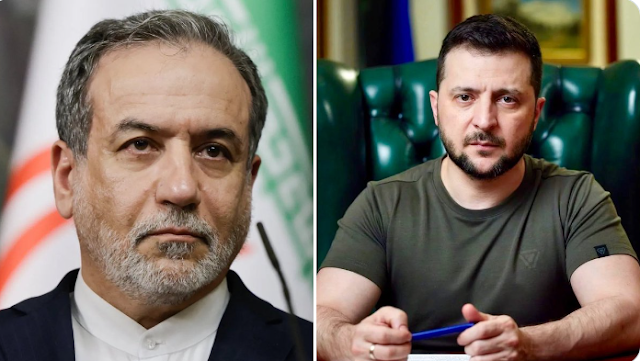
Iranian Foreign Minister Abbas Araghchi has accused Ukrainian President Volodymyr Zelensky of authorizing an attack on an Iranian commercial ship at Israel’s request, according to a statement circulated by XBRICS News on social media.
The allegation has drawn international attention but has not been independently verified by HOKANEWS. At the time of publication, neither the Ukrainian government nor Israeli officials had publicly confirmed or responded to the accusation.
Source: X post
Iranian Foreign Minister Makes Allegation
Araghchi alleged that Zelensky was responsible for an operation targeting an Iranian commercial vessel and said the action was carried out following a request from Israel. The remarks spread quickly after being reported by XBRICS News, prompting discussion among international observers and geopolitical analysts.
Iran has publicly made the accusation, but no official evidence has been released to substantiate the claim. Governments and intelligence agencies outside Iran have not independently confirmed the allegation.
As of publication, Ukrainian authorities had not issued an official response directly addressing Araghchi’s statement. Israel also had not publicly commented on the accusation.
Claim Has Not Been Independently Verified
For now, the claim remains an allegation by Iranian officials. International media organizations are continuing to seek more information about the reported maritime incident, while analysts have cautioned against drawing conclusions before independent investigations establish the facts.
The absence of publicly available evidence has led experts to urge careful evaluation of the claim. Maritime incidents involving several geopolitical actors often produce competing narratives, making independent verification essential before responsibility is assigned. In maritime cases, confirmation can depend on ship-tracking data, port records, satellite imagery, crew accounts, and statements from flag states or insurers, none of which has been publicly cited here as proof of the allegation.
HOKANEWS has not independently verified the allegation.
Maritime Security Remains a Global Concern
Commercial shipping routes have become recurring focal points of geopolitical tension in recent years. Attacks on commercial vessels, whether confirmed or alleged, can have implications for international trade, insurance markets, global energy supplies, and regional security.
The Middle East remains one of the world’s most strategically important maritime regions, with millions of barrels of oil and large volumes of commercial cargo moving through nearby waterways every day. Any escalation involving commercial shipping could affect markets beyond the immediate region.
Security experts have repeatedly warned that maritime incidents can quickly raise diplomatic tensions, particularly when multiple countries accuse one another of direct involvement.
Iran and Israel’s Long-Running Shadow Conflict
Iran and Israel have been engaged in a prolonged shadow conflict involving intelligence operations, cyber activity, military strikes, and regional proxy groups. Although both countries rarely acknowledge specific operations, each has frequently accused the other of attacks on military facilities, strategic infrastructure, and commercial interests.
The latest allegation involving Ukraine adds another international dimension to an already fragile geopolitical environment. Analysts note that any suggestion linking Ukraine to Middle Eastern maritime operations would likely draw scrutiny because of the ongoing war between Ukraine and Russia and the broader diplomatic relationships involving Western allies.
Ukraine’s relationship with Iran has also been strained during the Russia-Ukraine war, as Kyiv and Western governments have accused Tehran of supplying drones to Russia, an allegation Iran has repeatedly disputed or sought to qualify. That backdrop makes any new claim involving Iran and Ukraine especially sensitive, but it does not establish responsibility for the reported maritime incident.
Ukraine Has Not Responded Publicly
At the time this article was published, the Ukrainian government had not publicly commented on the allegation made by Iran’s foreign minister.
President Volodymyr Zelensky’s public communications have consistently focused on Ukraine’s defense against Russia’s ongoing invasion and diplomatic efforts to secure additional military and economic assistance from allied nations.
Without an official response from Kyiv, questions surrounding the Iranian accusation remain unanswered. International observers are expected to monitor any future statements from Ukrainian officials.
International Community Watches for Further Information
Diplomatic experts say accusations involving multiple sovereign nations can carry significant political consequences, even before evidence is publicly presented. If additional information emerges supporting or contradicting the Iranian claim, international organizations and governments may seek further clarification through diplomatic channels.
The situation also underscores the complexity of modern geopolitical conflicts, where military operations, maritime security, intelligence activity, and international alliances increasingly overlap. For now, governments continue to monitor developments while awaiting additional facts.
Social Media’s Role in Breaking Geopolitical Claims
The rapid spread of the allegation illustrates how social media platforms have become major channels for breaking international developments. XBRICS News was among the first widely followed accounts to circulate the Iranian foreign minister’s statement, drawing immediate global attention.
Professional news organizations continue to emphasize that information first appearing on social media should be evaluated carefully until it is confirmed through official statements, independent investigations, or multiple credible sources. Responsible journalism requires distinguishing verified facts from official claims, especially during periods of heightened international tension.
Markets May Monitor Further Developments
Financial markets have not immediately reacted specifically to this allegation, but investors often monitor geopolitical developments involving Iran, Israel, and major international shipping routes. Escalating regional tensions can influence energy prices, shipping insurance costs, commodity markets, and investor sentiment.
Any confirmed disruption affecting commercial maritime transportation could have broader economic implications beyond the countries directly involved. Financial analysts are likely to continue watching diplomatic developments in the coming days.
What Happens Next
Whether the allegation develops into a larger diplomatic dispute will depend largely on future statements from the governments involved and any evidence that may emerge. Independent investigations, official intelligence assessments, or international monitoring organizations could eventually provide additional clarity about the reported maritime incident.
Until then, the accusation remains an unverified claim made by Iran’s foreign minister. HOKANEWS said it will continue monitoring official statements and international developments as more information becomes available.

