'Another black eye for Dems': Far-right veterans bill passes on voice vote amid House floor chaos
Key Takeaways
- •A controversial Republican veterans bill, H.R. 9237, cleared the House on Wednesday via voice vote after no Democrat requested a recorded tally, marking the party's second misstep in two days.
- •Rep. Mark Takano said Republican leadership diverted Democratic leaders from the floor with an engrossment correction and a procedural proposal, enabling the bill to pass in roughly five seconds.
- •Takano argued the passage constituted an unprecedented breach of House procedure and warned that veterans and servicemembers could lose access to benefits under the legislation, noting the vote fell on Veterans Day.
- •The incident followed Tuesday night's vote in which 11 Democrats missed an impeachment vote due to traffic delays, prompting Rep. Steven Horsford to publicly take full accountability for his absence.
- •The Major Richard Star Act, the subject of Takano's discharge petition, would allow medically retired service members with fewer than 20 years of service to receive both military retired pay and VA disability compensation without one offsetting the other.
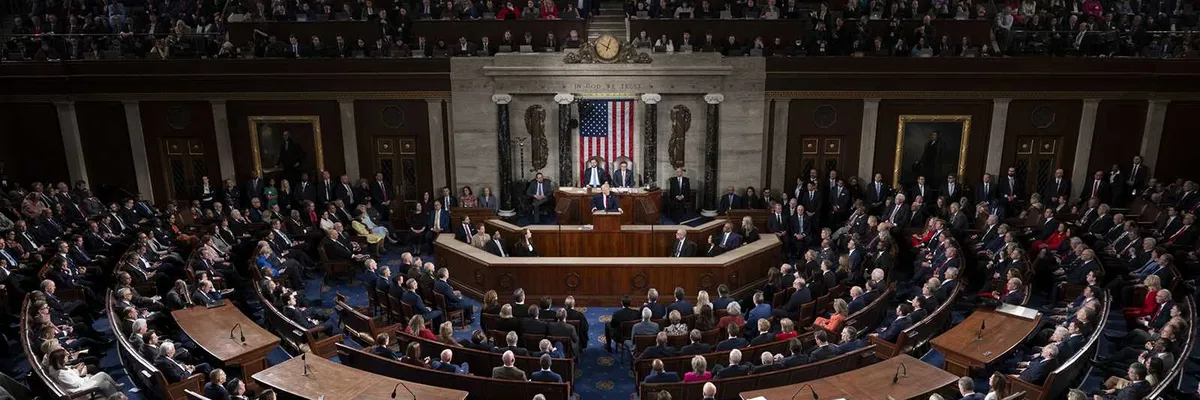
House Democrats stumbled for the second time in less than two days on Wednesday, allowing a far-right veterans bill to clear the chamber on a voice vote with no recorded tally requested.
Under a voice vote, the member presenting a bill is recognized, the parliamentarian asks for the "yays" — and the group shouts — then asks for the "nays," and they shout as well. House Republicans declared the bill passed. Any Democrat could have asked for a recorded vote, which requires the parliamentarian to call each member's name and record their position individually. Under House practice, voice votes are typically reserved for measures considered noncontroversial.
"Some confusion here about what exactly happened. But this is another black eye for Democrats. Two in two days," Punchbowl News reporter Jake Sherman wrote on X.
An anonymous Democratic staffer relayed the fallout in a message to a source: "It appears Democratic leadership just let a controversial veterans benefits bill pass by voice vote and didn't request a recorded vote. Hence the disarray on the floor. This is a huge procedural mess-up. Texts in group chats of Dem staff right now include phrases such as: 'How could they have let that happen?' 'We are not off to a good start.' 'This coming right on the heels of the attendance issue last night is incredibly damning of current leadership.'"
The reference was to a Tuesday night vote in which 11 Democrats, stuck in traffic, failed to reach the Capitol in time. One who did make it jumped out of the car and hurried inside on foot; another had the cab drop them off on the Senate side of the Capitol; another, who was undergoing minor surgery, arranged the procedure so they could return to vote on time. Two Democrats entered their votes after the fact.
The Nevada Independent's Jon Ralston reported that Rep. Steven Horsford (D-Nev.) spoke on the House floor Wednesday about his absence, citing a "personal emergency" and taking "full accountability" for missing Tuesday's impeachment vote. "The accountability I demand of others applies to me, too," Horsford said from the floor.
MS NOW reporter Mychael Schnell said on X that other House Democratic group chats pressed for specifics on the 11 absent members and why they missed the vote, complaining that the episode made the party look bad.
"The text was sent before the list of absences was known. One of the 11 identified themselves and explained what happened. Then a lawmaker responded and said everyone has to be at the Capitol for votes," Schnell said.
In an extensive statement, Rep. Mark Takano (D-Calif.), the ranking Democrat on the House Committee on Veterans' Affairs, laid out his account of what happened. "In short, GOP leadership resorted to unprecedented treachery to pass TCAVA because they did not have the votes to pass it otherwise," he said. "This is an affront to the veterans and servicemembers who now stand to lose access to benefits because of this terrible bill. This is also an affront to the workings of the House and we should all be outraged. These acts are made even more stark as we remember that today is Veterans Day."
Takano said that as the House was debating the "Rule" attached to his discharge petition to consider the Major Richard Star Act, the chamber began voting on HR 1013. "During this vote," the statement continued, "the speaker and GOP leadership presented Ranking Member Takano with an engrossment correction and a procedural option to allow the House to have a single vote tomorrow on the Major Richard Star Act, rather than a vote on the rule and a vote on final passage."
A discharge petition is a procedural tool that allows House members to force a bill onto the floor once a majority of the chamber — 218 of 435 members — signs on, bypassing leadership's control over the calendar. The Major Richard Star Act, the subject of Takano's petition, would allow service members retired for medical reasons with fewer than 20 years of service to receive both military retired pay and Department of Veterans Affairs disability compensation, rather than having one offset the other. An engrossment correction, meanwhile, is a technical fix to the final printed text of a bill after the chamber has approved it.
Takano and Democratic leadership stepped away from the floor to review the details of the package and the edits, at the request of Republican leadership.
While they were gone, the vote was closed out: "The Speaker Pro Tem. gaveled out the final vote on HR 1013 and quietly called up H.R. 9237 for a voice vote (where no members voiced a yay or nay) and gaveled out the vote on H.R. 9237 in a total of 5 seconds," the statement continued.
"This is an unprecedented breach of House procedure, all so House Republicans can quietly pass their bill without accountability and putting their names to their willingness to take benefits away from veterans," the statement said. "This evening RM Takano will take the floor to explain this outrageous series of events during the Special Order hour." The Special Order hour is the end-of-day portion of House business when individual members hold the floor to deliver speeches on topics of their choosing.

