Bluebulb Convenes Industry Leaders, Calls for Coordinated Action Against Fraud and Cyber Threats in Nigerian Finance
Key Takeaways
- •The Nigerian Cybersecurity and Fraud Roundtable, hosted by Bluebulb in Lagos on 11 November 2026, focused on building collective resilience against fraud and cyber threats in Nigerian finance.
- •Discussions at the roundtable produced 17 recommendations for further review, organised around proactive security, industry collaboration, regulatory engagement and investment in resilience.
- •Bluebulb CEO Ola Daramola argued that cybersecurity should be treated as a leadership responsibility that protects customer trust and institutional resilience, not merely as an IT cost.
- •Participants identified weaknesses in people, processes and technology within organisations as the primary enablers of fraud, calling for stronger internal controls, regular vulnerability assessments and board-level oversight of cyber risk.
- •Attendees supported cross-institutional intelligence sharing through the proposed Reporter platform and Fusion Centre, and committed to engaging the National Assembly on the amendment to the Banks and Other Financial Institutions Act (BOFIA).
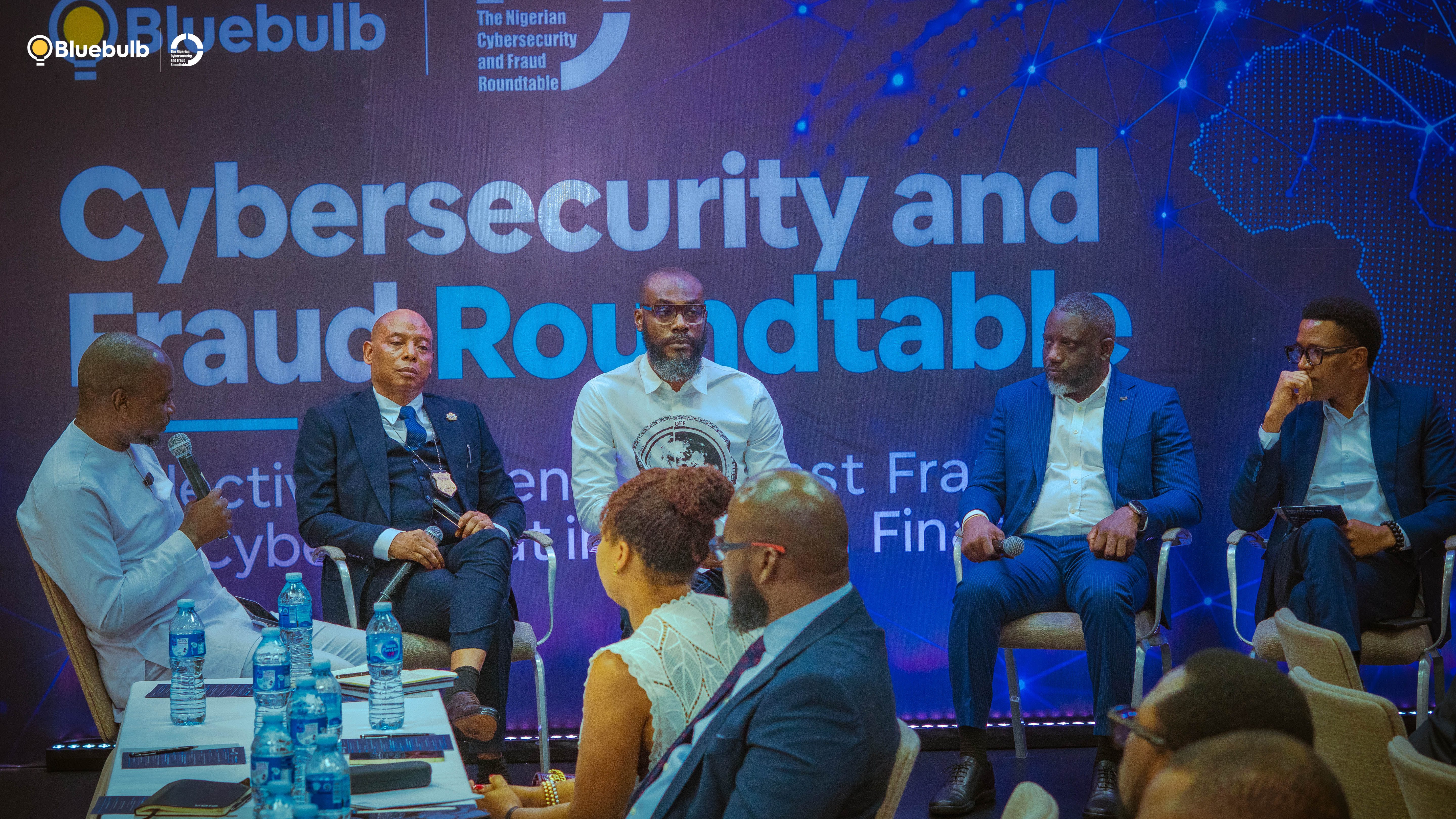
Bluebulb has called for coordinated action among financial institutions, cybersecurity experts, regulators and law enforcement agencies to address cybercrime, financial fraud and insider-enabled fraud across Nigeria's financial ecosystem.
The appeal followed the Nigerian Cybersecurity and Fraud Roundtable, convened by Bluebulb in Lagos on 11 November 2026 under the theme "Securing the Ecosystem: Collective Resilience Against Fraud and Cyber Threat in Nigerian Finance." Industry stakeholders examined the consequences of security failures, gaps in institutional controls and opportunities for responsible fraud intelligence sharing. The discussions produced 17 recommendations for further review, grouped around proactive security, industry collaboration, regulatory engagement and investment in resilience.
Ola Daramola, CEO and Co-founder of Bluebulb, said the industry must recognise cybersecurity as a leadership responsibility — one that protects customer trust and institutional resilience — rather than treating security solely as an IT expense.
"Fraudsters already operate as a network, and they exploit every gap between our institutions. Cybersecurity is not an IT cost; it is a leadership responsibility. Good legislation and strong regulation are essential, and we must engage fully with that process. But every institution can also act today, by putting its own house in order and by standing with one another," he said.
Other speakers echoed the call. Professor Adewale Peter Obadare, CEO of Digital Encode, a leading Nigerian cybersecurity company, stressed that fintechs must understand the consequences of failing to secure their operating environments. Ade Atobatele, CEO of Bootstrap Africa and Legishield, urged the industry to move beyond repeated conversations, make bold collective moves and seek the support it needs from regulators. Fintech expert Mayowa Owolabi drew attention to bad actors within financial institutions and the need for stronger action against fraud enabled by insiders.
Resilience starts from within
Participants agreed that fraud succeeds less through the sophistication of attackers than through weaknesses inside organisations — in people, processes and technology. They stressed that institutions must:
- Strengthen internal controls, access management and background checks to reduce insider risk
- Carry out regular vulnerability assessments, including on third-party providers
- Treat compliance as a daily practice, not a certificate on the wall
- Place cybersecurity and fraud on the board agenda as core business risks
Beyond each institution's own house, participants discussed more effective industry intelligence sharing, including further consideration of the proposed Reporter platform and the industry Fusion Centre — a shared structure for pooling fraud intelligence across institutions — alongside consistent customer profiling across institutions. The case for shared infrastructure rests on the gap Daramola described: fraud networks cross institutional boundaries, while defences that stop at each institution's edge leave the spaces between them exposed. Participants also considered engagement with regulators, law enforcement and the judiciary on investigation and recovery challenges, and committed to active engagement with the National Assembly on the amendment to the Banks and Other Financial Institutions Act (BOFIA), the principal legislation governing banks and other financial institutions in Nigeria, ensuring the fintech sector has a strong voice in the decisions that shape its future.
The recommendations serve as a basis for further consultation rather than a statement of formally adopted industry policy. Bluebulb intends to continue engaging relevant stakeholders on possible next steps. For the industry, the markers to watch are the outcome of those consultations, the progress of the BOFIA amendment through the National Assembly, and whether proposals such as the Reporter platform and the Fusion Centre move from discussion to implementation.
"This cannot end as another conversation. Bluebulb is committed to keeping this community working together until the system is genuinely safer for every institution and every customer," Mr Daramola added.
Bluebulb is an enterprise treasury solutions company helping global businesses command their money with clarity, control and confidence. Through advisory and technology, including Orbita, its enterprise treasury platform, Bluebulb brings liquidity, settlement and treasury operations together so finance leaders can see where their cash sits, where it is going and what it is doing. The company is building financial infrastructure that enables ambitious businesses, many of them growing from Africa, to operate confidently and compete anywhere in the world.

