Legal Analyst Harry Litman Says the 'Real Tragedy' of the Supreme Court's Ballroom Ruling Is 'Staring Us in the Face'
Key Takeaways
- •The Supreme Court's 5-4 shadow docket order lifted a lower court's block, allowing the White House ballroom construction to proceed while expressly declining to rule on the project's legality.
- •Litman wrote that every court to consider the ballroom's legality has found it likely unlawful, and no justice has written a defense of the project.
- •Because the order did not address the merits, the legal challenge can continue in lower courts, though Litman suggested review becomes largely academic once the building is finished.
- •Litman argued Congress has expressly barred construction on federal park grounds in Washington without direct authorization, and no cited statute permits razing the East Wing for a private ballroom.
- •The dispute reflects broader separation-of-powers tensions in Trump's second term over executive authority over federal property, personnel, and spending.
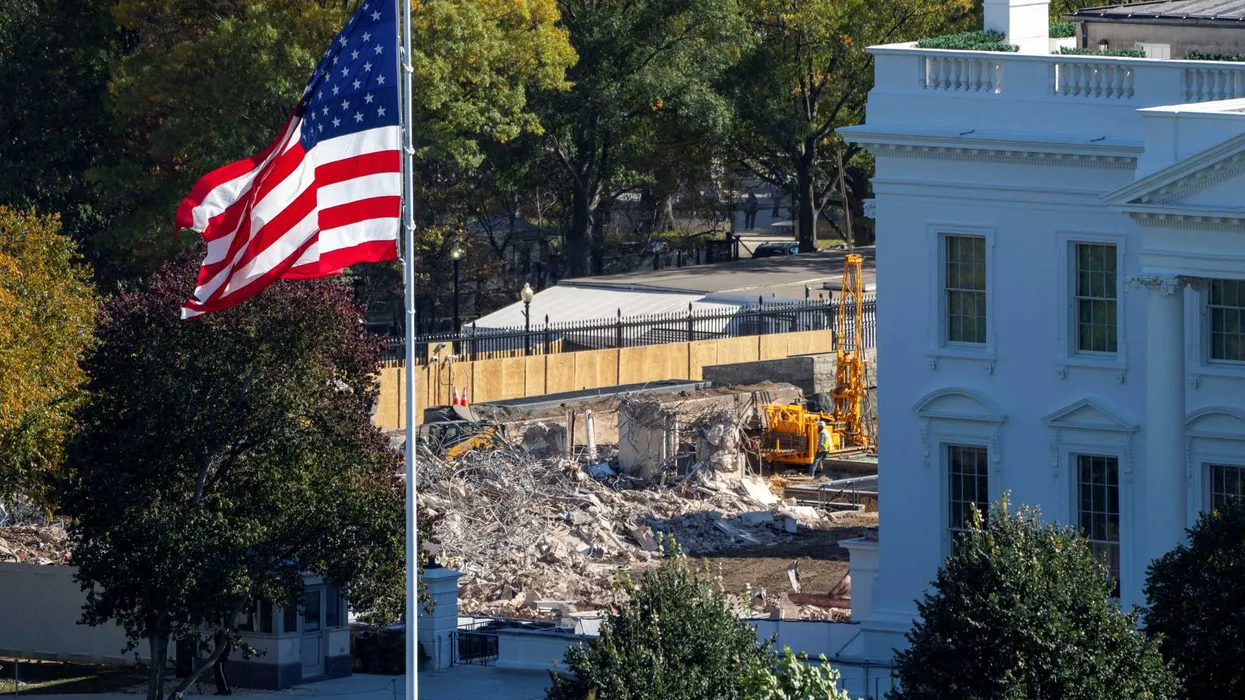
Former U.S. Attorney Harry Litman warned that the Supreme Court's latest ruling in the White House ballroom dispute carries a "real tragedy" that will outlast the case itself.
Writing Thursday on his Talking Feds Substack, Litman examined the Supreme Court's 5-4 decision concerning the White House ballroom. The Monday order cleared President Donald Trump to "proceed full steam ahead to construct his monstrous ballroom," Litman wrote.
The ruling lifted a lower court's block on the White House project, but the "per curiam, 5-4 order on the shadow docket expressly offered no opinion on the merits," Litman noted. The "shadow docket" refers to the Court's growing practice of resolving emergency applications through brief, largely unexplained orders rather than full briefing and signed opinions with precedential weight—a trend that has drawn increased scrutiny from scholars and members of Congress in recent years. Litman argued that the wording of the order had little to do with the legal arguments about who had standing to sue and who would be harmed by a construction pause.
"That's the real tragedy of the case, the point that eclipses standing doctrine and irreparable harm," Litman wrote.
He pointed out that "every court to consider the ballroom's legality has found it likely unlawful." Four justices now say the same, and "not one justice has written a word defending" the ballroom, Litman added. Because the order expressed no view on the merits, the underlying legal challenge to the project can continue in the lower courts even as construction proceeds—a dynamic Litman suggested makes judicial review largely academic once the building is complete.
The five justices in the majority said only that they "do not pass upon" the project's legality—language Litman called "cold comfort" given that the "unlawful project now resumes at deliberate breakneck speed."
Litman characterized the project as "in effect a raw power grab." Congress, he wrote, "has expressly forbidden any building on federal park grounds" in Washington without its direct authorization, and none of the statutes cited by the Trump administration permit the president to "raze the East Wing and put up a private ballroom." The dispute sits within a broader separation-of-powers tension that has run through the Trump administration's second term, as courts have repeatedly weighed how far executive authority extends over federal property, personnel, and spending without explicit congressional approval.
He also described the ballroom as a vanity project and called it "a monument to himself, a swollen reflection of his hopelessly grandiose self-image." The plan, he wrote, is "vastly unpopular with the American people, the actual owners of the 'People's House.'"
"Only a consummate and abject failure of the entire government—a corrupt president, a pliable and quiescent Congress, and a cynical Supreme Court refusing to confront the real stakes of the case—could even make it possible," Litman wrote. "But that's precisely what is now staring us in the face."
