FIFA's 2026 World Cup Strategy Faces Scrutiny as Blockchain Ticketing Quietly Enters the Picture
Key Takeaways
- •The 2026 World Cup will be the first 48-team edition, hosted across the United States, Canada, and Mexico with 104 scheduled matches and projected ticket and hospitality revenue between $3 billion and $7 billion.
- •FIFA is adopting dynamic pricing for tickets with some prices starting at $60, applying a model that has drawn controversy in the live-events industry to the world's largest football tournament.
- •A blockchain-based digital collectible system tied to ticket allocation and resale will allow FIFA to capture a 15% share of every secondary-market transaction.
- •FIFA intends to distribute tournament revenue evenly among its 211 member associations, which could generate significant on-chain financial activity even if participants are unaware of the underlying technology.
- •Analysts caution that the combination of dynamic pricing and revenue maximization could produce a K-shaped outcome where affluent fans secure premium access while other supporters are priced out or limited to low-cost seats for less prominent matches.
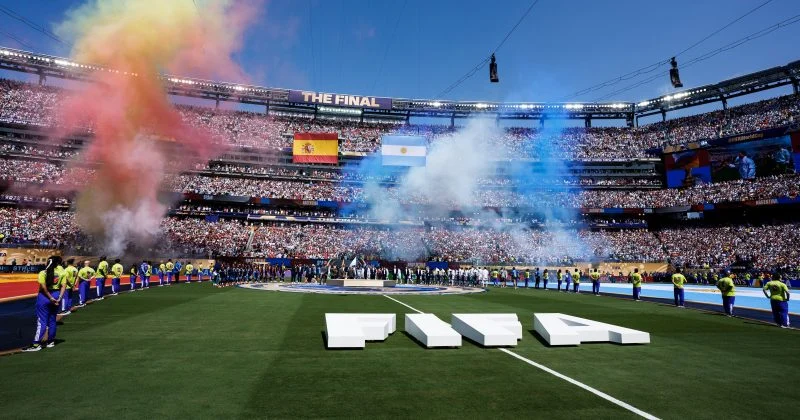
FIFA's roadmap for the 2026 World Cup is drawing criticism over a fundamental tension at its core: the organization aims to generate record-breaking revenue while simultaneously filling more seats than at any previous tournament. BBC economics editor Faisal Islam outlined why those two objectives may ultimately work against each other.
The expanded 48-team tournament—up from 32 in previous editions—will be hosted across the United States, Canada, and Mexico and is projected to bring in between $3 billion and $7 billion in ticket and hospitality revenue. By comparison, the 2022 FIFA World Cup in Qatar generated $929 million from the same revenue streams.
The Asset-Light Model
FIFA is relying on what observers describe as an "asset-light" approach, scheduling matches at existing NFL stadiums rather than committing billions to new construction. This marks a stark contrast with Qatar's hosting strategy, where the host nation invested heavily in building purpose-built facilities.
The organization is also implementing dynamic pricing for tickets, a technique widely used by airlines and live-event promoters in which prices shift in response to demand. According to reports, some tickets will start at prices as low as $60. Dynamic pricing has drawn scrutiny in the live-events industry in recent years, particularly following high-profile controversies over concert ticket costs, making its deployment at the largest World Cup to date a notable test case for the model at scale.
Islam's analysis highlights the risk of a "K-shaped" outcome: affluent fans gain access to premium hospitality packages, while other supporters are either priced out entirely or left competing for a limited number of low-cost seats at group-stage matches between less prominent teams.
Blockchain Enters Ticketing
FIFA is introducing a blockchain-based digital collectible system connected to ticket allocation and resale. Under this system, FIFA retains a 15% share of all secondary-market transactions.
Ticket resale has long presented a challenge for event organizers, operating largely in an unregulated gray market. By shifting resale activity onto a blockchain-based platform, FIFA positions itself to capture a portion of every transaction on an ongoing basis.
FIFA is not new to blockchain experimentation. In 2022, the organization partnered with blockchain firm Algorand for technical infrastructure and launched FIFA+ Collect, an NFT-based digital collectible platform built on that network. The 2026 ticketing initiative represents a deeper integration, tying blockchain infrastructure directly to core match-attendance revenue rather than keeping it confined to a separate collectibles product.
Reactions within the cryptocurrency sector have been subdued thus far. No specific tokens or blockchain protocols have been publicly linked to FIFA's ticketing infrastructure, and public discussion has remained centered on conventional economic questions rather than crypto-market implications.
Broader Implications
FIFA's intention to distribute tournament revenue evenly among its 211 member associations introduces an additional dimension. Should billions of dollars flow through a blockchain-based system to football federations around the globe, the resulting on-chain financial activity would be substantial, even if most participants remain unaware of the underlying technology.
The viability concerns Islam raises regarding dynamic pricing and potentially unfilled stadiums could, paradoxically, become the most significant variable for crypto's involvement. If FIFA encounters difficulty filling venues and secondary-market activity declines sharply, the blockchain resale platform would generate correspondingly less revenue and fewer transaction records. Conversely, if the tournament meets its attendance targets across its 104 scheduled matches, the volume of secondary-market activity flowing through the blockchain layer would establish one of the largest-scale blockchain deployments ever attempted in mainstream live sports.

