Midterm Landslide Hands Democrats a 'Double Mandate' to Confront Trump's Agenda
Key Takeaways
- •New York Times columnists said the midterm results amounted to a genuine landslide that transformed Democrats' oversight question from whether they have permission to investigate into whether they are obligated to.
- •David French characterized the outcome as a 'double mandate' rooted in the two top voter issues of corruption and affordability, pressing Democrats to act on tariffs, gas prices, and government misconduct.
- •Jamelle Bouie argued that centralizing investigations under standing committees cannot handle the scale of the task and recommended delegating work to select committees and subcommittees, including panels focused on Hegseth and DOGE.
- •The panel identified Defense Secretary Pete Hegseth as the leading investigative target, with OMB Director Russell Vought second for allegedly scheming to strip Congress of its constitutional authority over federal spending.
- •Cottle and Bouie expressed skepticism that Democrats could obtain the Senate majority needed to remove Hegseth, but Bouie noted investigations are likely to generate further inquiries.
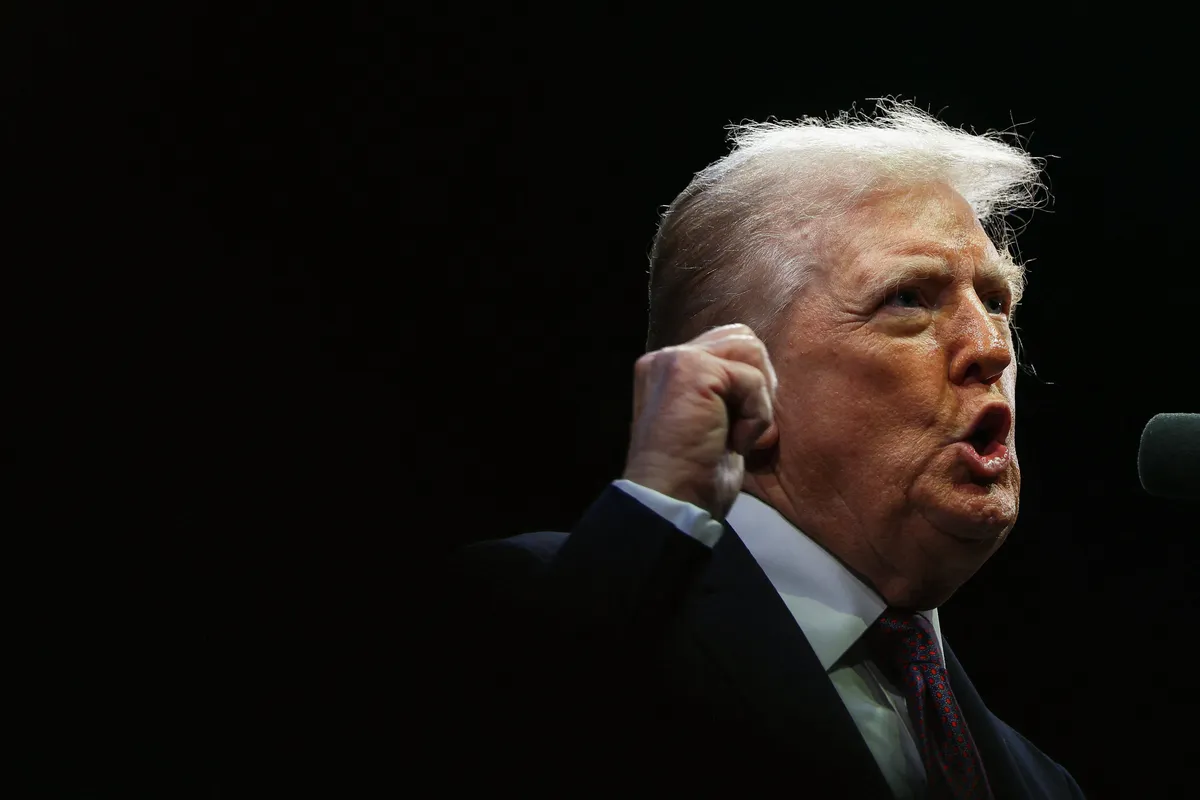
President Donald Trump won election two years ago by a handful of points and governed as if he had a Ronald Reagan-style mandate — albeit without Reagan's 60-plus approval rating. Now Democrats are positioned to tumble his agenda, and by their supporters' demands, they say they have no choice. Midterm elections have historically functioned as referendums on the party in power, and the scale of the result shapes how much latitude the incoming majority believes it has.
"[Trump] got way over his skis," said New York Times columnist David French during a Saturday morning panel alongside fellow columnists Jamelle Bouie and Michelle Cottle. "And so, here come the midterms, and the midterms were a genuine landslide. I mean, they were a genuine landslide. And so, all of a sudden, you've gone from a situation in which you're saying, 'Do we have permission to do investigations?' to 'Do we have a mandate that we must do investigations?'"
In the past, Democrats opposed the Republican president primarily over policy differences. This time, they were blasted into their Senate and House seats by a legion of voters furious at the Trump administration and demanding that Congress put a lock on the White House. The mechanics matter here: committee chairmanships, hearing calendars, and subpoena authority all flow to the majority in each chamber, which is what converts voter anger into usable oversight.
"Because the two top issues were corruption and affordability, I would argue that this is one of those situations where if you come in and you're not aggressive, people are going to be angry," French said. "Just as if you came in and you did nothing to try to, for example, roll back tariffs or nothing about affordability. It seems like if there is a mandate, it's a double mandate."
Angry voters are now breathing down newly elected Democrats' necks, pressing for a sharp detour from the direction of the last two years.
"One: do something about tariffs pronto, if at all humanly possible. Do something about gas prices — meaning the war — if at all possible. And then, also get after the corruption," French said. "You know, think about how long the call has gone up to 'Drain the swamp, drain the swamp, drain the swamp.' That is a genuine desire of voters, and Trump swamped the swamp. I mean, he filled the swamp."
"He dredged a new swamp," Bouie interjected.
"He added the whole Everglades outside of Washington," French agreed.
With Democrats now driven to block Trump's unpopular agenda and scrutinize his officials' failures — at the risk, they say, of public retaliation — the central question is how to address so many White House outrages at once without losing focus and angering voters.
Bouie argued that a centrally directed set of investigations run out of Oversight and the various committees cannot clean up a mess of this scale. Democrats, he said, will have to learn to delegate, or else. Select committees — temporary panels created by a chamber's vote to concentrate on a single subject — are one such tool, letting leadership pool resources on marquee targets while spreading the rest across subcommittees.
"[I]nstead of having the main committees tackle this primarily, to first create just a select committee that exists to do the big-target investigations," Bouie said. "A select committee that's just investigating [Secretary of Defense Pete] Hegseth. A select committee that's investigating the president, right? Your job is to begin to dig into everything we can do. A select committee on investigating DOGE — whatever. But then also, I think, this is a place where delegating more authority to subcommittees can be a fruitful way to divvy up the work and allow Congress to do more at once."
DOGE — the Department of Government Efficiency — is the administration's cost-cutting initiative, one of the entities Bouie suggested could warrant a panel of its own.
The panel identified Hegseth as the perfect first target, with U.S. Office of Management and Budget Director Russell Vought a strong second, citing his effort to engage in "a conspiracy to rob Congress of its power over the purse." The "power of the purse" is Congress's constitutional authority to authorize federal spending — precisely the lever the panel flagged as under threat.
While Cottle and Bouie agreed that Democrats are unlikely to muster "11 Republican votes to remove Hegseth," Bouie noted that the investigations themselves will lead to other investigations in their own right. Removing a Senate-confirmed Cabinet secretary takes a majority vote in the Senate — the arithmetic behind the panel's skepticism.
The early signals to watch are procedural: whether leadership embraces select committees, how subpoena authority gets parceled out to subcommittees, and whether Hegseth, Vought, or DOGE draw the first hearings.
Either way, Democrats know they have the full anger of voters whipping them from behind as they prepare to pick their targets and disassemble Trump's war and tariffs. So they had best act fast — and thoroughly.

