Coinbase Launches Four Tokenized U.S. Stocks on Base With 1:1 Backing
Key Takeaways
- •The initial Base launch includes four tokenized stocks tied to Nvidia, Meta, Apple, and Alphabet.
- •Coinbase says each token is backed 1:1 by a real share held in regulated custody separate from the company.
- •The tokens are available only to eligible investors outside the United States under Regulation S.
- •Primary minting and redemption are limited to KYC-onboarded institutional partners and Authorized Participants.
- •The launch extends Coinbase’s move into tokenized real-world assets on its Base network.
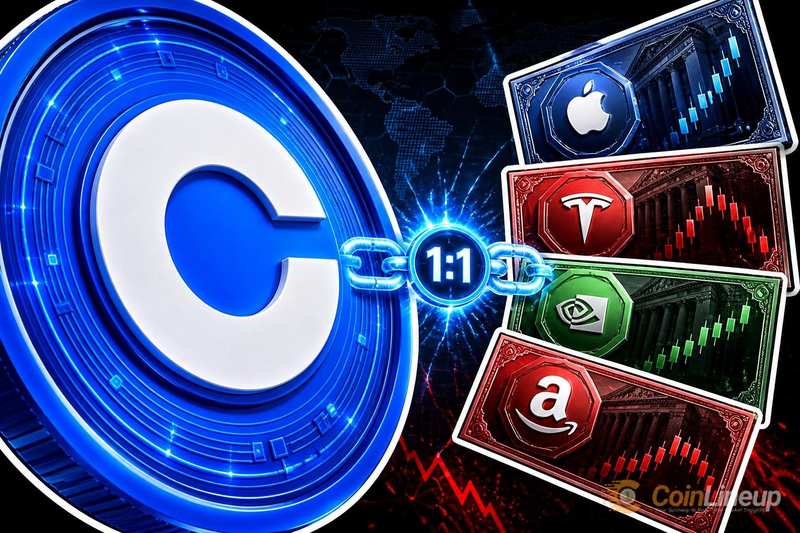
Coinbase has introduced four tokenized U.S. stocks on Base, the Ethereum layer-2 network it incubated, with each token backed 1:1 by a real share held in regulated custody. The debut brings Apple, Nvidia, Meta, and Alphabet shares onchain for eligible investors outside the United States.
What Coinbase Launched on Base
The official Base stocks page lists four live tickers: NVDAc, METAc, AAPLc, and GOOGLc. Those cover Nvidia, Meta, Apple, and Alphabet, Google's parent company. CoinDesk reported that the tokens went live on Base on Monday, starting with these four names for eligible non-U.S. investors.
Tokenized stocks are simply company shares turned into blockchain tokens. Instead of holding Apple stock in a brokerage account, an investor holds a token that represents that share and can move it onchain.
How the 1:1 Backing Model Works
The headline structural detail is the 1:1 backing. In plain terms, every token exists only because one real share sits in custody behind it. According to Coinbase, the tokens are beneficial claims on those real shares, and the underlying stock is held in regulated, bankruptcy-remote custody separate from Coinbase itself. Bankruptcy-remote means the shares stay protected even if Coinbase runs into trouble.
Backing is how a tokenized stock keeps its price aligned with the real one. If tokens were not fully backed, their value could drift away from the actual share price.
The tokens are issued as B20 tokens on Base, and the confirmed framing stops there. Some outside reporting adds detail Coinbase has not confirmed directly: according to unconfirmed reports cited by CoinDesk, a custodian named Alpaca holds the shares and Chainlink supplies live price feeds, though neither point appeared on the official pages.
Why the Launch Matters for Base and Tokenized Equities
Launching on Base ties the product straight into Coinbase's own ecosystem. Base is a Stage 1 Optimistic Rollup — a scaling network that batches transactions and settles to Ethereum — that uses ETH for gas and secures $12.65 billion in total value, per L2Beat. That gives the launch a large, established venue.
Base has no token of its own, so ETH activity acts as the market proxy for the network. In practice, that gives these tokenized stocks a busy DeFi environment to plug into from day one.
The move pushes Coinbase deeper into tokenized real-world assets, meaning traditional assets like equities living onchain rather than crypto-native tokens. It follows a wider industry push, similar to the way big banks have moved into digital asset custody. Tokenized Treasuries and money-market funds have already grown into a multibillion-dollar corner of onchain finance, and competing trading platforms have moved on stocks directly: Robinhood began offering tokenized shares to EU customers in 2025, and Kraken rolled out its xStocks lineup built with tokenization firm Backed.
Access rules keep the rollout cautious. The tokens are offered under Regulation S, the U.S. securities framework that permits offshore offerings to investors outside the United States, and they are not available to U.S. persons. Primary minting and redemption is limited to KYC-onboarded institutional partners and Authorized Participants — the institutions that create and redeem the tokens, a role long used in exchange-traded funds. Regulatory sensitivity remains real, much as it does with ongoing crypto tax disputes in the U.S. The offshore-first design also echoes the last tokenized-stock cycle: Binance wound down its stock tokens in 2021 after German regulator BaFin warned the products could violate securities prospectus rules, and FTX's fractionalized stock offerings ended with that exchange's 2022 collapse.
The Practical Takeaway
If you are outside the U.S. and eligible, these tokens let you hold blue-chip stock exposure onchain, backed one-for-one by real shares. If you are in the U.S., they are simply not available to you yet. From here, the open questions are whether the four-name lineup expands, whether U.S. access follows as rules around tokenized securities develop, and how quickly Base's DeFi venues integrate the new tokens.
Disclaimer: This article is for informational purposes only and does not constitute financial or investment advice. Cryptocurrency and digital asset markets carry significant risk. Always do your own research before making decisions.

