CNN Anchor Challenges Top Trump Economist on Economic Claims as Poll Numbers Slide
Key Takeaways
- •Kevin Hassett claimed American families have experienced roughly $3,000 in real income growth since President Trump took office, alongside strong domestic demand and declining inflation.
- •Pamela Brown cited a poll showing 77% of Americans describe economic conditions as poor, the lowest reading of Trump's second term so far.
- •Brown referenced a separate survey in which 66% of respondents said Trump's policies have worsened economic conditions, a 10-percentage-point increase from the final months of the Biden administration.
- •Hassett dismissed the polling results, maintaining that income growth and macroeconomic data demonstrate consumer optimism.
- •The interview illustrated a continuing divergence between headline economic indicators and consumer sentiment, as elevated price levels for everyday goods persist despite cooler inflation readings.
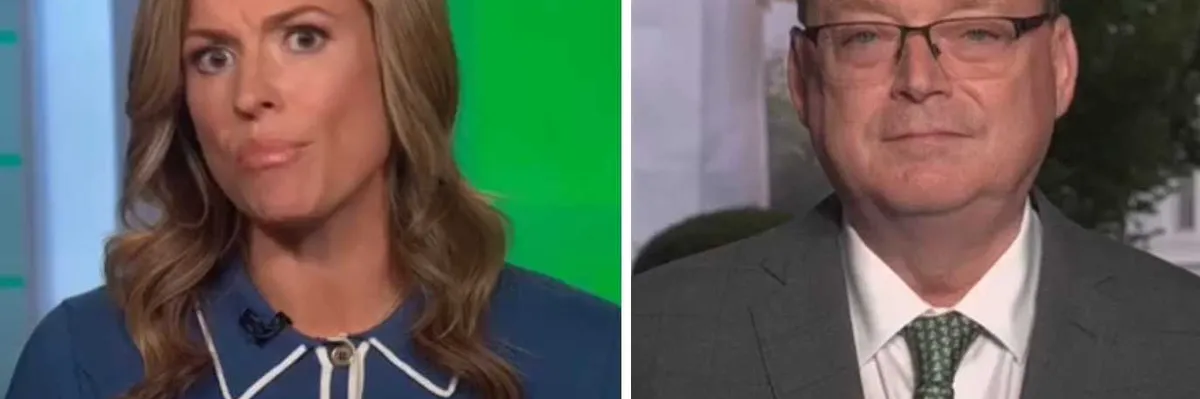
CNN anchor Pamela Brown confronted Kevin Hassett, President Donald Trump's director of the National Economic Council, during a Thursday interview, challenging several of his claims about the state of the U.S. economy with polling data and consumer sentiment indicators. The exchange underscored a persistent disconnect that has defined post-pandemic economic discourse: headline macroeconomic indicators, including GDP growth and unemployment readings, have repeatedly clashed with how Americans describe their own financial reality.
Hassett opened his defense of the Trump administration's economic record by asserting that Americans have seen "real income growth of about $3,000 per family since Trump took office," accompanied by what he described as "an incredible investment boom because of artificial intelligence and other things."
"If you dig down deep into the numbers, one of the things you can see is that final domestic demand, which is sort of the amount of stuff that actually was purchased in the U.S., was up a really healthy 3.9 percent or about 4 percent," Hassett said.
Brown pushed back, accusing the economic adviser of "throwing around … so many numbers" without addressing the reality facing ordinary households.
"But when you talk to the everyday American, they will tell you that prices at the grocery store are up, mortgage rates are higher," Brown said. "You have the high gas prices at the gas pump. And so yes, it is true that, um, there is income growth, but then at the same time, Americans out there are saying that they're hurting. Is the White House in touch with what the everyday American is feeling right now?"
"Oh, absolutely," Hassett insisted, before pivoting to a comparison with former President Joe Biden's administration.
"Real incomes have grown about $3,000 in President Trump's first couple of years. They declined that much over four years under President Biden," Hassett said. "And so people are seeing their wages go up more than prices. … like we saw in Q2, is a sign that consumers are optimistic about what's going on, on average."
Brown cited polling data that appeared to contradict that characterization: "You said just a moment ago, Kevin, that consumers are optimistic. But we have this poll where 77 percent of Americans say economic conditions are overall poor. That is the lowest of Trump's second term so far. Is this the, 'amazing economy' the administration thought you'd all be boasting about when the 'Big, Beautiful Bill' was passed more than a year ago?"
The gap Brown highlighted between aggregate data and consumer mood has been a recurring challenge for administrations of both parties. Even as official inflation measures cooled from their 2022 peaks, elevated price levels for everyday goods and services have continued to shape public perception, a dynamic economists often describe as the difference between the inflation rate and the cumulative cost burden households carry forward.
"Well, again, right now the economy does look amazing to me," Hassett maintained, pointing to inflation "going down and the unemployment rate is low."
Brown noted that job growth cooled the previous month and cited additional polling: "66 percent of people — these everyday Americans — they say President Trump's policies have worsened economic conditions in this country. That's 10 percent more than in the final months of the Biden administration. So, I mean, you say the economy looks amazing, but what do you say to that person who's part of that group, that 66 percent who say Trump has actually made the economic conditions worse?"
Hassett dismissed the survey outright: "You know, I just don't believe a poll like that. [Especially] given how strong the numbers are and how strong income growth is, how optimistic people are."
Source: YouTube

