'Buckle Up': Experts Warn Trump's 'Absurd' Economy 'Will End in Tears'
Key Takeaways
- •Andrew Neil warned that running both fiscal and monetary policy aggressively hot late in the economic cycle, as the U.S. is currently doing, will 'end in tears.'
- •U.S. broad money supply is growing at 7 percent, while the federal deficit stands at least at 6.5 percent of GDP, roughly double the historical average of about 3 percent.
- •Neil argued the midterm outcome will not restrain spending, because divided government tends to produce budget trades that push the deficit even higher.
- •He cautioned that if the AI-driven boom goes bust, the Federal Reserve would have limited room to respond due to elevated interest rates, high inflation, and the threat of stagflation.
- •Gerard Baker advised against interpreting the midterm election as a smooth transition toward a post-Trump political era, predicting turbulence ahead on both political and economic fronts.
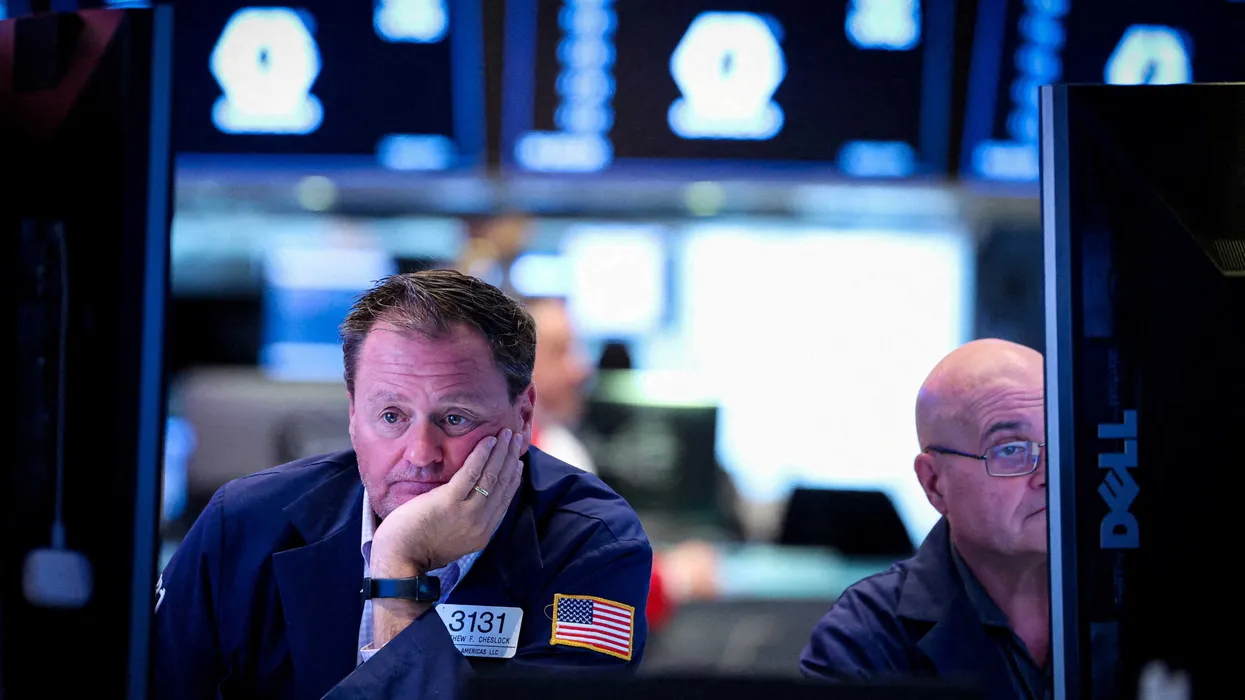
President Donald Trump has repeatedly hailed what he describes as a roaring economy, even as midterm voters showed little appetite for that message at the ballot box. Across the Atlantic, however, analysts and economists are bracing for what they portray as an economic collision big enough to be seen from the Thames.
“When you run money in fiscal policy this hot in this stage in the economic cycle, I can tell you it will end in tears,” said Andrew Neil, presenter of The Andrew Neil Report on The Times Radio's Friday podcast.
During the 2024 campaign, Trump pledged to eliminate the entire national debt within a single term — and insisted he could do it without cutting “one penny” from Social Security or Medicare, relying instead on manic economic growth, crypto, and tariffs. Critics have dismissed the plans as “absurd” “fantasies,” and Neil argued the bill is now coming due.
Speaking with Gerard Baker, a columnist at The Times and editor at large at The Wall Street Journal, Neil contended that Washington is running both major policy levers too hot, too late in the cycle.
“In the late stages of this economic cycle monetary policy and fiscal policy are both running hot, hot, hot,” he said. “You don't run hot on both [of these] at the end of an economic cycle. You're supposed to run both after we've hit an economic recession, then you run things hot.”
Neil pointed to rapid growth in the U.S. money supply. Broad money — the sum of all liquid financial instruments held by money-holding sectors, and a common gauge of an economy's money supply — is “now rising by 7 percent,” which he called “a hell of a lot.”
“Plus, the deficit is at least 6.5 percent, probably headed for 7 percent of GDP,” he said.
For scale, U.S. federal deficits have averaged roughly 3 percent of GDP over the past half-century, according to Congressional Budget Office figures — meaning a shortfall near 7 percent would run well above the historical norm.
Nor does the recent midterm result offer relief, in his view, because divided government tends to fuel budgetary horse trading rather than restraint.
“The Trumpies will say ‘give us more for defense and you can have more for health.’ Or ‘give us more for the border wall and you can have more for welfare.’ And then both get more as a result and the deficit will get even worse,” said Neil. “Either all the economics that I've been taught all my life since university has been wrong and a waste of time or something big is coming, regardless of AI. When you run money in fiscal policy this hot in this stage in the economic cycle, I can tell you it will end in tears.”
Neil also warned of a “nightmare scenario” if the AI-driven boom goes bust — an outcome he suggested looks increasingly likely. In that event, he argued, the Federal Reserve, the U.S. central bank, would have few tools left.
“The FED will only have limited room to maneuver [to save the economy], not only because its interest rates are already running high but because inflation is still running high and we have the terrible, terrible specter of stagflation [because] the fiscal situation is already completely out of control,” he said.
Stagflation — high inflation paired with stagnant growth — is widely viewed by economists as one of the toughest environments to fight, because the rate hikes that cool prices can also deepen a slowdown.
Baker, for his part, cautioned against reading the election as a peaceful handover to a post-Trump era.
“If you thought last week's election was a steady transition to the post-Trump world and that it would convey Trump peacefully to his retirement, you're going to be in for a bit of a shock,” he said. “Fasten your seatbelts on the political front and on the economic front. It's going to be wild.”
Both gauges anchoring Neil's warning — broad money growth and the deficit's share of GDP — are updated in regularly published Federal Reserve and Treasury data, giving readers a way to track the trajectory he describes.
The full conversation can be watched on YouTube.

