Lesley Stahl's Decision to Stay at 60 Minutes Draws Sharp Criticism After Scott Pelley's Departure
Key Takeaways
- •Scott Pelley and other staff members departed 60 Minutes after refusing to compromise on the program's editorial independence, following executive producer Bill Owens's earlier resignation over the same issue.
- •Tensions between the 60 Minutes newsroom and Paramount Global intensified as the company pursued a merger with Skydance Media and faced a multibillion-dollar lawsuit from Donald Trump regarding the program's 2024 interview with Kamala Harris.
- •Lesley Stahl chose to remain at 60 Minutes, reportedly believing she could preserve the program from within rather than join her departing colleagues.
- •Critics argue that Stahl's decision to stay inadvertently undermined the message sent by those who resigned on principle and may have normalized corporate influence over the newsroom.
- •The 60 Minutes crisis reflects broader pressures facing legacy news organizations from corporate consolidation, litigation, and political actors who view editorial independence as negotiable.
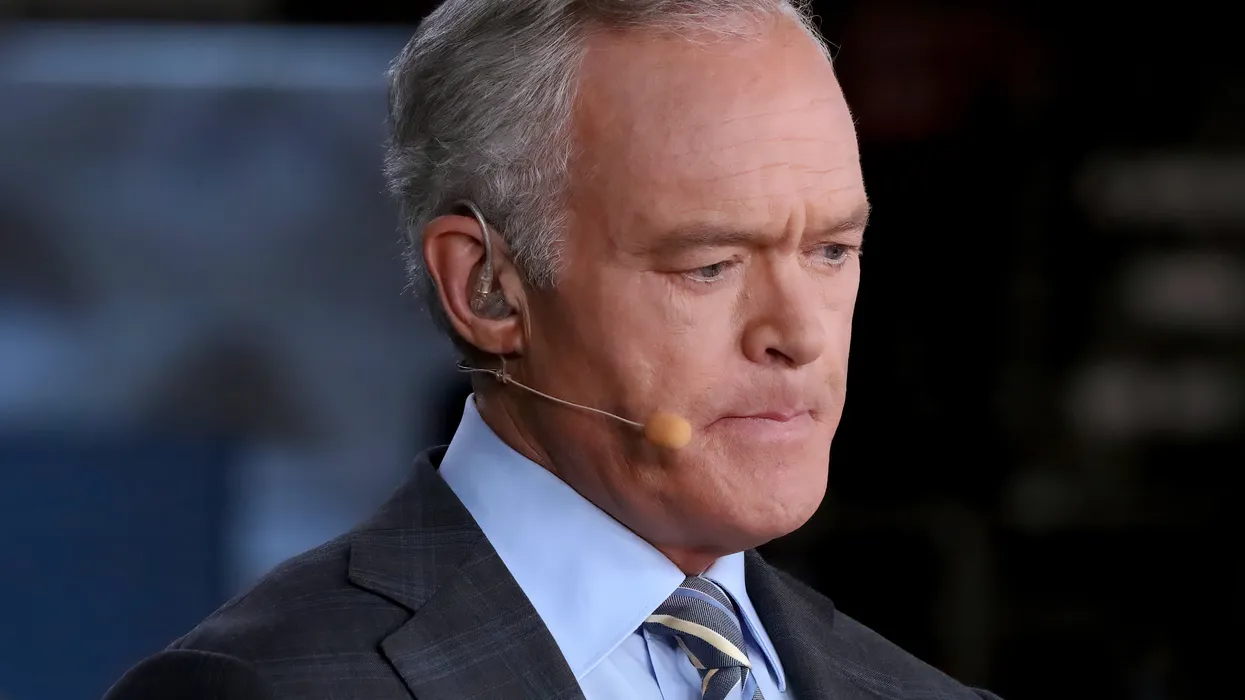
The unraveling of 60 Minutes has raised a fundamental question: what should journalists do when the institution they serve no longer upholds the principles that defined it?
Scott Pelley answered that question decisively. He departed the program along with others who either resigned voluntarily or were pushed out after refusing to compromise on the editorial independence that made 60 Minutes the gold standard of television journalism. Their position was clear: remaining inside an institution that has abandoned its core values does not preserve it — it merely legitimizes its decline.
The departures did not occur in a vacuum. Executive producer Bill Owens resigned earlier, citing a loss of editorial independence — the first major fracture in a chain reaction that exposed tensions between the newsroom and CBS's corporate parent, Paramount Global. Those tensions intensified as Paramount pursued a merger with Skydance Media and faced a multibillion-dollar lawsuit from Donald Trump over the program's 2024 interview with Kamala Harris, creating an environment in which corporate leadership had clear incentives to manage 60 Minutes' coverage carefully.
Lesley Stahl chose a different course.
Her apparent belief that she could "save what was left" of the program by remaining may ultimately be remembered as one of the most consequential miscalculations in modern journalism.
By the time Pelley took his stand, significant damage had already been done. Editorial independence — 60 Minutes' defining principle for nearly six decades — had already been called into question. Once audiences begin to suspect that powerful interests are shaping what appears on screen, the program's unique authority is compromised. Trust is journalism's only real currency. Once depleted, no amount of prestige, ratings, or prominent correspondents can restore it.
This is why the notion of "saving" 60 Minutes from within seems disconnected from the reality of the situation. The program's editorial foundation had already been weakened. Staying behind to tend to appearances while the structural integrity erodes is not preservation — it is denial.
Stahl's decision appears rooted in a familiar impulse: maintain calm, preserve institutional peace, avoid escalation, and trust that time will repair what has been lost. That approach may work in certain organizational settings. It rarely succeeds in journalism.
One development that underscores the seriousness of the situation involves Bari Weiss's recent hiring of Ross Douthat. According to reports, Stahl had little to no input on that decision.
Journalism depends on public confidence — on audiences believing that reporters will walk away rather than surrender their editorial independence. Once respected journalists demonstrate a willingness to absorb compromises in the name of institutional survival, the institution itself becomes defined by those compromises.
Perhaps Stahl believed her decades of experience could slow the erosion from within. Perhaps she felt a sense of obligation to the staff, the audience, and the legacy of 60 Minutes to make one final effort. Those motivations are understandable.
But noble intentions do not guarantee wise decisions — particularly in the immediate aftermath of a colleague's principled departure.
By remaining after Pelley walked out, Stahl inadvertently diminished the force of his sacrifice. Her decision produced the opposite of its intended effect. The question arises: how could someone so attuned to the public mood misread the situation so completely?
Resignations carry weight because they send an unambiguous message: certain lines cannot be crossed. Their moral authority derives from solidarity. When respected colleagues choose instead to remain, management receives a fundamentally different signal — that the crisis is not severe enough to warrant unified action.
The symbolic landscape shifts overnight. Rather than presenting a united front in defense of editorial independence, the newsroom appears divided over whether the compromise is acceptable. That ambiguity is precisely what powerful executives rely upon.
History offers numerous examples of individuals who believed they could reform institutions from within, only to discover that institutions exert a far greater influence on them than they exert on the institution.
Stahl's decision has drawn comparisons — not because the circumstances are identical, but because the underlying instinct is similar — to former Attorney General Merrick Garland. Garland faced widespread criticism for believing that patience, restraint, and institutional preservation constituted sufficient responses during extraordinary circumstances. His supporters regarded that approach as principled. His critics viewed it as paralysis presented as prudence.
Regardless of where one falls in that debate, the comparison illustrates a broader truth: sometimes protecting an institution requires refusing to shield its leadership. Sometimes preserving a legacy demands sacrificing one's position within it. And sometimes resignation is not abandonment — it is the final act of loyalty available.
The tragedy in this case is that Lesley Stahl had nothing left to prove. Her decades of work built one of the most respected careers in broadcast journalism. Her interviews, reporting, and professionalism secured her place in television history long ago. She had little to gain professionally by staying.
She had everything to gain by standing alongside colleagues who were willing to risk their careers on principle. Instead, her decision to remain may define how history remembers her role in this episode.
Consider the alternative scenario: Scott Pelley walks out. Lesley Stahl follows. Other correspondents join them. Together, they send an unmistakable message that 60 Minutes is bigger than any corporate owner or executive decision-maker.
That moment would have been impossible to ignore.
Instead, the public conversation shifted toward who stayed rather than why others left — a loss not only for the journalists who sacrificed their positions, but for the audiences who depended on them.
The implications extend well beyond a single television program. The 60 Minutes crisis unfolds against a broader backdrop in which legacy news divisions face intensifying pressure from corporate consolidations, litigation, and political actors who view editorial independence as a negotiable commodity. Institutions do not survive on reputation alone. They endure because individuals within them are willing to bear a personal cost for their integrity. Once enough people decide that remaining is more important than holding the line, the institution may persist — but only as a diminished version of its former self.
There may still be excellent reporting on 60 Minutes. There may still be talented producers and correspondents producing outstanding journalism. But if viewers no longer believe the newsroom will risk everything to defend its editorial independence, then the program's defining promise has already been weakened.
In the end, the central irony may be this: by attempting to save 60 Minutes, Stahl may have helped normalize the very transformation her departing colleagues were fighting to prevent.
Source: Raw Story

