President Lee Jae Myung Signals No Veto for Disputed Prosecution Reform Bill
Key Takeaways
- •President Lee Jae Myung will not exercise his veto power against the prosecution reform bill, allowing the National Assembly's legislation to proceed.
- •The new law strips prosecutors of their supplementary investigative authority, leaving them with only the power to indict and request that police conduct further investigations.
- •The bill was passed by the Democratic Party of Korea last Friday over objections from the opposition People Power Party.
- •Lee argued that prosecutors had abused their broad investigative powers for decades and that separating investigation from indictment is essential to normalizing the criminal justice system.
- •Uncertainty remains over whether police oversight mechanisms are robust enough to handle the expanded investigative role, particularly following allegations of police misconduct in a recent murder case.
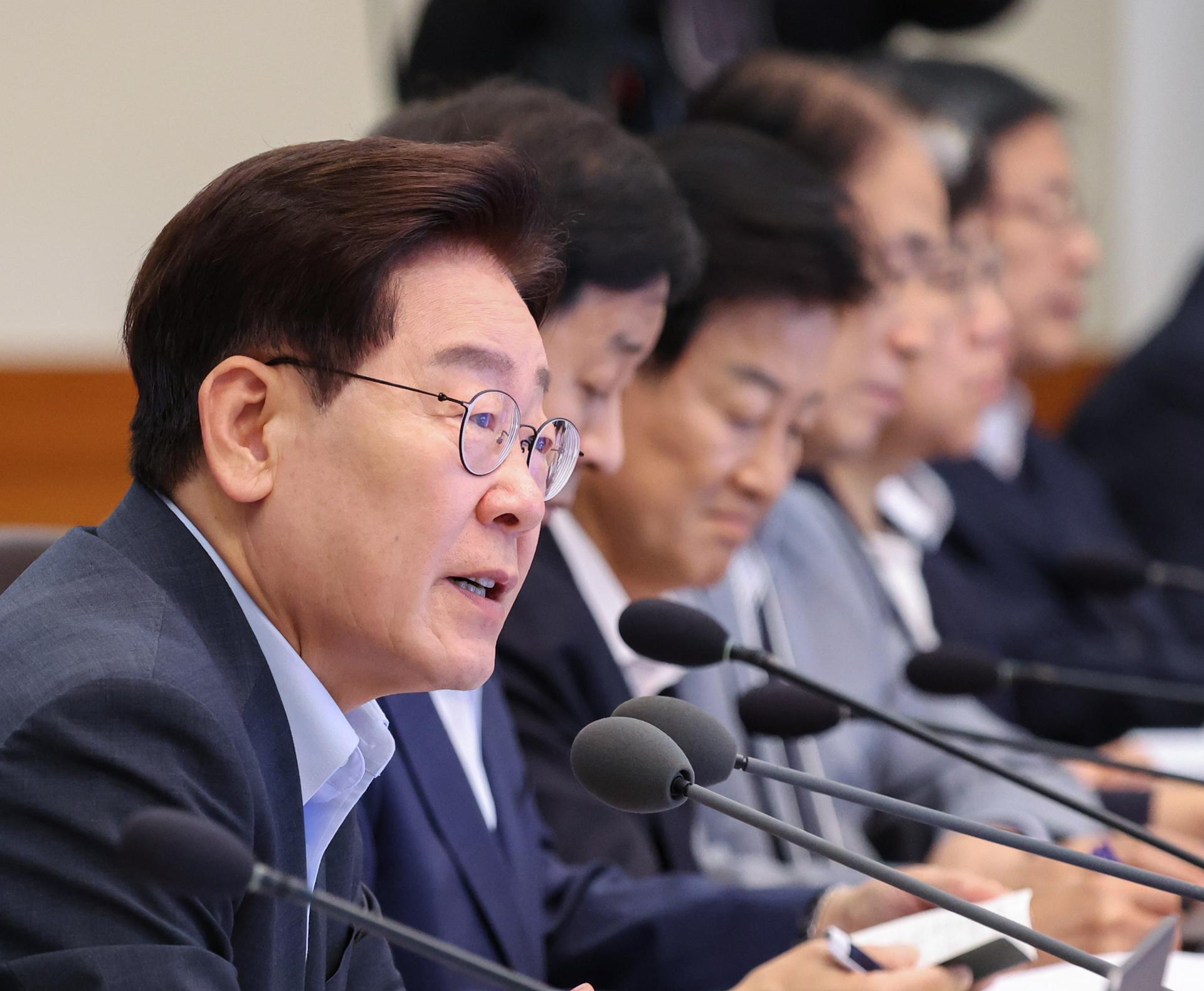
President Lee Jae Myung indicated on Tuesday that he will not exercise his veto power against a contested prosecution reform bill that eliminates prosecutors' supplementary investigative authority, despite concerns over potential investigative gaps and diminished protections for crime victims.
Addressing a Cabinet meeting at Cheong Wa Dae, Lee said the legislation — though controversial — does not contain constitutional or legal defects severe enough to warrant rejecting a bill duly passed by the National Assembly.
The bill in question concerns prosecution reform and was passed last Friday by the majority Democratic Party of Korea (DPK), over objections from the main opposition People Power Party (PPP). Public discontent over the measure intensified following allegations of police misconduct in a murder case involving the son of a police officer.
The legislation seeks to strip the prosecution of its direct investigative powers, advancing a broader objective of separating the institution's decades-old dual authority to both investigate crimes and bring indictations. The push to curtail prosecutorial power has spanned multiple administrations in South Korea, where the prosecution service has long wielded unusually broad authority rooted in the country's period of authoritarian rule, during which prosecutors were instrumental in politically directed investigations.
A central point of dispute has been whether prosecutors should retain supplementary investigative powers — a limited mechanism used to verify evidence and remedy deficiencies in police investigations. Under the new bill, prosecutors will keep only the authority to indict and may merely request that judicial police officers carry out supplementary investigations. The shift aligns South Korea more closely with the model followed by many other democracies, where police serve as the primary investigative body and prosecutors focus on charging decisions.
"Although there are many controversies and differing opinions, it is difficult to conclude that this bill is so seriously flawed, whether because it is unconstitutional, impossible to implement, harmful to the national interest or an infringement on the executive branch's authority," Lee said. "It does not warrant rejecting the National Assembly's legislative authority."
The president argued that a presidential veto should not be deployed merely because the executive branch disagrees with legislation, but reserved for instances where a bill fundamentally violates the constitutional order or legislative authority.
Lee accused prosecutors of having abused their broad investigative powers for decades, asserting that some had used supplementary investigations to conceal cases or pursue sweeping, targeted probes against predetermined individuals.
"The separation of investigation and indictment is the first step toward normalizing an abnormal criminal justice system," Lee said, adding that all state institutions exercising public authority must remain subject to public oversight. With the reform advancing, attention now centers on whether police oversight mechanisms are robust enough to handle the expanded investigative role, particularly given the public discontent triggered by the recent allegations of police misconduct.

