Newsweek Seeks Answers on Mitch McConnell’s Extended Senate Absence
Key Takeaways
- •Mitch McConnell has not cast a Senate roll call vote since June 11, marking an absence of nearly six weeks.
- •McConnell stated he suffered a fall and mild pneumonia but said doctors confirmed no broken bones, concussion, heart attack, stroke, tumors, or hemorrhages.
- •Independent verification of McConnell's condition has proven challenging for journalists and fellow lawmakers beyond a hospital photo released by his office.
- •Kentucky Governor Andy Beshear contacted McConnell's office in early July expressing concern about his health and ability to hold office.
- •Election-law observers have identified August 3 as the practical cutoff date for calling a special election to fill a potential Senate vacancy in Kentucky.
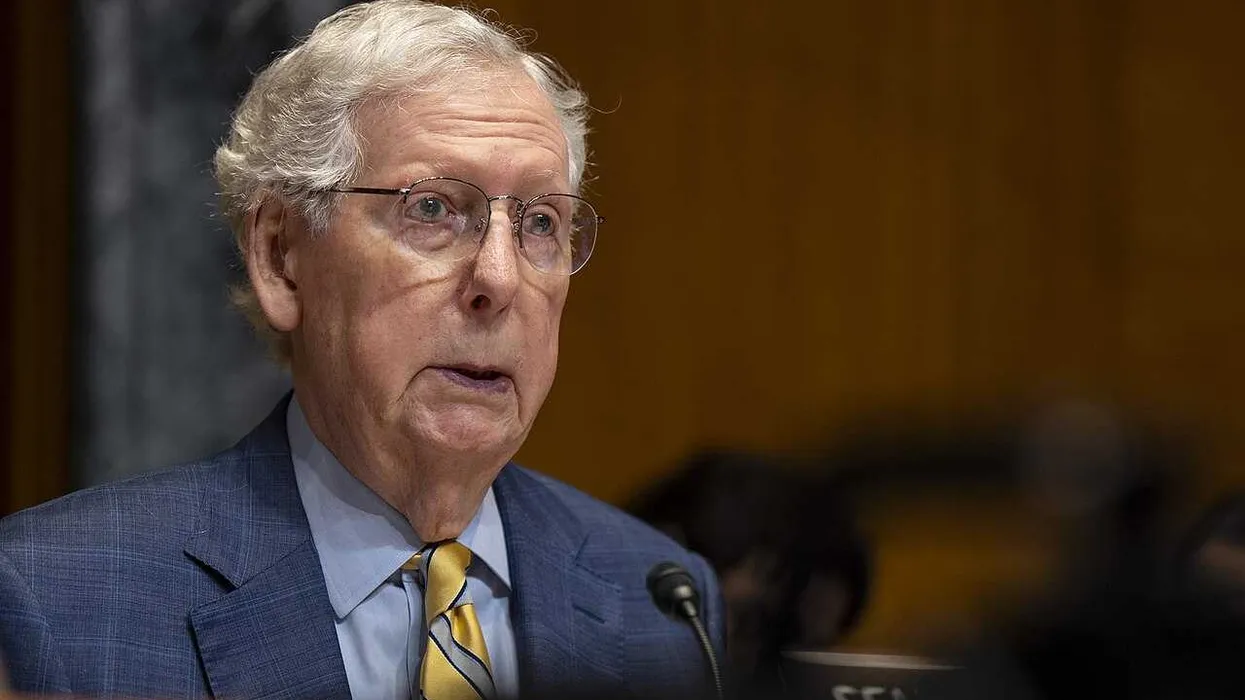
Former Senate Majority Leader Mitch McConnell (R-Kentucky) has not participated in a U.S. Senate vote for nearly a month and a half, according to GovTrack.us. The site says the 84-year-old senator has missed every Senate roll call vote since June 11, while public updates about his health have remained sporadic. Newsweek has contacted McConnell’s office seeking further information.
Roll call votes are one of the clearest public records of a senator’s participation in chamber business, covering final passage, amendments, procedural motions and nominations. That makes an extended gap in voting especially visible at a time when control of the Senate is narrow and individual absences can affect whether party leaders can reliably assemble a majority.
Earlier this month, several prominent Republicans said they had spoken with McConnell, including Senate Majority Leader John Thune (R-South Dakota) and GOP strategist and CNN commentator Scott Jennings. McConnell’s office also released a photo of him in a hospital bed in mid-July. Still, Newsweek’s Hugh Cameron reported that detailed updates on the senator’s condition have been limited.
“In addition to talk of reforming congressional rules and pressure on the retiring lawmaker to return to work — especially given Republicans are already grappling with a slim majority in the Senate — McConnell's extended absence is leading to calls from voters, journalists and fellow members of Congress for transparency on the part of his staffers,” Cameron reported. “As of Wednesday, (July 22), the last communication from McConnell was an in-memoriam post for his former colleague, Lindsey Graham.”
A Facebook post attributed to McConnell and dated July 13 said, “Lindsey Graham was a good friend and a great American, and I was shocked and saddened by his passing.”
Newsweek contacted McConnell’s office for comment on July 22. Cameron wrote that three questions need to be answered, beginning with: “Why can't anyone verify McConnell's condition?”
In a statement, McConnell said he had suffered a fall and a “mild case of pneumonia.” He added, “My doctors have confirmed that I didn't break any bones or suffer a concussion. I didn't have a heart attack or a stroke. I don't have any tumors or hemorrhages. But I was briefly unconscious and was taken to the hospital.”
Cameron noted, however, that “beyond the attached image of McConnell in a hospital, independent verification of his condition after a weekslong hospital stay has proved challenging for journalists and fellow lawmakers.”
Newsweek is also examining whether Democratic Kentucky Gov. Andy Beshear can “force the issue” regarding McConnell’s status. Cameron reported that on July 8, Beshear contacted McConnell’s office and said Kentucky residents were “increasingly concerned about the current state of your health and wellbeing, and ability to hold office in the United States Senate.”
A third question raised by Newsweek is whether there is an August 3 deadline tied to any potential vacancy. The timing matters because Senate vacancies are handled under state law, and the available process can differ depending on how close the vacancy occurs to an election.
“Open Senate seats must be filled by a special election,” Cameron explained, “but Kentucky's constitution says the governor can appoint a replacement if the vacancy happens close to an election. While Beshear is not able to call a special election at a time of his choosing, an August 3 deadline has emerged as what many Kentucky election-law observers have identified as the practical cutoff for calling a special election.”

