37 Americans Arrested in 2026 Over AI Data Center Protests, Futurism Investigation Finds
Key Takeaways
- •At least 37 people have been arrested across multiple U.S. states in 2026 for participating in protests against AI data center construction at public meetings.
- •Arrest charges have been minor in nature, including clapping in support of a speaker, exceeding allotted speaking time, and refusing to present identification.
- •Major technology companies including Amazon, Microsoft, Google, and Meta are investing hundreds of billions of dollars in new data center capacity to support growing AI service demand.
- •A single large-scale AI data center can consume tens of millions of gallons of water annually for cooling and draw as much power as a small city.
- •The community tensions parallel earlier resistance to cryptocurrency mining operations, as both the AI and crypto sectors increasingly compete for the same rural resources including electricity, land, and water.
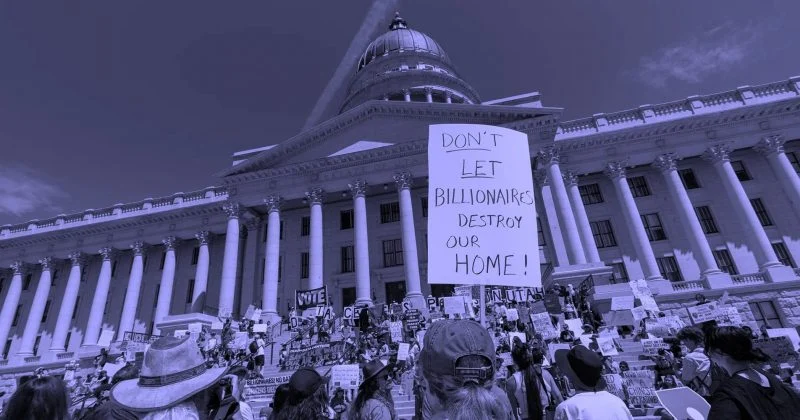
At least 37 people have been arrested across the United States in 2026 for participating in protests against the construction of AI data centers in their communities, according to a Futurism investigation published on August 3.
The charges leveled against those detained have been minor in nature, ranging from clapping and exceeding allotted speaking time to refusing to present identification at public meetings. The arrests come as the largest U.S. technology companies — including Amazon, Microsoft, Google, and Meta — race to build out hundreds of billions of dollars in new data center capacity to support surging demand for AI services, placing unprecedented strain on local power grids, water supplies, and zoning processes in rural and suburban communities across the country.
Ordinary Citizens Facing Arrest
The Futurism report documented 37 arrests across multiple states, nearly all connected to public meetings regarding proposed data center expansions. Those taken into custody include maintenance managers, schoolteachers, and farmers who attended town halls to raise concerns about their land and electricity bills.
In Hobart, Indiana, a maintenance manager identified as Pablo Payan was arrested in May for declining to identify himself during a meeting concerning an Amazon data center project.
In Emporia, Kansas, a physics teacher named Lux Claridge was taken into custody in July for clapping in support of an anti-data center speaker. Law enforcement officers determined that her applause constituted a disruption sufficient to warrant arrest. Arrests of this kind at government meetings raise unresolved questions about the boundaries of First Amendment protections for public participation, as courts have generally held that citizen speech at open government forums receives constitutional safeguards.
In Port Washington, Wisconsin, three individuals were arrested in December 2025 while opposing a proposed AI data center campus under development by OpenAI and Oracle. That project is estimated to cost between $15 billion and $18 billion.
The investigation identified at least 12 separate incidents in which speakers were either physically removed from meetings or prevented from addressing attendees. Most of the protests have remained peaceful, with escalations typically arising from the enforcement of procedural rules rather than any acts of violence.
Community Concerns and Police Response
Residents attending these meetings have been raising questions about water consumption, electricity rates, and the impact on farmland. A single large-scale AI data center can consume tens of millions of gallons of water annually for cooling and draw as much power as a small city, intensifying local debates over resource allocation. In at least 37 documented cases this year, law enforcement was the response to those concerns.
Parallel to Crypto Mining Pushback
The tensions echo a dynamic familiar to the cryptocurrency mining industry. Bitcoin mining operations have encountered similar community resistance in recent years, with municipalities in Texas, New York, and other states pushing back against the noise, energy consumption, and environmental effects of large-scale mining facilities. New York imposed a partial moratorium on proof-of-work mining operations connected to fossil fuel power plants.
While the protests over AI data centers have no direct connection to digital asset prices or blockchain infrastructure, the indirect implications are notable. The AI and crypto sectors increasingly compete for the same resources: electricity, land, cooling water, and political goodwill in rural communities.

