South Korea's Unification Ministry Proposes Dropping 'Main Enemy' Label for North Korea
Key Takeaways
- •South Korea's unification ministry proposed referring to North Korea by its official name instead of the label "main enemy" to foster mutual trust between the two countries.
- •The policy framework was presented to President Lee Jae Myung and is built on three pillars: reciprocal cooperation, peaceful conflict resolution, and a long-term vision for a nuclear-free Korean Peninsula.
- •The ministry aims to revive the 2018 inter-Korean military tension reduction agreement, which was partially suspended by Seoul in 2023 after a North Korean satellite launch.
- •Construction on the South Korean section of the Gyeongwon rail line connecting Seoul to Wonsan is set to resume next year, targeting completion by 2029 after a decade-long suspension.
- •A ministry white paper published in May established three guiding principles for the initiative: respecting North Korea's system, rejecting unification by absorption, and avoiding hostile acts.
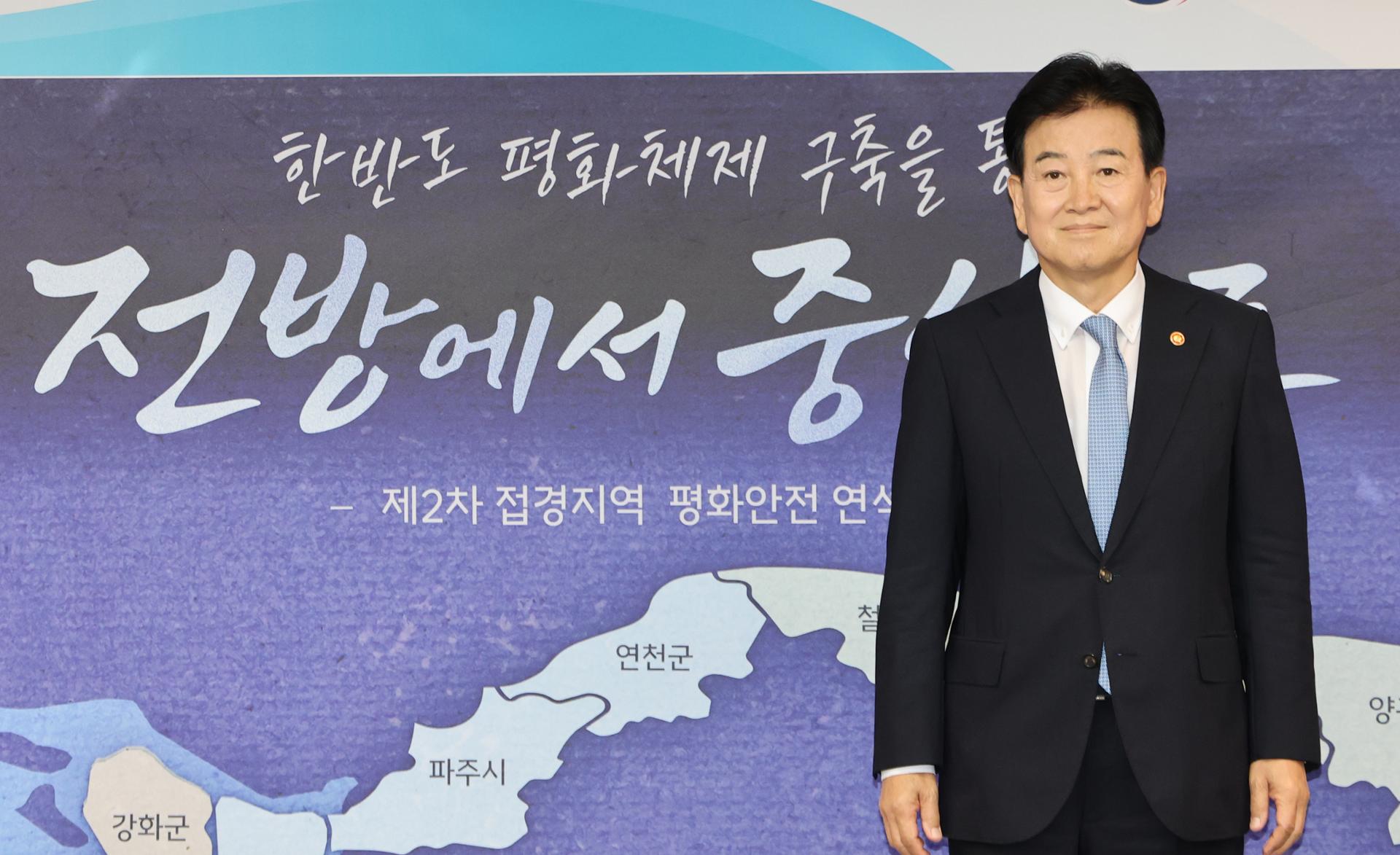
South Korea's unification ministry on Wednesday proposed discontinuing the use of "main enemy" when referring to North Korea, as part of a broader initiative to pursue peaceful coexistence with Pyongyang and revive long-stalled inter-Korean relations.
The proposal marks a significant departure from the trajectory of recent years, during which bilateral ties deteriorated sharply. North Korea demolished the inter-Korean liaison office in Kaesong in 2020, declared the relationship one between "two hostile states," and formally abandoned peaceful reunification as a policy goal, with leader Kim Jong-un labeling the South the "principal enemy."
The ministry outlined its major policy plan during a briefing to President Lee Jae Myung. The framework centers on three pillars: building mutual respect and reciprocal cooperation, pursuing peaceful conflict resolution and crisis management, and advancing a long-term vision for a nuclear-free Korean Peninsula and broader peace in Northeast Asia.
To foster mutual trust, the ministry proposed referring to the North by its official name — the Democratic People's Republic of Korea — instead of the label "main enemy." South Korea has conventionally used the term "North Korea" rather than the country's official name, consistent with Seoul's position under the 1991 inter-Korean Basic Agreement that the two Koreas do not constitute separate states. The "main enemy" designation has a fluctuating history in South Korean defense publications, first appearing in the Defense White Paper in 1995 and subsequently dropped and revived under successive administrations depending on the prevailing political climate.
The initiative effectively resurrects a peace regime framework first introduced under former President Moon Jae-in, whose engagement policy produced three inter-Korean summits in 2018 but lost momentum after inter-Korean exchanges ground to a halt.
On the security front, the ministry aims to revive the Sept. 19 inter-Korean military tension reduction agreement, signed in 2018 by former President Moon and North Korean leader Kim Jong-un. That accord established border buffer and no-fly zones but was partially suspended by Seoul in November 2023 following a North Korean military satellite launch, prompting Pyongyang to declare it fully void. The plan also calls for utilizing the Demilitarized Zone (DMZ) separating the two Koreas in a peaceful manner.
A white paper published by the ministry in May established three guiding principles underpinning the initiative: respecting the North's system, ruling out unification by absorption, and avoiding hostile acts.
To lay the groundwork for renewed inter-Korean exchange, the ministry outlined a plan to resume construction next year on the South Korean section of the Gyeongwon Line, a rail link connecting Seoul to Wonsan in the North, with a target completion date of 2029. Construction on the project has been suspended for the past decade amid deteriorating bilateral ties.
Additionally, the ministry intends to revise regulations governing the Inter-Korean Cooperation Fund, which has seen utilization rates of only 2–3 percent. The proposed revisions would permit spending on peace economic zones, private unification initiatives, and North Korea studies.
Source: The Korea Times

