U.S. Depleted Nearly Entire Long-Range Missile Stockpile During Iran War, Sources Say
Key Takeaways
- •The U.S. has expended virtually all of its ATACMS and PrSM long-range precision missiles during the five-month Iran conflict, according to sources familiar with the data.
- •A CSIS report estimated that approximately 65% of Patriot interceptors and at least 38% of THAAD interceptors were consumed between February and July.
- •The Army is caught in a generational transition between the aging ATACMS and the newly introduced PrSM, limiting how quickly either system can be replenished.
- •President Trump stated that the U.S. possesses more munitions than any other nation and that defense companies are expanding production at record levels.
- •Raytheon has reached a tentative multi-year agreement with the Pentagon to boost Tomahawk production as part of broader efforts to rebuild depleted U.S. weapons stockpiles.
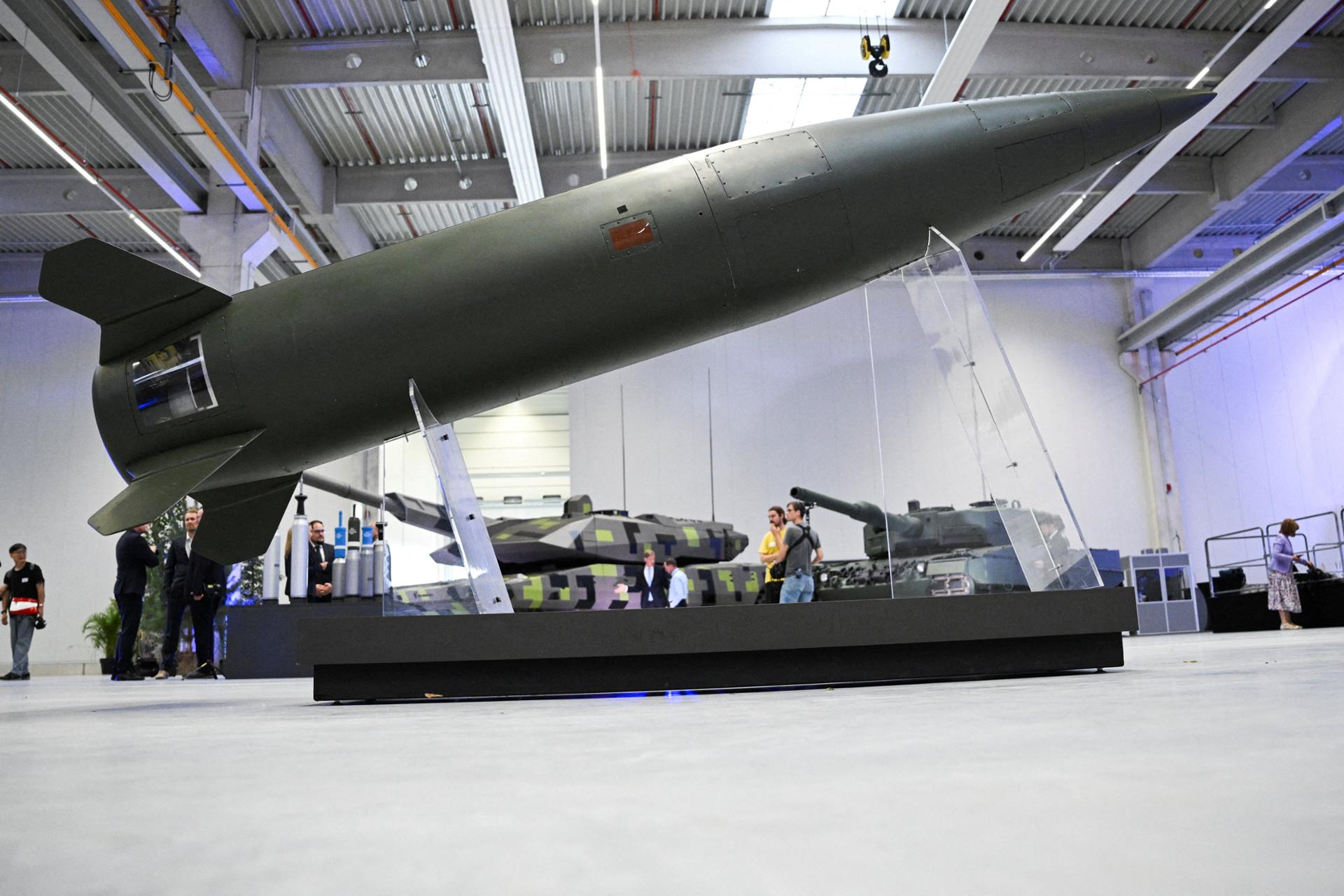
NEW YORK/WASHINGTON — The U.S. Army has consumed the vast majority of its global stockpile of highly precise long-range missiles during its five-month war with Iran, according to three individuals familiar with the data, raising fresh concerns about the military's preparedness for future conflicts.
The weapons in question are primarily the Army's surface-to-surface Army Tactical Missile Systems (ATACMS) and Precision Strike Missiles (PrSM). Two of the sources said the U.S. has expended "virtually all" of these munitions. The extent of the depletion has not been previously reported.
Each of these long-range missiles costs more than $1 million and forms a critical component of the U.S. military arsenal, enabling accurate strikes from standoff distances. U.S.-supplied ATACMS have also been instrumental in the war in Ukraine, where Ukrainian forces have used them to strike targets inside Russia. The PrSM represents a newer, more advanced generation of missiles intended to replace the ATACMS, which has a shorter range. Because PrSM entered low-rate production only recently and the ATACMS line is winding down, the Army is in the middle of a generational transition that limits how quickly either system can be replenished.
The depletion underscores a long-standing vulnerability in the U.S. defense industrial base. After decades of consolidation following the Cold War, precision-guided munitions are produced by a small number of prime contractors — Lockheed Martin for ATACMS and PrSM, Raytheon for Tomahawk and Patriot — relying on specialized component suppliers and limited production lines that cannot be rapidly expanded even with additional funding. The Pentagon's own industrial-base reviews have repeatedly flagged limited surge capacity for precision weapons as a strategic risk.
Potential Impact on Future Operations
The sharp drawdown in precision long-range missiles means President Donald Trump may need to rely more heavily on riskier piloted bombing missions should he decide to relaunch large-scale attacks on Iran. The sources declined to disclose how many of each type of munition remain in the U.S. inventory.
Trump launched the Iran war jointly with Israel in February, initially predicting the conflict would be brief. As the fighting has persisted, however, three individuals familiar with the matter expressed concern that dwindling missile supplies could constrain the U.S. military's capacity to deter adversaries, including Russia and China. The Pentagon's National Defense Strategy identifies China as the "pacing challenge" for U.S. military planning, and analysts have long warned that a Pacific conflict would require precisely the kind of long-range, standoff strike capability now running low.
A fourth person familiar with the situation offered a more optimistic assessment, stating that despite the high rate of precision weapon usage, the U.S. retains the ability to resupply. U.S. Central Command, which oversees American forces in the Middle East, has been able to replenish its stocks from military supplies positioned around the globe, this person said.
All sources spoke on the condition of anonymity.
White House and Pentagon Responses
When asked to comment on the stockpile data, the White House released a statement from Trump asserting that the U.S. possesses "far more munitions than anyone in the world" and "far more than we need."
"Our defense companies are, at this moment, making more munitions than they have ever made before, in addition to expanding their plants and equipment at record levels," Trump said.
Analysts acknowledge that certain munitions — including artillery shells and several missile types — are being produced at record levels, though they caution that supplies may still fall short of what a prolonged war would demand. Prior administrations have faced similar crossroads: during the 1999 Kosovo air campaign and the 2011 Libya intervention, U.S. and allied forces depleted precision-munition stocks to levels that prompted urgent reviews and accelerated procurement.
Lockheed Martin, manufacturer of the ATACMS, PrSM, and the anti-ballistic missile THAAD system, did not immediately respond to questions about Trump's statements or current supply levels. Raytheon, which produces Tomahawk missiles and Patriot interceptors, also did not immediately respond.
Chief Pentagon spokesperson Sean Parnell issued the following response: "America's military is the most powerful in the world and has everything it needs to execute at the time and place of the President's choosing. We have executed multiple successful operations across combatant commands while ensuring the U.S. military possesses a deep arsenal of capabilities to protect our people and our interests."
Internal Deliberations
The supply figures have circulated within the federal government over the past week amid tense discussions inside the Trump administration about how much longer the U.S. can sustain strikes against Iran without depleting stockpiles to levels that would compromise the military's ability to respond to crises in other theaters.
One source said the drawdown of ATACMS and PrSM stockpiles reflects a deliberate decision by the Trump administration to avoid riskier attack methods, such as deploying piloted aircraft for bombing runs. Analysts note that because these missiles enable strikes from a distance, they would be especially valuable in a conflict against an adversary with robust air defenses, such as China.
These weapons have been used to strike targets inside Iran, according to a March report by the Center for Strategic and International Studies (CSIS). That report noted that PrSM stockpiles were already low at the outset, given the munition's relatively recent introduction, but the U.S. military has placed substantial orders for delivery in 2027. The Army has stated that ATACMS are being phased out and production is shifting to the newer PrSM.
For weeks, military leaders have warned the president that stockpiles of defensive weapons — including Patriot interceptors, which are effective against ballistic missiles — were running low, according to two of the sources.
Last week, several media outlets reported that Trump had decided against launching another massive offensive inside Iran, partly because his military advisers had raised concerns about U.S. stockpile levels. A U.S. official disputed those accounts, saying Trump opted not to proceed with another attack due to pressure from Gulf states.
The conflict has also ignited intense debate about Trump's authority to conduct hostilities against Iran without congressional authorization. No request for a declaration of war or an authorization for the use of military force has been submitted to Congress. Under the War Powers Resolution of 1973, a president must notify Congress within 48 hours of introducing armed forces into hostilities and withdraw them within 60 days absent congressional approval — a timeline that has long since elapsed.
Defensive Weapon Stockpiles Depleted
A CSIS report published last week estimated that between February and July, approximately 65% of Patriot interceptors had been expended, and the number of THAAD ballistic missile interceptors in U.S. stockpiles was at least 38% lower than at the war's outset. Both Patriots and THAADs are designed to detect and destroy incoming missiles and rank among the most effective systems in the U.S. arsenal.
While Reuters has not independently reviewed the supply figures, two of the sources said those numbers align with internal U.S. data.
The U.S. has also consumed a little less than half of its global supply of Tomahawk cruise missiles since the start of the war, according to one source. Reuters could not independently verify this figure.
The Tomahawk is a Navy weapon launched from destroyers, cruisers, and submarines, and has long served as the sea service's primary means of striking heavily defended targets without putting pilots at risk.
Raytheon, a unit of RTX, has reached a tentative multi-year agreement with the Pentagon aimed at increasing Tomahawk production, alongside boosts in other munitions, as Washington races to rebuild its depleted stockpiles. The agreement reflects a broader Pentagon effort, accelerated since the start of the Ukraine conflict in 2022, to expand production lines for precision weapons that had previously operated at minimal sustainment rates.

