EU Names HTX in New Russia Sanctions Package Without UK-Style Asset Freeze
Key Takeaways
- •The European Council named HTX among 18 non-EU crypto and payment service providers accused of undermining sanctions by facilitating fund transfers to Russia, though the measures stop short of a full designation or asset freeze.
- •The UK sanctioned Panama-registered Huobi Global S.A. on May 26, alleging the platform facilitated money laundering and sanctions evasion involving over $1.5 billion in Russian funds.
- •The EU's new sanctions package includes 218 listings covering 48 individuals and 170 entities, making it the largest single batch in four years, and restricts transactions with 94 banks and major financial institutions.
- •The EU established a new mechanism allowing bloc-wide prohibitions on crypto-asset services from entire jurisdictions deemed to be systematically hosting platforms that help Russia evade restrictions.
- •A separate measure effective August 25 bars Belarusian citizens and residents from owning, controlling, or managing any crypto-asset service provider registered under the EU's MiCA framework.
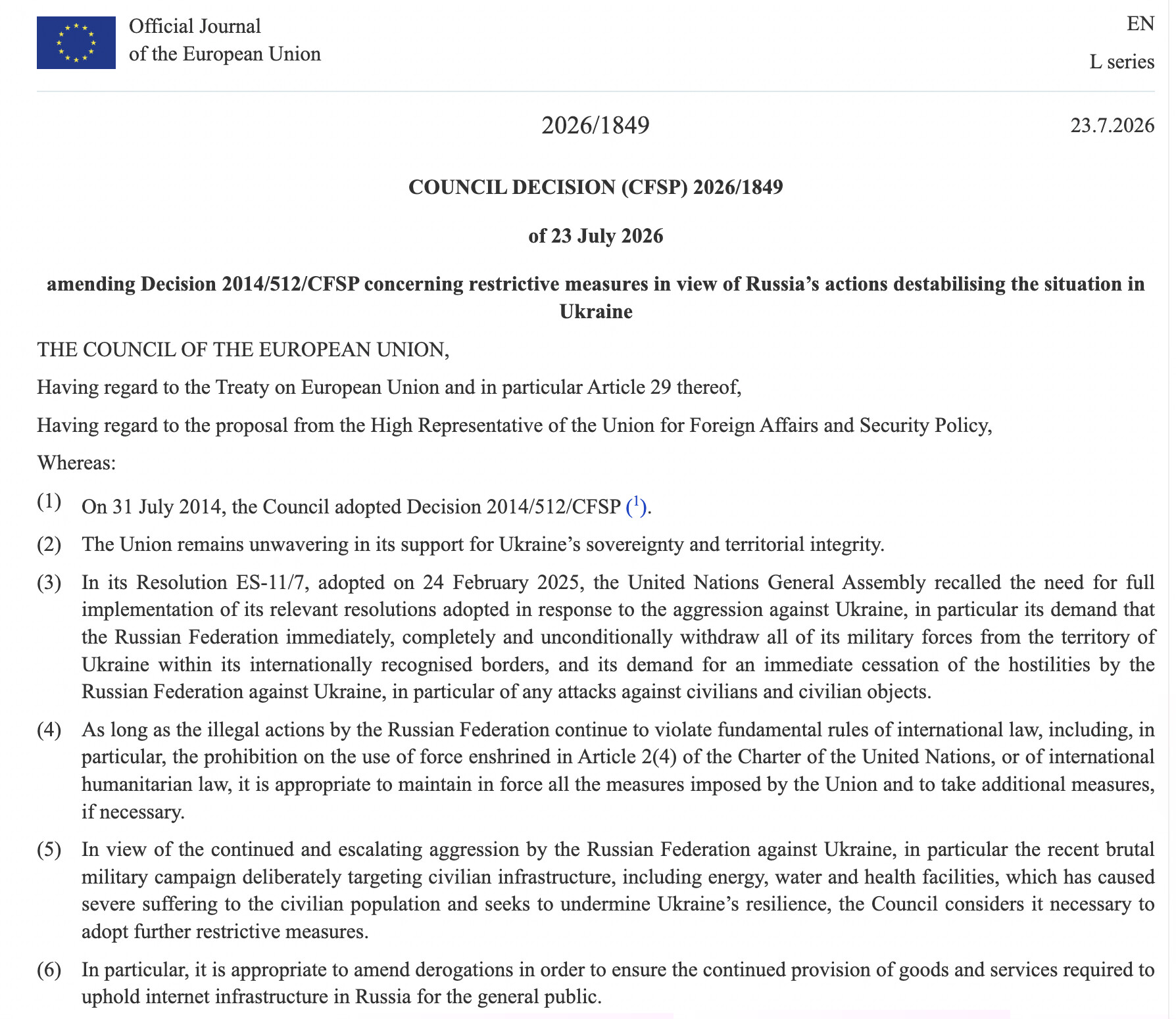
The European Council has named crypto exchange HTX, formerly Huobi, in its 21st package of restrictive measures against Russia. The package was adopted on July 23 and published Friday.
The Council decision lists HTX among 18 entities providing crypto-asset or payment services from outside the European Union that officials say are significantly undermining the purpose of the bloc's prohibitions. The measures target channels that continue to move funds to Moscow, including services linked to the Russian central bank's financial-messaging system and arrangements designed to work around existing restrictions.
The broader sanctions package includes 218 listings covering 48 individuals and 170 entities, according to TRM Labs. It is the largest single batch of listings in four years and freezes assets or bans transactions for 94 banks and major financial institutions.
EU action against HTX stops short of full designation
The EU measures against HTX do not amount to a full designation and do not include an asset freeze. Instead, they bar transactions between the exchange and entities based in the European Union. This means EU-licensed firms and residents are prohibited from using HTX's services, but the exchange's assets are not seized and its operations outside the bloc are not directly affected.
After the United Kingdom imposed sanctions in May, HTX said in a statement that compliance is its "absolute top priority" and that it follows regulations in every jurisdiction where it operates.
UK previously targeted Huobi-linked flows
The EU move follows action taken by London on May 26. The UK sanctioned Panama-registered Huobi Global S.A. as part of a package aimed at what it described as shadow financial systems supporting Russia's war economy. British authorities said they had reasonable grounds to suspect the exchange had assisted Moscow through sanctioned entities and funds.
That action applied Regulation 17A of the Russia (Sanctions) (EU Exit) Regulations 2019 to a crypto exchange for the first time. Analysts told Reuters it was also the first time authorities had sanctioned a trading venue of HTX's size.
Cryptopolitan previously reported that the United Kingdom alleged the platform facilitated money laundering and sanctions evasion involving more than $1.5 billion in Russian funds, with nearly $4.9 billion transferred to linked entities between 2021 and 2026.
HTX was founded in China in 2013 and is now among the world's largest crypto exchanges. Justin Sun took a controlling stake in the business in 2022, although the exchange describes the Tron founder as an adviser.
Sun was also one of the main financiers of World Liberty Financial, the company formed jointly by President Donald Trump and his sons. That relationship ended after WLFI blocked all HTX addresses in June and HTX delisted its USD1 stablecoin.
EU creates mechanism that could cover entire crypto jurisdictions
The package also establishes a mechanism allowing the EU to prohibit crypto-asset services from an entire jurisdiction if it is found to be systematically hosting platforms that help Russia circumvent restrictions, according to Crypto Times. Until now, Brussels has generally acted entity by entity. The shift means that countries whose regulatory frameworks are deemed permissive toward sanctions evasion could face bloc-wide service cutoffs, raising the stakes for offshore crypto hubs.
The bloc also expanded its transaction ban to 14 crypto-related service platforms based in Georgia, Panama, the United Arab Emirates, the Marshall Islands, Kyrgyzstan, and Belarus. It added four designations linked to the A7 cross-border payments network, including new connections to Africa.
Chainalysis estimates that A7, which is home to the ruble-pegged A7A5 stablecoin, has processed close to $120 billion and was built for sanctions evasion. EU foreign policy chief Kaja Kallas said the bloc is targeting "over a hundred banks and crypto operators, 40+ vessels in Russia's shadow fleet," as well as refineries in Russia and Belarus.
Belarusian ownership barred at MiCA-regulated firms
A separate measure adopted the same day, Council Decision (CFSP) 2026/1847, prohibits citizens of Belarus and people residing in Belarus from owning, controlling, or managing crypto-asset service providers registered under the Markets in Crypto-Assets regime. MiCA is the EU's comprehensive crypto-asset regulatory framework, which began full enforcement on December 30, 2024. The rule takes effect on August 25 after a 30-day implementation period.
The previous restriction applied only to wallet, account, and custody providers. The revised regulation now covers all service categories under MiCA, including operating trading facilities, trading cryptocurrencies, executing client orders, placing tokens, transferring funds, and providing investment advice or portfolio management.
EU companies operating under the MiCA framework will need to review ownership and governance documents before the deadline. The MiCA transition period ended on July 1.

