Asian Stocks Climb, Crude Oil Surges on West Asia Conflict Ahead of Fed Rate Decision
Key Takeaways
- •South Korean shares led Asian market gains with an approximately 2% rise, driven primarily by SK Hynix's 557% year-on-year surge in quarterly operating profit.
- •Brent crude oil prices exceeded $87 per barrel as intensifying conflict in West Asia raised concerns about potential disruptions to global energy supplies through critical shipping routes like the Strait of Hormuz.
- •The Kospi index recovered 0.20% after South Korean authorities had briefly halted trading in the previous session when the index plunged nearly 10%.
- •The memory chip industry is experiencing a broad recovery from a prolonged downturn that began in 2022, with demand rebounding partly due to artificial intelligence applications requiring advanced memory products.
- •Asian emerging-market currencies and equities are particularly sensitive to U.S. Federal Reserve policy decisions, which can redirect capital flows toward or away from regional markets.
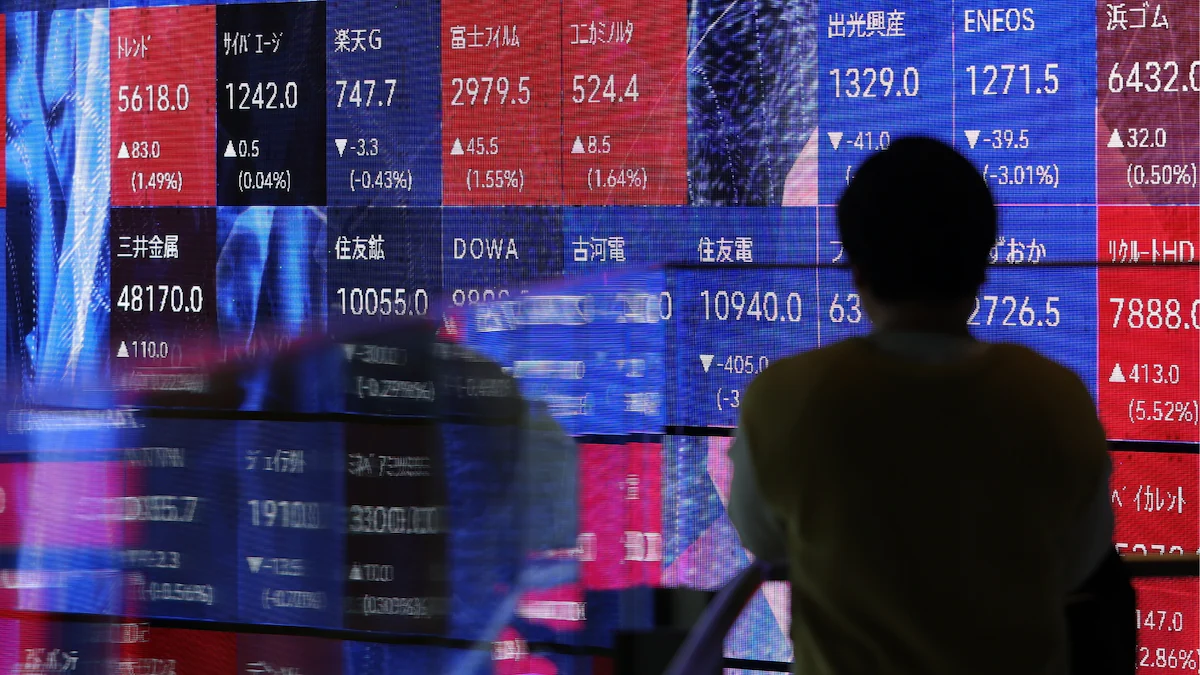
Asian equities advanced as investors monitored escalating tensions in West Asia and awaited the U.S. Federal Reserve's upcoming interest rate decision. Crude oil prices jumped amid renewed hostilities in the region, with Brent crude trading above $87 per barrel.
South Korean shares led regional gains, climbing approximately 2%. The advance was driven by SK Hynix, the world's second-largest memory chipmaker, which reported a 557% year-on-year surge in quarterly operating profit. The results reflect a broader recovery in the memory chip industry, which had weathered a prolonged downturn starting in 2022 before demand rebounded — driven in part by artificial intelligence applications requiring advanced memory products, including high-bandwidth memory used in AI accelerators, alongside traditional DRAM and NAND flash.
The Kospi index rose 0.20% after South Korean authorities had briefly halted trading during the previous session, when the index suffered a nearly 10% decline. The recovery signaled restored investor confidence in Korean markets following the sharp sell-off.
Oil prices rose sharply as conflict in West Asia intensified, raising concerns about potential supply disruptions in one of the world's most important energy-producing regions. Brent crude, the international benchmark, surpassed $87 per barrel. The region contains critical shipping chokepoints, including the Strait of Hormuz, through which a substantial share of global seaborne crude oil transits daily.
Markets across Asia were also watching for the U.S. Federal Reserve's policy announcement. The central bank's rate decision is closely watched by global investors, as U.S. monetary policy influences capital flows, currency valuations, and equity markets worldwide. Asian emerging-market currencies and equities are particularly sensitive to Fed policy shifts, as changes in U.S. rates can redirect capital toward or away from regional markets.
Source: CNBC-TV18 Markets

