Bangkok Confronts a Rising Heat Crisis as Temperatures Push Toward Record Levels
Key Takeaways
- •Bangkok's heat index peaked at 51.9 degrees Celsius in late June 2025, capping a sustained period of dangerous readings that began in April.
- •The World Bank projects that a single degree Celsius rise in Bangkok's average temperature could lead to more than 2,300 additional heat-related deaths annually and over $1.3 billion in lost wages from reduced labor productivity.
- •Bangkok's average daily maximum temperature is projected to climb to 38.1 degrees Celsius by 2050, the steepest increase forecast for any major Southeast Asian capital.
- •Southeast Asia faces an estimated $20 billion annual need for climate adaptation investment but currently receives only about $2.5 billion, reflecting an 88 percent shortfall.
- •The Bangkok Metropolitan Administration has set up more than 300 cooling centers and designated 379 heat-risk zones, though experts say long-term data-driven planning and financing are needed to address the crisis systemically.
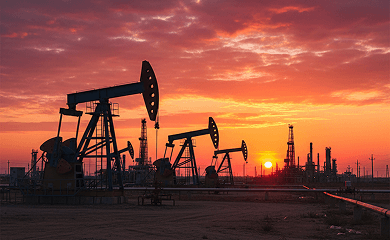
Bangkok's heat index — a measure that combines air temperature with humidity to reflect how hot conditions actually feel — surged to a scorching 51.9 degrees Celsius in late June, marking the peak of a sustained period of danger-zone readings that began in April. For many residents, it was simply another sweltering day. But for city leaders, including newly re-elected Bangkok Governor Chadchart Sittipunt, the episode served as yet another stark reminder of the escalating dangers posed by extreme heat.
The Thai capital's geography compounds its vulnerability. Situated on a low-lying delta plain near the Gulf of Thailand and just 13 degrees north of the equator, Bangkok is exposed to intense solar radiation and persistent humidity that magnify the human health effects of rising temperatures. It is one of several rapidly urbanizing Southeast Asian megacities — alongside Manila, Jakarta, and Ho Chi Minh City — facing intensifying heat risks as dense concrete infrastructure, limited green cover, and population growth converge with a warming climate.
Rising temperatures are already reshaping how the Thai capital functions. Outdoor labor capacity is shrinking, businesses are spending more on cooling, and tourists increasingly avoid the city during its hottest months.
The outlook is sobering. Bangkok's average daily maximum temperature is projected to reach 38.1 degrees Celsius by 2050, a sharp increase from 33.3 degrees Celsius in 2000 — the steepest projected rise for any major Southeast Asian capital. The ASEAN Centre for Energy estimates that the number of "extreme heat days," defined as those exceeding 35 degrees Celsius, will nearly triple to 120 per year by mid-century.
According to the World Bank, a single degree Celsius increase in Bangkok's average temperature could result in more than 2,300 additional heat-related deaths annually, over 44 billion Thai baht ($1.3 billion) in lost wages from reduced labor productivity, and approximately 17 billion baht ($509 million) in additional electricity costs. The tourism, manufacturing, agriculture, and construction sectors — pillars of Thailand's economy — are especially exposed to these impacts.
The economic toll of extreme heat is certain to be a central topic of discussion at the 2026 Annual Meetings of the International Monetary Fund and World Bank Group, scheduled for mid-October in Thailand. The gatherings mark the first time these meetings return to the country since 1991.
Bangkok has not been idle. Under its Urban Heat Management Framework, the Bangkok Metropolitan Administration has established more than 300 cooling centers, deployed hydration stations and heat-health advisories, and identified 379 heat-risk zones to guide emergency response efforts.
However, emergency measures alone may be insufficient to keep pace with the accelerating climate. Cooling centers can provide relief during a heat wave, but they do not constitute a systemic, long-term solution. They do little to reduce ambient temperatures in the days and years that follow.
As extreme heat events grow more frequent, experts argue that urban resilience will depend less on reactive measures and more on the quality of proactive planning. For Bangkok, that means shifting from merely responding to heat to deliberately designing for it.
A key priority is directing long-term investments more precisely. The World Bank notes that Bangkok's expanded cooling initiatives are not adequately reaching its hottest neighborhoods because detailed microclimate data has not been fully integrated into city planning.
Singapore's Digital Urban Climate Twin offers one potential model. The platform allows planners to simulate interventions such as tree planting and ventilation corridors before committing public funds. Research using the tool has confirmed that the cooling effect of a single park can extend to a 300-meter radius — a meaningful figure in a city where the urban heat island effect, driven by heat-absorbing surfaces like concrete and asphalt, can raise local temperatures by up to seven degrees. Researchers caution, however, that excessive tree planting can produce diminishing or even counterproductive results.
Bangkok need not replicate Singapore's approach wholesale, but the underlying principle — using data-driven evidence to guide investment — is broadly applicable.
Financing remains another critical challenge. Constructing a heat-resilient city requires resources well beyond what municipal budgets alone can provide. Cities need a stronger pipeline of investable resilience projects, supported by reliable data and clear policy signals, to attract both public and private capital. The gap is substantial and reflects a broader global pattern in which climate adaptation funding consistently trails mitigation: a 2025 Climate Policy Initiative analysis found that Southeast Asia requires an estimated $20 billion annually in adaptation investment but currently receives only about $2.5 billion — an 88 percent shortfall, among the widest of any subregion in Asia.
Governor Chadchart, fresh off re-election with a strong mandate, has an opportunity to elevate heat adaptation as a defining priority of his second term. Bangkok has already demonstrated it can act swiftly when temperatures reach dangerous levels. The greater challenge lies ahead: whether the city will invest deliberately now to prepare for the heat it already knows is coming.
This story was originally featured on Fortune.com.

