Zcash Mining Revenue Outpaces Bitcoin as ZEC Rally Draws New Hashrate
Key Takeaways
- •The Bitmain Z15 Pro generated approximately $727.30 per MWh in August and about $708 per MWh by early September, compared with $179 for Bitcoin’s S23 Pro.
- •Grayscale’s ZCSH ETF began trading on NYSE Arca on August 25 and exceeded $500 million in assets under management within two weeks.
- •ZEC reached a record $890 in August and moved above $1,000 on September 4, with CoinMarketCap later listing it near $1,180 and a market value of about $20 billion.
- •Cypherpunk Technologies, Foundry USA, and Fortitude Mining Holdings have expanded Zcash-related operations, increasing network competition and potentially reducing individual miners’ rewards.
- •Bitcoin miners are also exploring artificial-intelligence computing, as Bitcoin profitability weakened and companies including Riot Platforms and Bitdeer pursued long-term computing agreements.
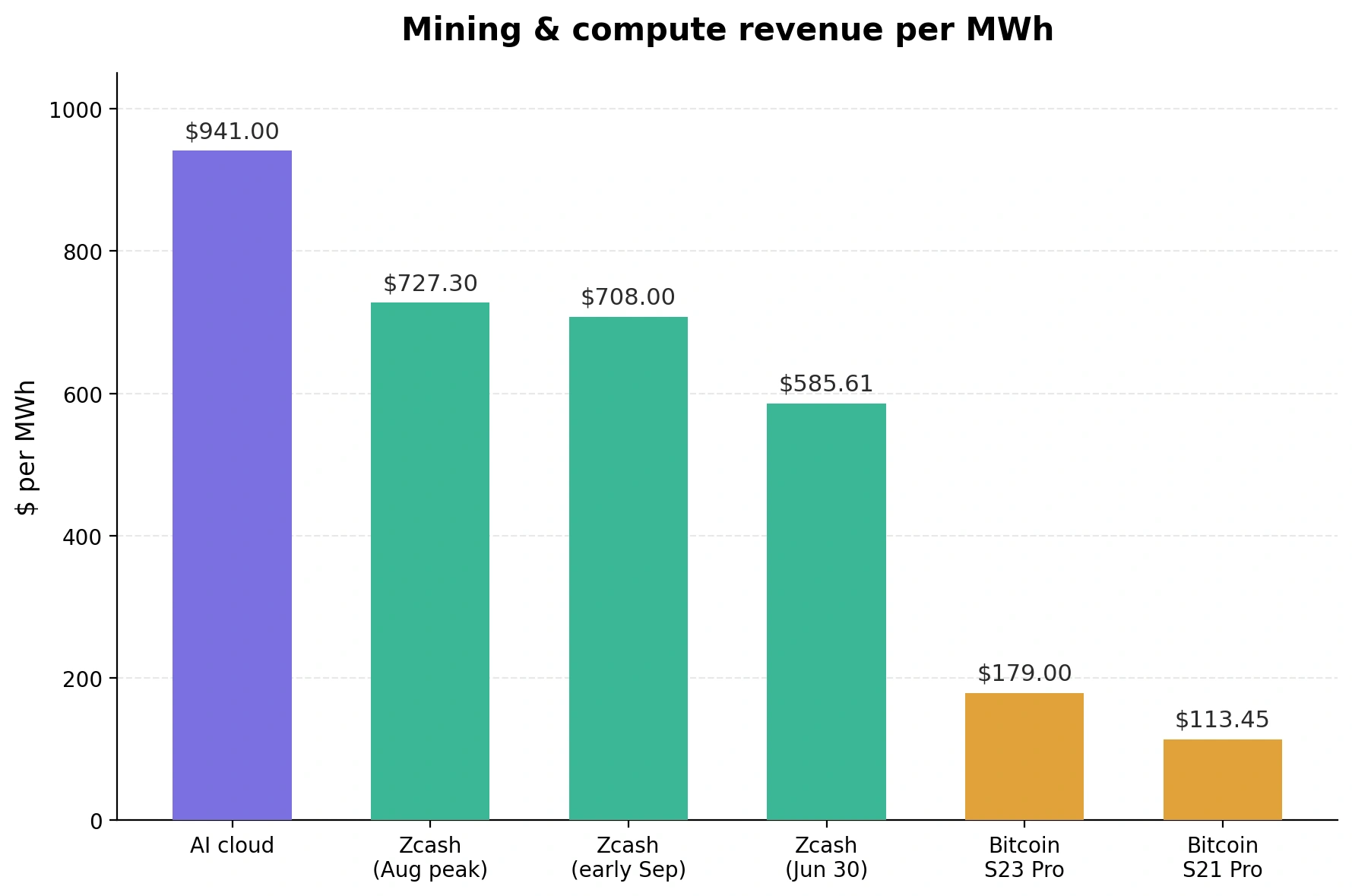
Block-reward miners are shifting some electricity from Bitcoin to Zcash, where the leading mining rig is generating roughly four times more revenue per megawatt-hour than Bitcoin’s best machine. The change follows a rally that pushed ZEC, Zcash’s native token, into the top 10 cryptocurrencies by market value.
Mining returns have declined for many operators in recent years, particularly since Bitcoin’s last halving, among other factors. That has made Zcash’s current economics increasingly attractive to miners deciding where to direct their capacity, according to Cryptopolitan.
Zcash rig revenue exceeds Bitcoin machines
Data from The Energy Mag showed that a Bitmain Z15 Pro mining Zcash generated approximately $727.30 per megawatt-hour (MWh) by August, compared with $585.61 on June 30. A state-of-the-art Bitmain S23 Pro mining Bitcoin generated $179 per MWh, while the older S21 Pro produced $113.45. These figures measure revenue generated by the machines and do not by themselves account for electricity, hardware, staffing, or other operating costs.
Only AI cloud workloads, generating close to $941 per MWh, exceeded the Zcash machine. By early September, the Z15 Pro was earning about $708 per MWh, approximately 3% below its August peak as more machines joined the network. The returns have tracked ZEC’s price, which reached a record $890 in August.
ETF inflows helped drive the ZEC rally
The mining economics are tied to a token rally that Grayscale helped accelerate. The firm converted its Zcash Trust into an exchange-traded fund and listed ZCSH on NYSE Arca on August 25, creating the first US product offering spot exposure to a privacy coin. Grayscale said in its official announcement that the fund’s assets under management exceeded $500 million within two weeks.
That figure includes approximately $100 million from DCG International Investments, an affiliate of Grayscale’s parent company, Digital Currency Group. The affiliate transferred 85,705.32563297 ZEC in exchange for shares, according to a company disclosure.
ZEC crossed $1,000 for the first time on September 4. CoinMarketCap lists the token near $1,180, with a market capitalization of approximately $20 billion. On September 3, Grayscale attributed the rise to “the hard money thesis and growing awareness around digital privacy.”
Mining competition is increasing
Higher profits have attracted additional operators, putting pressure on margins. Cypherpunk Technologies (Nasdaq: CYPH), backed by Cameron and Tyler Winklevoss, paid $33.33 million in August to finance what it calls the world’s largest Zcash mining fleet. The fleet operates at approximately 4.2 GSol/s, or about 18% of the network. The company holds nearly 2% of ZEC’s supply and aims to reach 5%.
Foundry USA launched an “institutional-grade” Zcash mining pool in March and reached nearly 30% of the network’s mining share within a month. Fortitude Mining Holdings, another DCG subsidiary, purchased a 12.5-megawatt site in Nebraska to expand its operations.
As the network’s hashrate rises faster than the token’s price, each miner’s share of approximately 43,800 ZEC in monthly rewards declines. Hashrate growth and changes in ZEC’s price will therefore remain important indicators of whether the current revenue gap persists.
Bitcoin miners also pursue AI workloads
The shift toward Zcash comes as Bitcoin mining becomes less profitable. BTC’s rally stalled after the token topped $82,000 on September 3. It was trading near $77,000, while network difficulty was reportedly expected to rise again on September 19. CoinMarketCap data tracks the asset’s market information.
Canaan reported second-quarter mining revenue of $17.7 million and a net loss of $97.6 million. The company guided for third-quarter revenue of as little as $11 million.
Some miners are moving beyond cryptocurrency and toward artificial-intelligence infrastructure. On August 25, Riot Platforms was reported to have signed a $9 billion, 20-year computing agreement with Anthropic, while Bitdeer entered into a 16-year agreement.

