Young Koreans Show Limited Interest in $420 Million State-Backed National Growth Fund Despite Strong Overall Demand
Key Takeaways
- •Investors in their 50s accounted for 33.9 percent of subscribers and 38.7 percent of total investment, making them the largest participating demographic in the fund's first round.
- •The 600 billion-won fund sold out within a week, attracting 30,038 subscribers as part of the broader 150 trillion-won Korea National Growth Fund program targeting advanced industries such as AI, semiconductors, and biotechnology.
- •Investors in their 20s and 30s together represented only 19.5 percent of subscribers and contributed just 13.4 percent of total invested capital.
- •The Financial Services Commission will launch a second 600 billion-won fund in September, increasing the allocation for low-income investors from 20 percent to 50 percent to attract greater youth participation.
- •More than 60 percent of young investors who did participate in the first round fell into the low-income category, according to the data.
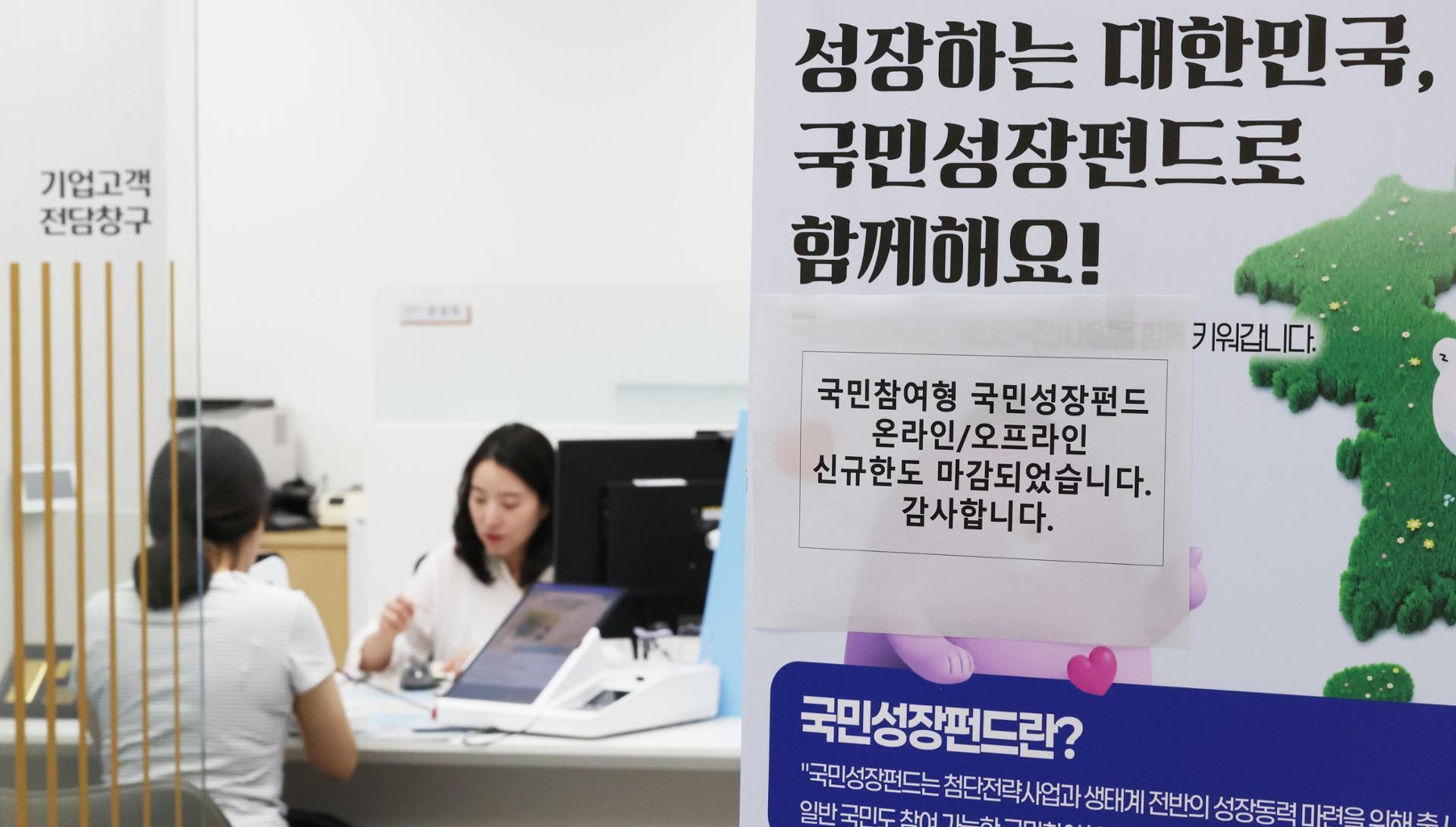
Young Koreans demonstrated relatively little interest in South Korea's state-backed growth fund launched earlier this year, even as the 600 billion-won ($420 million) vehicle drew strong overall demand, according to data released Monday.
Figures obtained by Rep. Kim Sang-hoon of the main opposition People Power Party from the Financial Services Commission (FSC) showed that the first round of the National Growth Fund program attracted 30,038 subscribers and sold out within a week of its May 22 launch.
Investors in their 50s represented the largest participating group by both subscriber count and invested capital. A total of 10,173 individuals in their 50s invested 231.6 billion won, accounting for 33.9 percent of all subscribers and 38.7 percent of total investment.
By comparison, 5,852 investors in their 20s and 30s together invested a combined 80.2 billion won. These two age groups made up 19.5 percent of all subscribers and contributed just 13.4 percent of total investment.
Investors in their 40s numbered 9,357 and invested 170.6 billion won. Those aged 60 and above totaled 4,588 but posted the highest average investment per person, at 23.36 million won through banks and 27.8 million won through securities firms.
The fund forms part of the broader 150 trillion won Korea National Growth Fund program, launched late last year as one of President Lee Jae Myung's signature economic initiatives. The program is designed to channel capital into advanced industries, including artificial intelligence, semiconductors, biotechnology, robotics, and rechargeable batteries. The initiative comes as South Korea faces intensifying global competition in several of these sectors, particularly from Chinese rivals in semiconductors and electric-vehicle batteries, making domestic capital formation for strategic technologies a growing policy priority.
The comparatively low participation among younger Koreans likely reflects their more limited financial resources as well as the fund's five-year maturity. Restrictions on early redemption pose a significant barrier for investors who may need quicker access to their savings.
Market timing may have also played a role. Around the fund's late-May launch, the benchmark KOSPI was in the midst of a strong rally, surpassing 9,000 points for the first time on June 18 and drawing many younger investors toward direct stock market participation. South Korean retail investors, widely known for their active participation in equity markets, have increasingly favored direct stock trading over long-term locked-up products in recent years.
The comparatively weak turnout among younger investors also carries broader demographic significance for South Korea, which recorded the world's lowest total fertility rate in 2023 and faces one of the fastest-aging populations among developed economies. Policymakers have flagged engaging younger citizens in long-term financial assets as part of the country's wider retirement-readiness challenge.
The government intends to intensify efforts to attract younger investors to the fund's second round later this year. The FSC plans to launch another 600 billion-won fund in September, increasing the allocation reserved for "low-income" investors to 50 percent, up from 20 percent in the first round.
More than 60 percent of young investors who participated in the first fund fell into the low-income category, according to the data.
"By increasing the allocation for lower-income investors, we expect more young people to join the fund," said FSC Secretary-General Shin Jin-chang.

