Wall Street Journal Editorial Board Criticizes Trump Tariffs as Politically Unpopular and Economically Harmful
Key Takeaways
- •The Wall Street Journal editorial board said Trump’s renewed tariffs are causing economic harm and could hurt Republicans before the midterm elections.
- •The new tariff measures include actions aimed at Canada and Brazil under authorities such as Section 301 and Section 338.
- •The editorial argued that tariffs can raise costs for importers, businesses and consumers through supply chains.
- •The board said stronger tax provisions and AI-related investment have offset some damage attributed to the tariffs.
- •The editorial concluded that tariff-related uncertainty and higher prices could contribute to voter dissatisfaction with the economy.
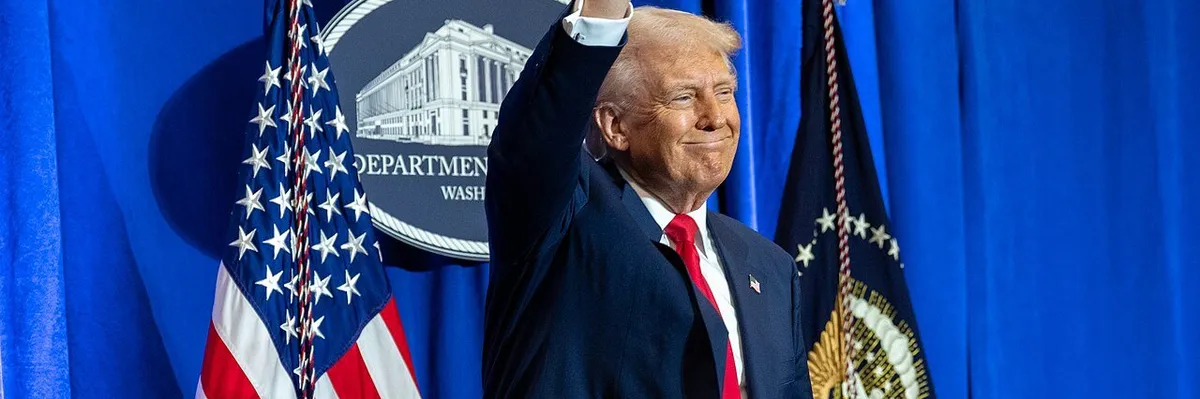
The Wall Street Journal editorial board criticized President Donald Trump in a new opinion piece, faulting him for what it described as a tariff “obsession” that it said is causing significant “harm” just months before the midterm elections.
The Wall Street Journal is owned by conservative media mogul Rupert Murdoch, and its editorial board is widely regarded as an influential voice within modern conservative politics. In an editorial published Friday evening, the board questioned Trump’s decision to reinstitute several tariffs, even though import taxes have been widely viewed as among his least popular policies with voters.
“Tariffs are an obsession for President Trump, much as climate was for the Biden Administration,” the board wrote. “How else to explain his imposition of yet another round of border taxes three months before the November election despite their political unpopularity and economic harm?”
Tariffs are paid by importers when goods enter the country, but their costs can be passed along through supply chains to businesses and consumers. That is why fights over tariff policy often carry both economic and political consequences, especially when voters are already focused on prices.
Many of the new tariffs are being imposed under the claimed authority of “Section 301,” a trade law that permits the president to levy tariffs in response to “unfair foreign acts, policies, or practices affecting U.S. commerce.” The measures include new rates aimed at Canada and Brazil, countries that have drawn Trump’s ire for different reasons. According to the Wall Street Journal editorial board, the moves show Trump using tariffs as a political weapon while relying on weak justifications.
“The Administration says America’s trading partners—including Canada and the European Union—are unfairly discriminating against the U.S. by not doing enough to stop imports made with forced labor. Yes, the slave traders of Toronto strike again,” the board wrote. “Last week the President announced Section 301 tariffs of 25% on Brazil because he doesn’t like its leftwing leader Lula da Silva. Note how Mr. Trump weaponizes tariffs: He picks a target. Then his team finds a pretext for tariffs.”
Some tariffs targeting Canada have been imposed under Section 338, a provision of the 1930 Smoot-Hawley Act that, according to the Journal’s editorial board, “no president has used... before.” Smoot-Hawley is one of the best-known tariff laws in U.S. history and is commonly associated with protectionist trade policy during the early 20th century. By invoking that authority, the board argued, Trump has effectively pulled the United States into a “needless trade war with its second-largest trading partner.”
“Mr. Trump’s tariff defenders point to the buoyant stock market as evidence that his border taxes aren’t harmful,” the board added. “But last year’s tax bill—especially the business provisions like full investment expensing—has offset some of the damage from his tariffs. So has the AI investment boom.”
The editorial concluded by arguing that the economy would be stronger without the tariffs and the business uncertainty they create. “Imagine how strong the economy would be without the tariffs and their uncertainty for business. Americans remain unhappy about the economy, and higher prices are a big reason. They know that tariffs are adding to their pain even if they don’t see the cost as a line-item on a bill. Republicans could pay the price in November.”

