Williams Sonoma's 'Taste of Korea' Collection Draws Backlash From Korean Consumers Over Inauthentic Design
Key Takeaways
- •Williams Sonoma introduced a "Taste of Korea" collection of more than 100 items, including sauces, seasonings, cookware, and dinnerware, both online and at its Seattle store.
- •The collection's Lotus Bloom centerpiece line features ornate pinkish-red and gold designs that critics say do not reflect traditional Korean aesthetic sensibilities.
- •Korean ceramic traditions historically favor understated elegance, with celadon flourising during the Goryeo dynasty and white porcelain dominating the Joseon dynasty.
- •Several Korean social media users noted that the tableware designs more closely resemble items found in Chinese restaurants in Korea than authentic Korean dishware.
- •The backlash highlights increasing vigilance among Korean consumers regarding cultural representation as more global brands launch Korean-themed products in response to the Korean Wave.
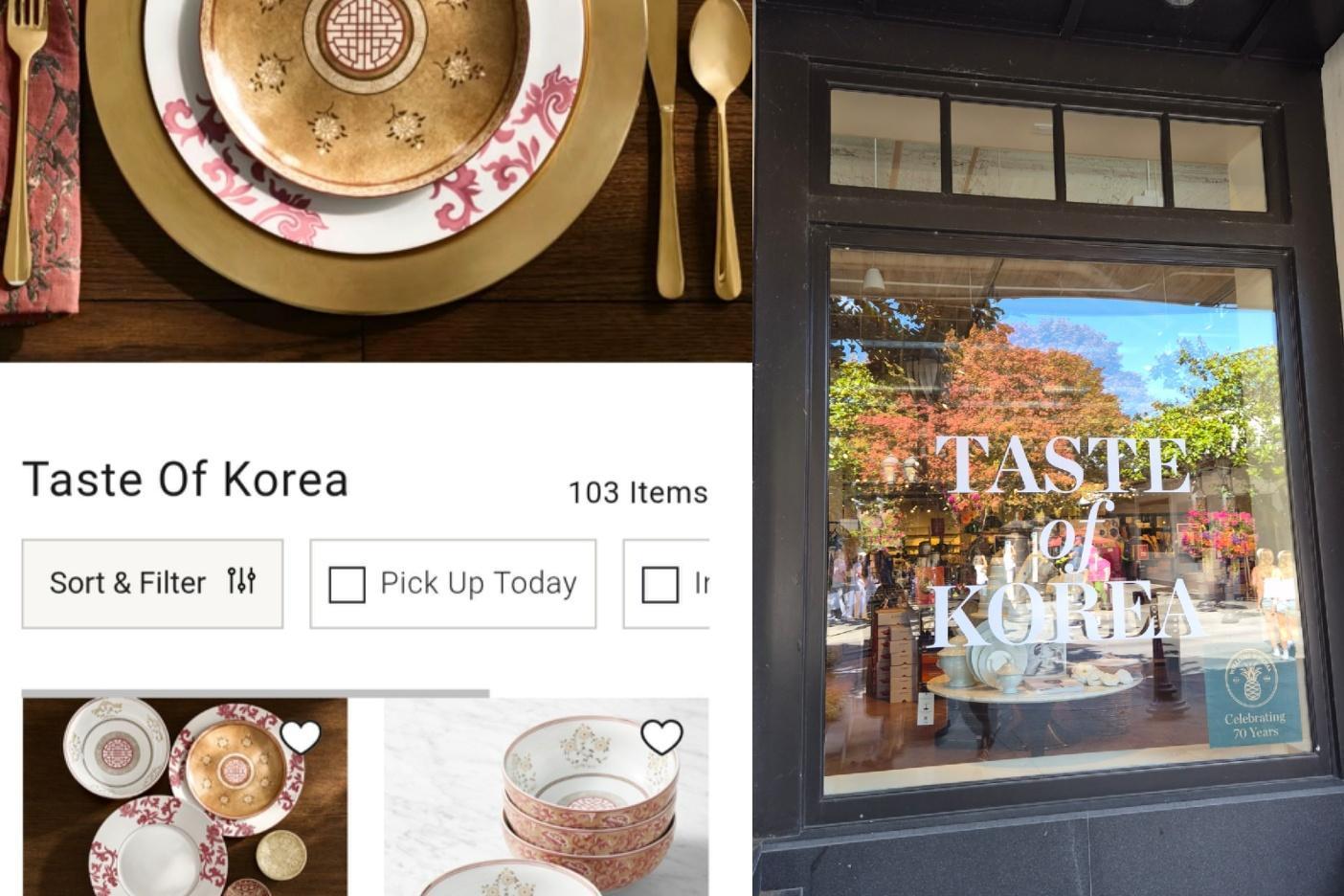
Williams Sonoma's 'Taste of Korea' Collection Draws Backlash From Korean Consumers Over Inauthentic Design
Published Aug. 8, 2026, 3:15 a.m. KST
SEATTLE — Williams Sonoma, one of America's most prominent upscale kitchenware and home goods retailers, has launched a new "Taste of Korea" collection aimed at celebrating Korean cuisine. However, Korean American consumers are questioning whether the products bear any authentic connection to Korean culture.
The collection, featured on the retailer's website and at its Seattle storefront, comprises more than 100 items ranging from Korean sauces and seasonings to cookware and dinnerware. Its centerpiece is the Lotus Bloom collection — an ornate line of plates and bowls in pinkish-red and gold, accompanied by similarly elaborate table linens.
For a company that has spent decades building its reputation as a premium American tastemaker, the distinctly un-Korean aesthetic has sparked criticism online. The backlash comes at a time when an increasing number of brands are seeking to capitalize on the global surge in popularity of Korean food and culture, a phenomenon driven by the broader Korean Wave — the international spread of K-pop, K-dramas, film, and cuisine that has accelerated since the late 2010s and shows little sign of abating.
Korean content creator Bambigirl shared her reaction in a YouTube video. "I saw this huge sign outside the store that said 'Taste of Korea,' and as a Korean, I felt so flattered," she said. "K-culture is everywhere now."
Her enthusiasm, however, was short-lived upon examining the collection up close.
"What is going on here? It's not giving Korea at all," she said. "In Korean culture, we use a lot of white and subtle blue in our dishware. Simple, clean and not too over the top."
Her observation aligns with centuries of Korean ceramic tradition, in which celadon — a pale jade-green glaze — flourished during the Goryeo dynasty, and white porcelain became dominant during the Joseon dynasty, both prized for their understated elegance rather than ornate decoration.
She also criticized the inclusion of a bamboo steamer displayed as part of the "Taste of Korea" table setting, remarking: "This is not a Chinese dim sum place."
Similar sentiments surfaced across other social media platforms. "Who else thinks Williams Sonoma really, really, really missed the mark here for Korean fine dining?" one user wrote, arguing that even someone who had watched a few K-dramas, dined at Korean restaurants, or browsed books on Korean ceramic art would struggle to find anything resembling the collection's aesthetic.
Another Korean commenter quipped, "'Taste of Korea,' they say. Looks like they went to a Chinese restaurant in Korea!"
"You only can find these kinds of plates when you visit Chinese restaurants in Korea," another wrote.
The criticism highlights a broader tension as Korean food and culture continue to gain mainstream traction in the United States, prompting a growing number of major American retailers and brands to roll out Korean-themed products and promotions. The reaction to Williams Sonoma's collection underscores that Korean consumers are paying close attention to how their culture is represented — and are quick to call out what they see as mischaracterization. The episode also reflects a wider pattern in which major brands have faced public pushback over perceived cultural missteps when marketing products tied to specific ethnic or national traditions, raising the stakes for companies seeking to engage authentically with rapidly growing cultural categories.

