SpaceX and Tesla Commit $16.8 Billion to Terafab Chip Manufacturing Complex in Texas
Key Takeaways
- •Terafab is planned for Grimes County, Texas with an initial investment of $16.8 billion and over 100 million square feet of manufacturing space.
- •SpaceX estimates that combined chip demand from itself and Tesla exceeds one terawatt of compute, surpassing current total global supply.
- •The facility will produce advanced logic and memory chips for AI applications including Tesla's Optimus humanoid robots, autonomous Cybercabs, and SpaceX's planned space-based data centers.
- •Intel disclosed its involvement in the Terafab project in April, though the specific scope and nature of its role have not been made public.
- •The $16.8 billion commitment represents only the initial phase, with subsequent expansion stages potentially increasing the project's total cost significantly.
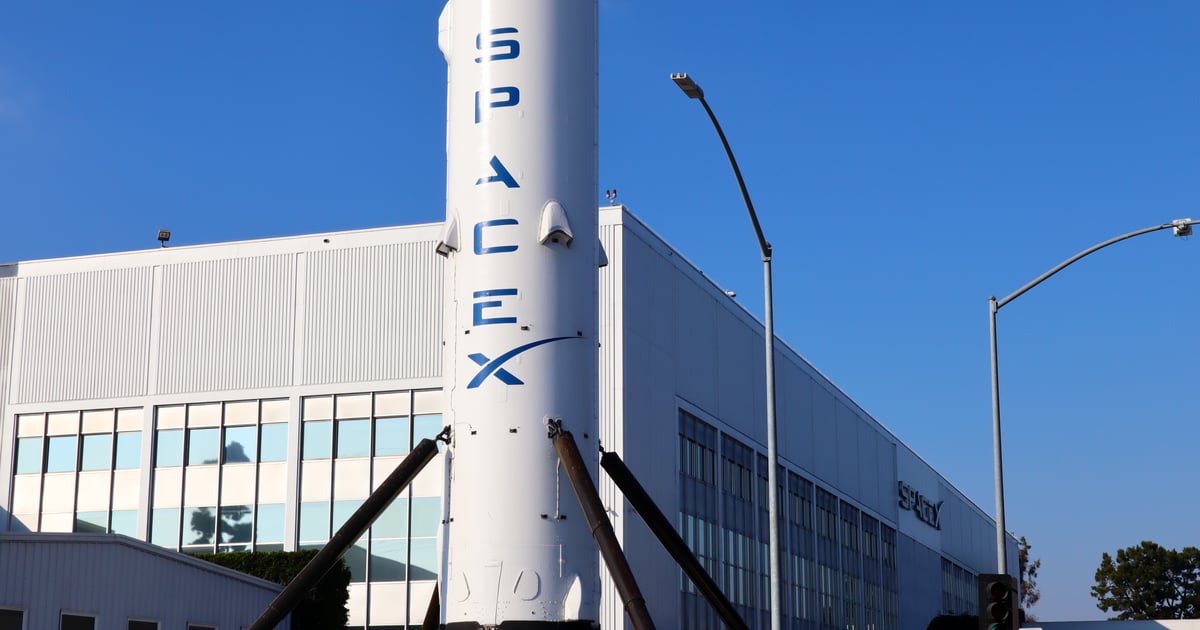
SpaceX and Tesla are preparing to break ground on Terafab, a large-scale semiconductor manufacturing complex in Texas, backed by an initial investment of $16.8 billion.
The facility will be located in Grimes County, Texas, outside Houston. Elon Musk described the planned site as "the largest and most valuable building on Earth" in a post on X.
In an announcement on its website, SpaceX said the complex is planned to encompass more than 100 million square feet of manufacturing space, placing it among the largest semiconductor fabrication projects ever proposed. For comparison, Samsung's semiconductor campus in Taylor, Texas — one of the largest greenfield fab projects in the U.S. — has seen its investment grow to over $40 billion across phases, while TSMC's two-fab complex in Arizona has been estimated at roughly $40 billion. Terafab's $16.8 billion initial commitment already rivals these projects and, if expanded as planned, could exceed them.
SpaceX framed the facility as a response to the substantial combined chip demand from itself and Tesla, which it estimates exceeds 1 terawatt (TW) of compute — more than the current total global supply. The claim underscores the scale of compute requirements driven by large-scale AI training and inference workloads, which have prompted companies including Google, Amazon, and Meta to pursue custom silicon programs and, in some cases, direct foundry partnerships.
"While we are deeply appreciative of our current chip suppliers and encourage them to expand production whenever possible, this looming gulf between supply and demand is at the core of Terafab's necessity," the company stated.
Terafab is designed to consolidate the development, packaging, and testing of advanced logic and memory chips at a single location. The semiconductors produced there will support a range of AI initiatives across both companies, including processors for Tesla's Optimus humanoid robots and autonomous Cybercabs, as well as high-power chips intended for SpaceX's planned space-based data centers.
To address concerns surrounding data center water usage, the companies said they intend to draw water from the nearby Gibbons Creek Reservoir rather than depend on local groundwater supplies.
SpaceX indicated that the $16.8 billion represents only the initial phase, and that subsequent expansion stages could significantly increase the project's total cost. Large-scale fab construction has historically faced multi-year timelines and cost escalation; TSMC's Arizona project, for example, experienced delays and budget increases tied to labor and supply chain challenges.
The undertaking represents a further step in the vertical integration of Musk's AI operations. Earlier this year, SpaceX merged with Musk's AI company xAI — since renamed SpaceXAI — consolidating its AI initiatives and space-based data center plans under one corporate structure. SpaceX subsequently completed its initial public offering in June, in what became the largest IPO on record.
Intel is also expected to participate in the Terafab project. The company disclosed its involvement in April, though the scope and nature of its role have not been made public. Intel's participation comes as the company expands its contract manufacturing business under its Intel Foundry strategy, positioning itself as a domestic alternative to TSMC and Samsung for advanced node production. The CHIPS and Science Act, which allocated $52 billion in subsidies to strengthen U.S. semiconductor manufacturing, has underpinned much of this domestic capacity buildout, though it remains unconfirmed whether Terafab would seek such funding.

